
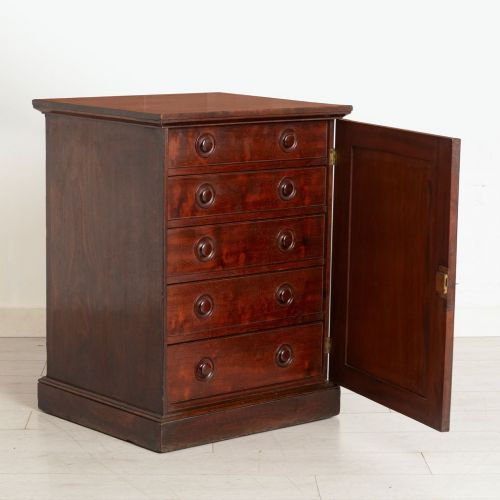


Victorian Sheet Music Cupboard
A victorian sheet music cupboard organises loose scores in domestic parlours with hinged doors and internal sliding trays.
Victorian Sheet Music Cupboard
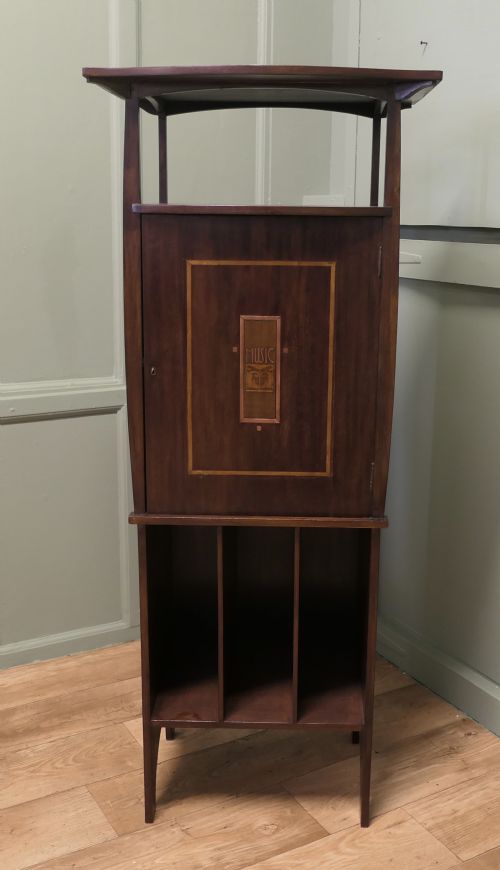
A victorian sheet music cupboard is typically encountered as a compact vertical piece designed to house unbound folios near a piano or music stand. These pieces emerge primarily from the nineteenth century, spanning Victorian and late Victorian periods alongside occasional Edwardian examples.
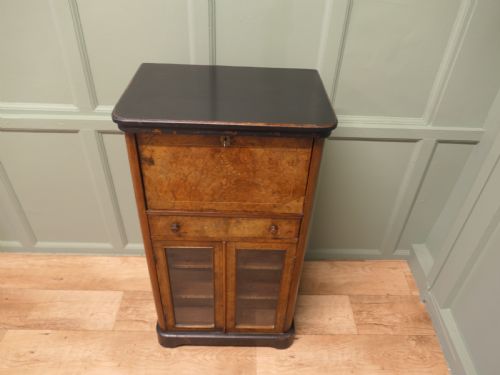
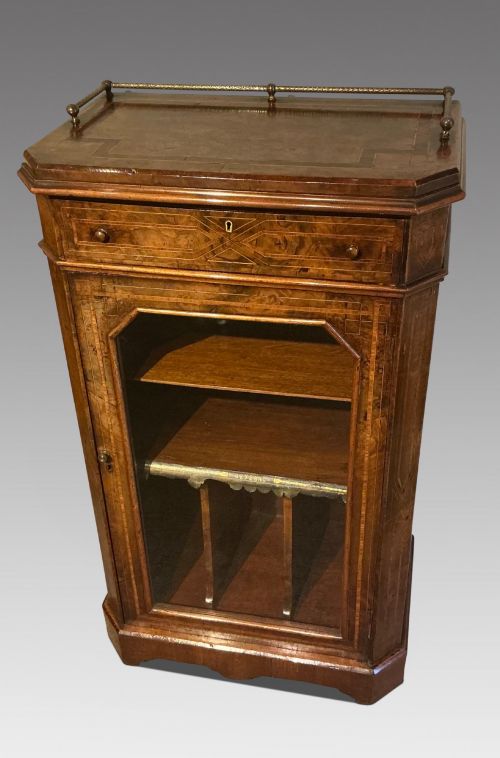
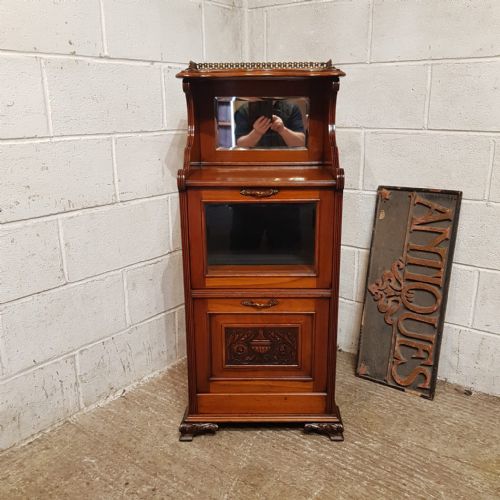
Forms vary from music cabinets and side cabinets to specialised filing formats and folio cabinets. Most examples present a single door or glazed front concealing internal divisions sized specifically for paper scores.
Origins stretch across English workshops and Scottish makers, occasionally influenced by Aesthetic Movement or Arts and Crafts design principles. The buyer encounters these primarily as walnut, mahogany or ebonised wood constructions dating between 1870 and 1900.
Assessing Quality and Execution
Quality reveals itself in the choice of timber figure, such as highly figured burr walnut or flame mahogany veneers selected for the primary visual surfaces. Finer pieces demonstrate meticulous hand-cut marquetry and precise inlay work rather than printed or stamped decoration.
The internal architecture dictates daily utility, with well-made examples featuring smooth-running wooden trays or dedicated filing dividers. Structural integrity in the door frames and hinges separates standard production items from master cabinetmaker commissions.
Some Victorian pianists apparently owned cabinets fancy enough to distract audience members from the actual music.
GM Elwood for JS Henry·Henry Ogden and Son·Keeble London
The Victorian Sheet Music Cupboard Glossary
- Marquetry
- Decorative patterns formed by fitting together thin veneers of wood, ivory or shell onto a structural surface. This technique creates complex pictorial or geometric designs across the cabinet door.
- Burr Walnut
- Timber taken from a growth deformation on a walnut tree, yielding highly swirled and mottled grain patterns. Cabinetmakers prize this wood for prominent door panels and top surfaces.
- Ebonised Wood
- Timber treated with chemical stains or dark paint to imitate expensive ebony. The finish became particularly popular during the Victorian period for dramatic contrast.
- Folio Cabinet
- A storage piece designed to hold large, unbound sheets of paper or artwork flat. These items provide deeper proportions than standard shelving units.
- Stringing
- Thin inlaid lines of contrasting timber set flush into the surface of furniture. It frames drawer fronts, panels and tabletops in decorative borders.
Victorian Sheet Music Cupboard: Frequently Asked Questions
What fits inside these music cupboards?
Internal sliding trays and shallow shelves accommodate large paper folios, sheet music, and manuscript books.
Today, owners repurpose these compartments for storing flat stationery, vinyl records, or collection portfolios.
How do I date a music cabinet?
Dating relies on timber choices, construction methods, and stylistic cues like Aesthetic Movement or Arts and Crafts details.
Most pieces date from the Victorian era between 1870 and 1900, with occasional Edwardian examples extending into the early twentieth century.
Where were they placed originally?
These pieces stood beside upright pianos, grand pianos, or in domestic music rooms for immediate access during recitals.
Their compact vertical footprint allowed them to fit neatly into drawing room corners without occupying excessive floor space.
Are walnut and mahogany the only woods?
While walnut, burr walnut, and mahogany dominate the inventory, makers also utilised rosewood, oak, and ebonised wood.
Decorative variants feature contrasting stringing, marquetry, and occasional glazed or mirrored doors.