



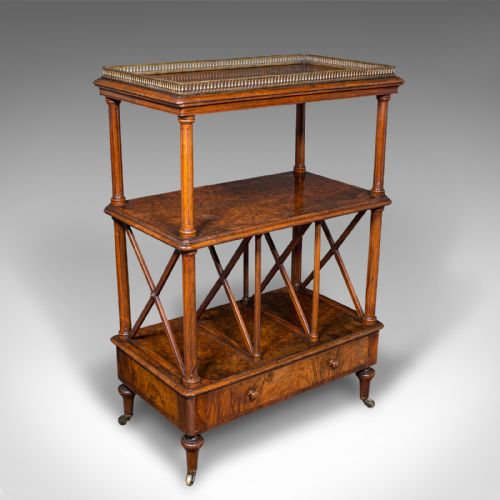


Brass Gallery Music Stand
A brass gallery music stand is a refined piece designed to hold scores securely while complementing a formal interior.
Brass Gallery Music Stand
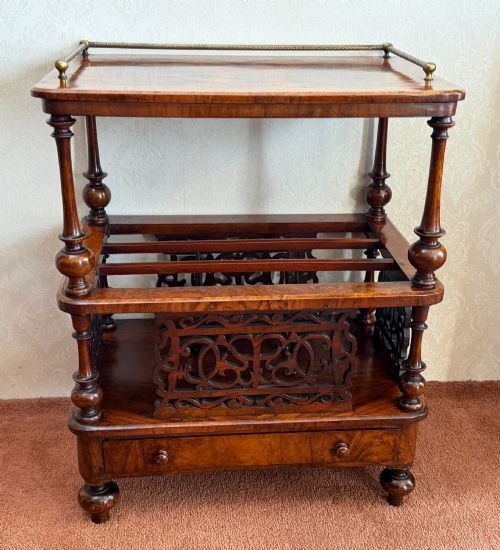
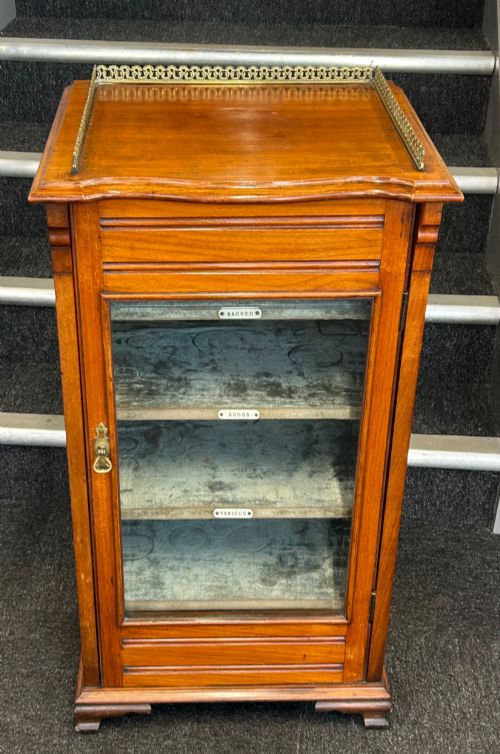
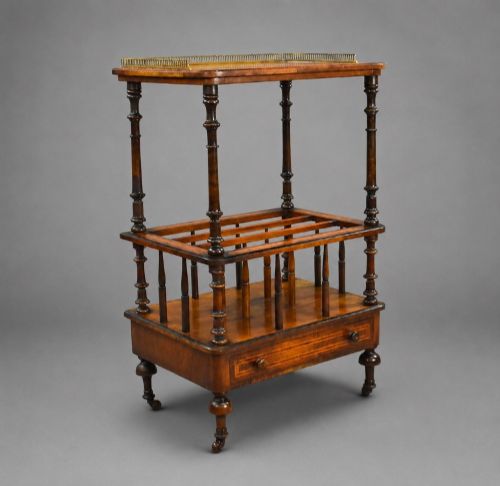
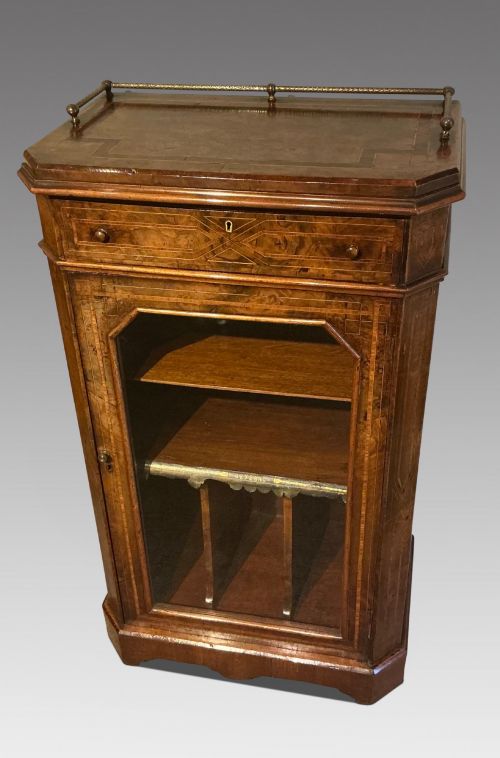
When you search for a brass gallery music stand, you are looking at sophisticated furnishings associated with Victorian, Edwardian, and Regency taste. The forms appearing on this page span music cabinets, canterburys, whatnots, etageres, and occasional tables, often featuring protective metal rails.
The version most commonly met here is the Victorian walnut music cabinet or burr walnut Canterbury, frequently enhanced with intricate inlay work. These pieces combine practical storage compartments for sheet scores with elegant display surfaces suitable for a formal parlour.
Originating from periods of meticulous craftsmanship, these furnishings range from compact occasional tables to multi-tiered display stands. Each surviving example demonstrates the functional elegance demanded by nineteenth and early twentieth-century musicians and collectors.
Materials and Construction
Cabinetmakers utilised rich timbers such as walnut, burr walnut, ebonised mahogany, and ebonised wood as the primary structural foundations. These woods were frequently selected for their striking grain patterns and finished with delicate boxwood stringing and decorative inlay.
Brass fittings, including the characteristic gallery rails, were integrated to secure items placed upon the upper tiers or display surfaces. Additional elements such as glass panels, fabric linings, and fitted shelves further enhanced the utility and visual appeal of the cabinets.
Brass Gallery Music Stand Retail Price Guide 2026
Typical asking prices for brass gallery music stand among the pieces listed under this phrase on Sellingantiques today, from the lower quarter to the upper quarter. They describe what is for sale here now, not the wider market.
Some Victorian cabinets doubled as discreet storage for piano rolls alongside standard sheet music.
Assessing Quality and Execution
Quality in these pieces is dictated by the selection of timber and the precision of the decorative inlays. Superior examples display carefully matched burr walnut veneers and crisp, uncompromised boxwood detailing across the panels and surfaces.
The refinement of the brass gallery work and the structural integrity of the internal shelving and divisions separate exceptional pieces from simpler utilitarian items. Master cabinetmakers ensured that joints remained tight and that secondary materials matched the quality of the primary timbers.
The Brass Gallery Music Stand Glossary
- Canterbury
- A low stand featuring partitions, originally designed to hold sheet music or folios beneath a small table surface.
- Etagere
- A set of open shelves for displaying small objects, popular in refined nineteenth-century interiors.
- Gallery
- A raised ornamental rail of pierced metal or wood fitted around the edge of a shelf or tabletop to prevent items from sliding off.
- Burr walnut
- A highly prized timber veneer taken from the growth growths of walnut trees, known for its swirling, intricate grain patterns.
- Stringing
- Thin lines of contrasting wood inlay used to outline panels and drawers on antique cabinetry.
Brass Gallery Music Stand: Frequently Asked Questions
What is a music cabinet?
A music cabinet is a specialised piece of furniture designed to store sheet music, folios, and scores in dedicated internal compartments or drawers.
During the Victorian and Edwardian eras, these cabinets kept heavy paper scores organised and protected in the home parlour.
How were canterburys used?
Canterburys served as mobile stands for holding sheet music and books close to a piano or seating area.
The vertical partitions kept scores upright and accessible for musicians during practice or evening entertainment.
What is a brass gallery?
A brass gallery is a decorative metal railing fitted to the perimeter of a tabletop or shelf.
Its original purpose was to keep items secure when the furniture was moved or when the surface was used for display.
How do I date these pieces?
Dating involves examining the secondary timbers, construction methods, and prevailing decorative styles such as Regency curves or Victorian inlay.
Mouldings, handle types, and the specific cut of the veneer offer further clues to the decade of manufacture.