
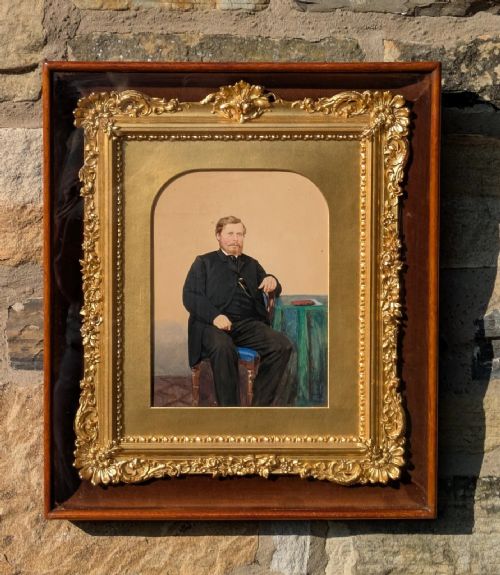


Victorian Shadow Portrait
These Victorian shadow portrait pieces capture likenesses in cut paper and ink, offering a direct window into nineteenth-century domestic life.
Victorian Shadow Portrait
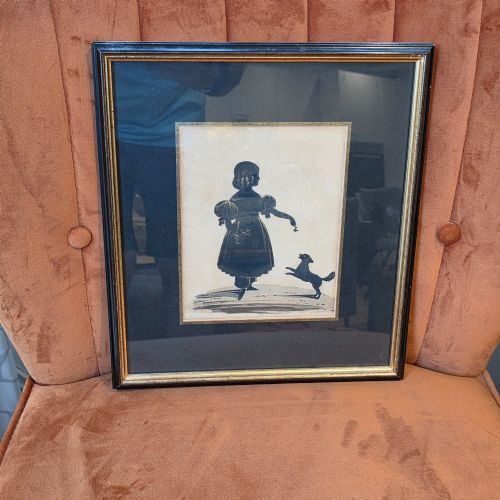
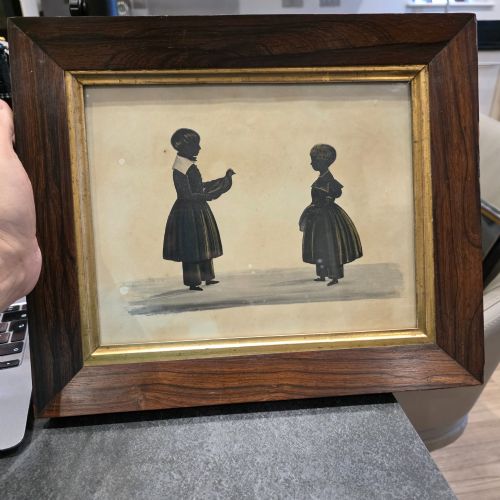
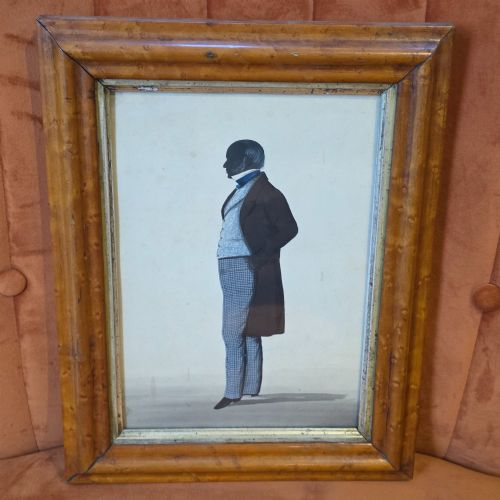
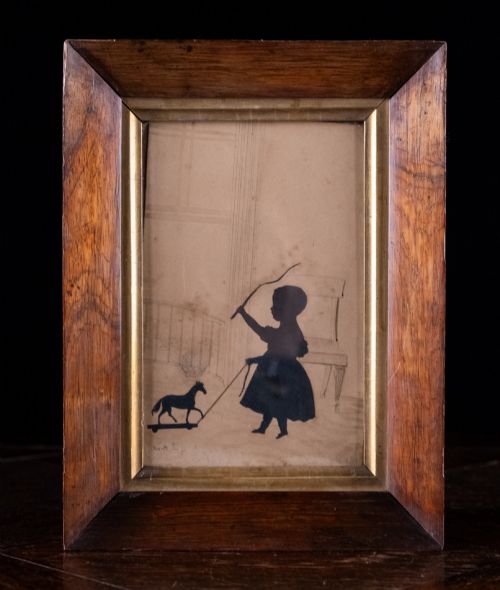
A victorian shadow portrait presents a profile likeness, most frequently executed as cut paper mounted against a contrasting background and displayed within a frame. The listings here comprise framed silhouette art, silhouette portraits, and framed artwork originating from the nineteenth century, including the Victorian era and the year 1880.
The forms span individual portrayals of gentlemen, ladies, and children, alongside conversation pieces depicting multiple figures, children with animals, and family groups. These works are predominantly encountered as framed silhouettes, utilising glass, paper, ink, wood, gold leaf, brass, rosewood, and gilt wood to enclose and protect the delicate paper work.
How they were made
Framing techniques matched the ambition of the portrait, employing deep glazed box frames, velvet mounts, rosewood, and gilt wood to house the paper artwork securely behind glass. Brass fittings and secure wooden backboards protected the fragile paper profiles from moisture and physical damage.
One industrious girl even managed to squeeze both a pet dog and a bird into her portrait silhouette.
What varies in quality
The precision of the hand-cutting dictates the distinction between standard profiles and superior examples, where fine details such as lace, facial expressions, and proportions remain crisp and deliberate. Well-executed works demonstrate exceptional knife control that captures the exact likeness and posture of the subject without hesitation.
The composition and framing further separate pieces, ranging from simple solitary profiles to complex conversation pieces involving multiple figures and animals. The preservation of the original paper, ink, and period framing materials, such as rosewood or deep gilt wood boxes, contributes substantially to the integrity of the piece.
William James Hubard·Augustin Edouart·Frederick Frith·Alfred Darbyshire·Skeolan
The Victorian Shadow Portrait Glossary
- Silhouette
- A portrait represented as a solid shape, usually a profile cut from black paper and mounted on a pale background. This form relies strictly on outline and shadow to convey identity.
- Conversation piece
- An artwork depicting a group of figures engaged in a narrative scene or daily activity together. These compositions show families, children, or animals interacting within a single frame.
- Cut paper
- An artistic technique involving the precise cutting of paper with scissors or a knife to form an image. In these portraits, the silhouette is formed entirely by the excised paper shape.
- Gilt wood
- Wood decorated with a thin layer of gold leaf or gilt paint. This material provides a reflective, ornate border often seen on nineteenth-century frames.
- Box frame
- A deep frame designed to create physical space between the glass and the backing board. This construction accommodates velvet mounts and prevents delicate paper elements from touching the glass.
Victorian Shadow Portrait: Frequently Asked Questions
What is a victorian shadow portrait?
A victorian shadow portrait is a framed silhouette depicting a person's profile, typically hand-cut from black paper and mounted on card or paper during the nineteenth century.
These pieces range from solitary portraits of ladies and gentlemen to complex family conversation pieces featuring animals and multiple figures.
How should I display these portraits?
Display these framed pieces away from direct sunlight to prevent the paper and ink from fading over time. Maintaining stable indoor humidity protects the delicate paper and nineteenth-century wooden frames.
Hang them at eye level on interior walls where the contrast of the cut paper profile remains clearly visible.
How do I identify the period?
Period identification relies on the framing materials, backing papers, and handwriting styles found on the reverse of the work. Nineteenth-century examples often feature rosewood frames, early brass hangers, and handwritten artist inscriptions.
Stylistic cues in clothing and hairstyles within the cut paper silhouette also provide clear chronological markers.
Are all silhouettes signed by the artist?
Many nineteenth-century silhouettes remain unsigned because artists often sold their work through galleries or travelling exhibitions without adding signatures. Attributions are frequently based on distinct cutting styles, historical records, or period framing.
Signed examples by known practitioners such as Augustin Edouart or William James Hubard carry explicit markers on the paper or backing.