
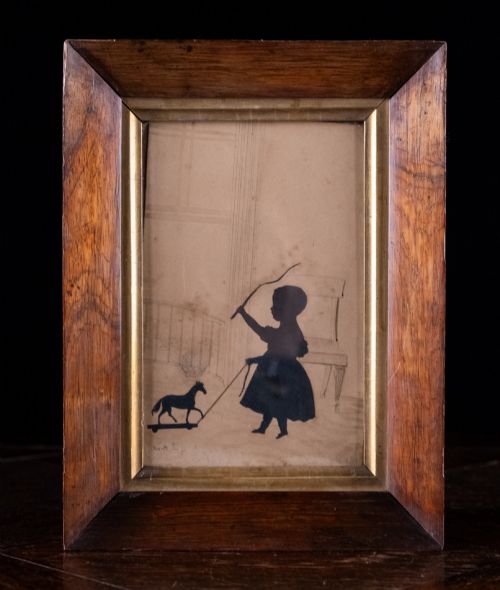


Regency Cut Shadow Portrait
Regency cut shadow portrait pieces are elegant works capturing profile likenesses in paper, offering a direct window into nineteenth-century life.
Regency Cut Shadow Portrait
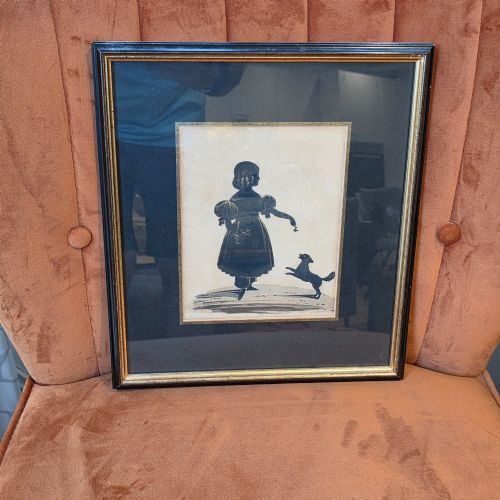
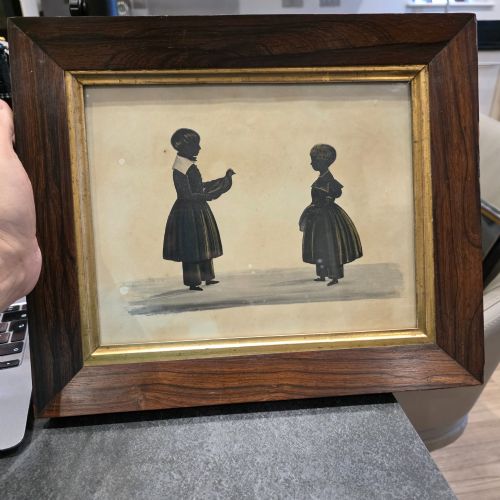
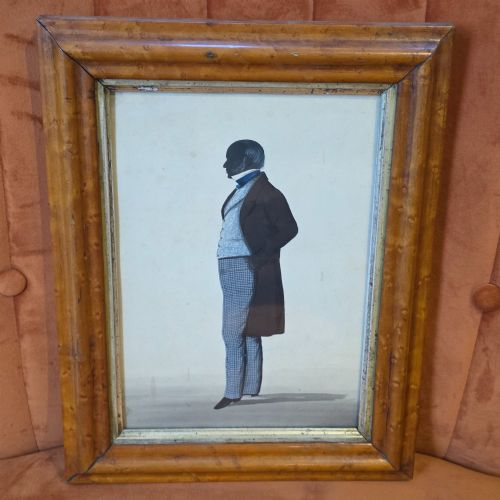
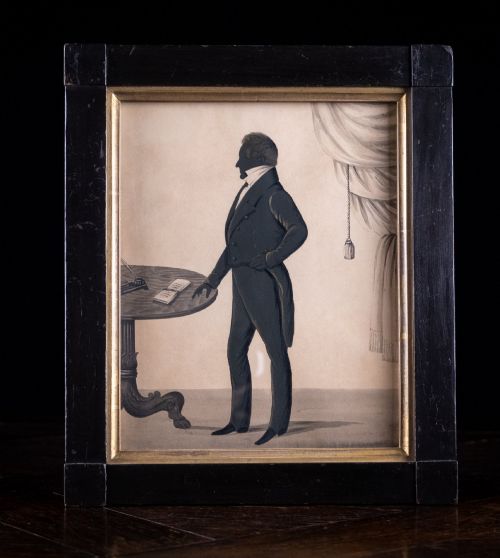
A regency cut shadow portrait presents a profile likeness of a person created through precise paper cutting, often enhanced with ink or gold leaf. These works capture gentlemen, ladies, children, and sometimes their pets in formal or domestic settings.
The pieces appearing on this page originate predominantly from the nineteenth century, including the Regency and Victorian eras, along with the year 1800. Wall art and framed artwork formats predominate, preserving these delicate paper profiles for display.
Materials and technique
Makers fashioned these portraits primarily from dark paper, cutting the likeness freehand with small scissors before mounting the silhouette onto a light background. Artists occasionally added ink details or highlights in gold leaf to delineate hair, costume, and accessories.
Finished paper profiles received protection behind glass within traditional frames made of wood, rosewood, maple, ebony, or brass. These housings preserved the fragile paper from moisture and dust over successive centuries.
Several silhouettes capture beloved household pets joining their owners, proving that nineteenth-century families were just as keen to immortalise their dogs.
Distinctions in quality
Quality rests in the precision and dexterity of the scissor work, where finer cuts reveal distinct facial expressions, intricate lace, and accurate costume details without tearing the paper. Superior examples maintain crisp edges and clean adhesion to the backing material.
The presentation contributes significantly to the overall merit, particularly when an authentic period frame such as rosewood or maple houses the artwork. Signed works or pieces bearing attribution to known practitioners elevate the historical standing of the portrait.
The Hubard Gallery London·William James Hubard·Augustin Edouart·Frederick Frith
The Regency Cut Shadow Portrait Glossary
- Silhouette portrait
- A profile likeness filled in with a solid dark colour, typically cut from paper or painted. This form became widely popular before the invention of photography.
- Gilded silhouette
- A paper profile enhanced with applied gold leaf to highlight clothing details, jewellery, or hair. This technique adds luminous contrast to the dark shadow.
- Hollow cut
- A silhouette method where the profile is cut out from a sheet of paper, leaving the surrounding mount to serve as the background.
- Portrait miniature
- A small-scale painting or artwork depicting a person. These delicate items were often framed for intimate domestic display.
Regency Cut Shadow Portrait: Frequently Asked Questions
How do I date a regency cut shadow portrait?
Dating relies heavily on costume details, hairstyles, and framing materials typical of the nineteenth century. Examining the construction of the wooden frame and any handwritten notes on the reverse often provides further chronological context.
Paper stock and mounting techniques also shift between the Regency period and later Victorian eras, offering additional clues to the age of the artwork.
How should I display these paper silhouettes?
Display portraits away from direct sunlight to prevent the paper from fading and the dark pigments from degrading. Maintaining stable indoor humidity protects the delicate paper and prevents warping within the frame.
Wall placement should avoid exterior walls where dampness might affect the antique wood frames and mounting boards.
What subjects appear in these portraits?
Subjects include individual gentlemen, ladies wearing period headwear such as turban caps, children, and family groups. Animals like dogs and horses also occasionally accompany the human subjects.
These compositions reflect the personal lives and social standing of sitters during the nineteenth century before photographic portraits became widespread.