


Framed Victorian Silhouettes
These framed victorian silhouettes capture likenesses in monochrome profile, offering direct glimpses into nineteenth-century lives through meticulous paper-cutting and ink work.
Framed Victorian Silhouettes
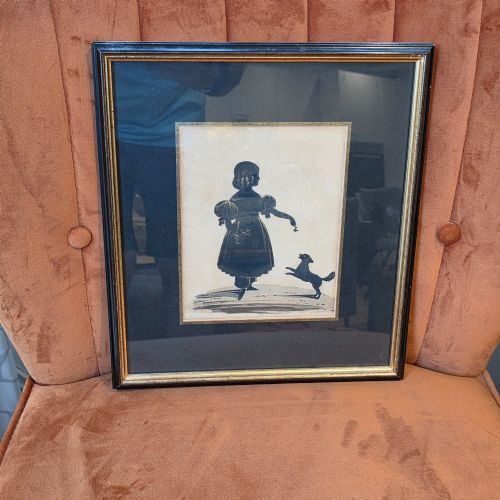
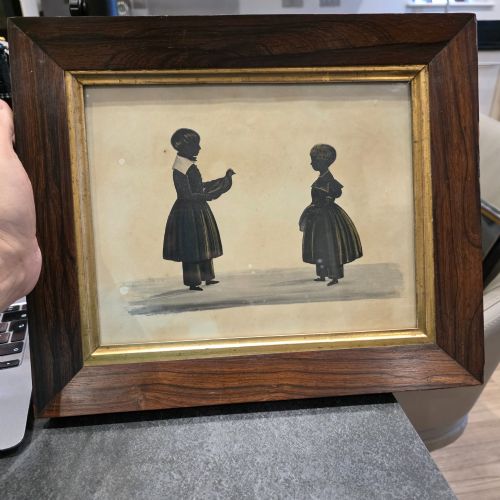
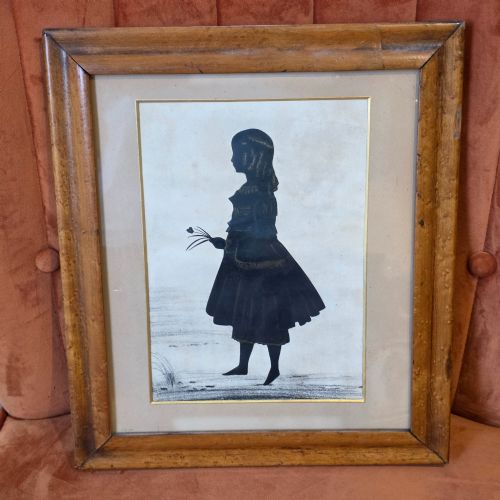
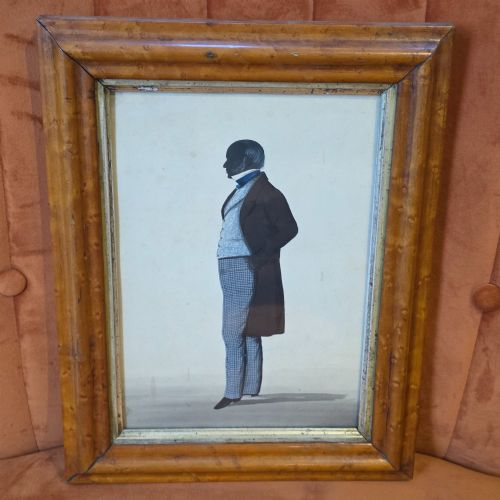
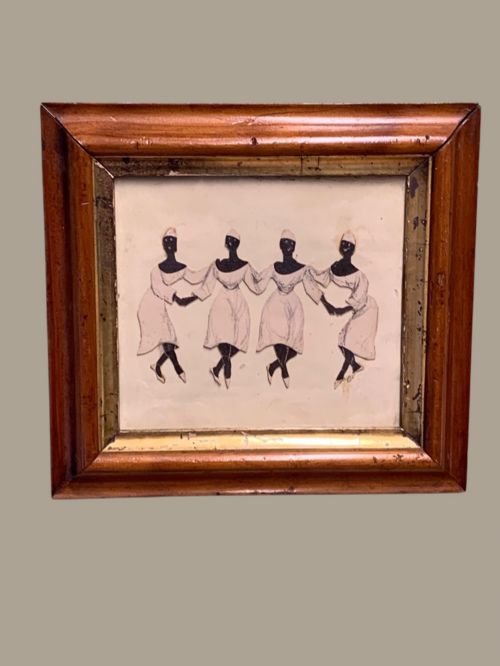
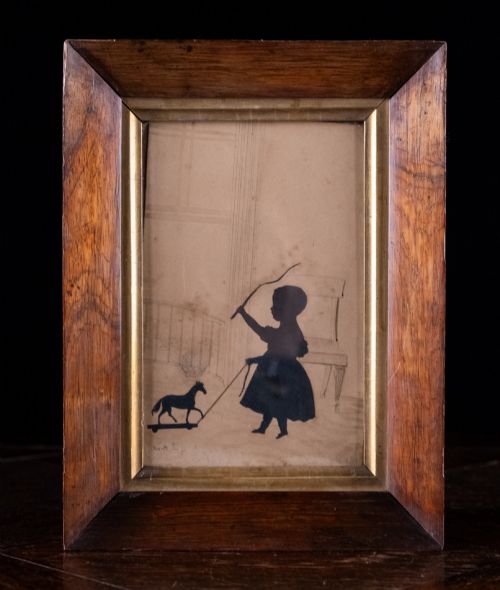
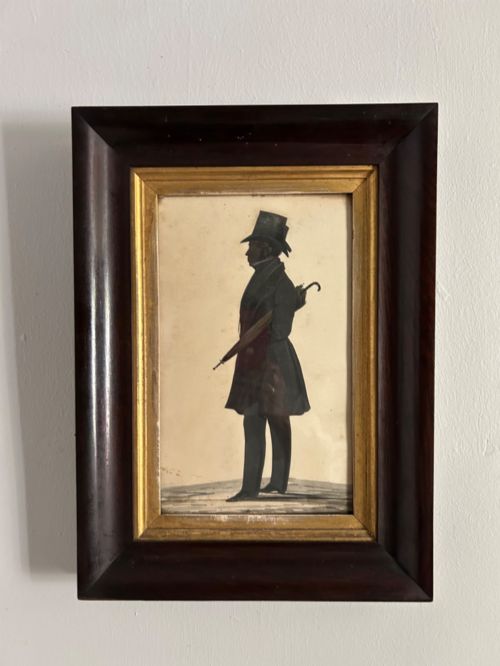
Framed victorian silhouettes present profile portraits and figures cut from paper, painted in ink, or rendered on glass from the nineteenth century. These works depict individuals, children, gentlemen, and family groups, frequently accompanied by animals or domestic settings.
The pieces appearing here span the nineteenth century, including Regency and early Victorian periods, alongside specific dates from the eighteen-fifties through eighteen-eighties. Buyers encounter full-length portraits, conversation pieces involving multiple figures, and reverse glass paintings.
Most examples arrive within wood or rosewood frames, often detailed with brass or gold leaf accents. They serve as historical portraiture that records personal appearance and social dress before the dominance of photography.
What varies in quality
The precision of the paper-cutting determines the sharpness of the profile, distinguishing delicate hand-cut execution from simpler work. Fine details in watercolour or ink, such as individual locks of hair or fabric folds, elevate the character of the portrait.
The composition of the scene influences the standing of the piece, as complex conversation pieces featuring multiple figures or animals demand greater skill than a standard bust. Original framing, particularly rosewood housings with intact brass fittings or gilt liners, preserves the historical integrity of the object.
Materials recorded across the inventory include glass, paper, wood, ink, gold leaf, brass, gilt, and rosewood.
William James Hubard·Augustin Edouart·Frederick Frith·Alfred Darbyshire·Skeolan
The Framed Victorian Silhouettes Glossary
- Silhouette
- A portrait or scene represented as a solid shape, usually black, showing the profile of a subject. This form derives its name from Étienne de Silhouette and became popular for affordable likenesses.
- Conversation piece
- An informal painting or artwork showing a group of figures engaged in a social setting or daily activity. In silhouette work, this involves multiple people and animals interacting within a framed narrative.
- Reverse glass painting
- An artwork created by applying paint to the reverse side of a glass sheet so the image is viewed through the front. This technique gives the surface a glossy finish and protects the pigment.
- Cut paper
- An artistic method where shapes are formed by snipping paper with scissors or cutting with a blade rather than drawing lines. Portraitists achieved remarkable likenesses through this deft manual skill.
- Gilt
- A thin layer of gold applied to wood, metal, or glass surfaces for decoration. It frames and highlights the dark silhouette profile.
Framed Victorian Silhouettes: Frequently Asked Questions
How do I date a silhouette?
Dating relies on the costume, hair style, and framing materials visible in the piece. Regency examples display distinct high-waisted fashions, while later Victorian items show crinolines or mid-century tailoring.
Inscribed paper backs, artist signatures, or framer labels also help establish a precise decade within the nineteenth century.
Are these portraits original?
The pieces presented here are period works created in the nineteenth century using traditional hand-cut paper and ink techniques. Each item represents a unique likeness produced by contemporary practitioners of the art.
Makers often signed their work directly on the paper or noted their studio locations on the reverse.
How should I hang them?
Display these framed works away from direct sunlight to prevent the paper from fading and the watercolour pigments from degrading. Consistent indoor humidity protects the delicate paper and wooden frames.
Grouping smaller silhouettes together creates a traditional gallery arrangement reminiscent of nineteenth-century parlor displays.
What is a conversation piece?
A conversation piece is a detailed artwork showing multiple people, children, or animals interacting in a shared domestic or outdoor scene. These compositions tell a wider story about family life and social status than a single portrait.
They require advanced skill to arrange and cut multiple figures within a single frame.