





Vintage Profile Silhouette Artwork
These vintage profile silhouette artwork pieces offer striking monochrome likenesses that bring genuine historical character and intimate human presence into any room.
Vintage Profile Silhouette Artwork
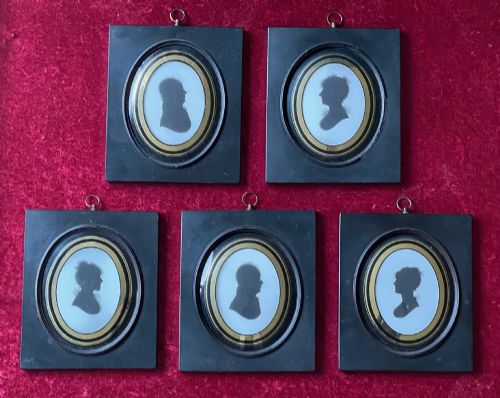
Vintage profile silhouette artwork encompasses framed portrait miniatures and wall art created across the eighteenth, nineteenth, and early twentieth centuries. These pieces capture the outline of a sitter, most frequently rendered in ink, paper, or watercolour.
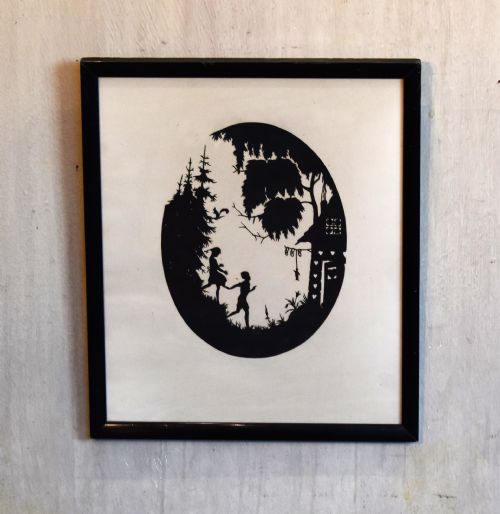
Collectors looking at this page are most likely to meet nineteenth-century examples, including Regency cut-paper portraits and Victorian framed silhouette art. The selection also includes folk art interpretations and narrative scenes such as Gothic Hansel and Gretel compositions.
The forms range from single gentleman and lady portraits to full-length studies of young girls, children with animals, and multi-figure family groups. Originating as a popular form of portraiture before the widespread adoption of photography, these works preserve individual identities through careful hand-cutting and painting.
How they were made
Makers produced these profiles using cut paper, ink, and watercolour applied to a contrasting ground, frequently housed behind glass within maple or gilt wood frames. Artists worked with scissors or knives to freehand the likeness from black paper before mounting it.
Vintage Profile Silhouette Artwork Retail Price Guide 2026
Typical asking prices for vintage profile silhouette artwork among the pieces listed under this phrase on Sellingantiques today, from the lower quarter to the upper quarter. They describe what is for sale here now, not the wider market.
Some nineteenth-century artists managed to capture the likeness of family pets alongside their owners, ensuring even the household dog joined the portrait session.
What varies in quality
The precision of the cutting and the crispness of the profile outline distinguish superior examples from simpler pieces. Master practitioners achieved remarkable likenesses and subtle anatomical accuracy through sheer dexterity with the blade.
The sophistication of the backing materials, the presence of original gilding on the glass or frame, and the inclusion of contemporary watercolour highlights elevate certain works. Signed pieces or those attributed to accomplished profilists command greater attention from collectors.
Bateman·Augustin Edouart·Alfred Darbyshire·John Smith of Edinburgh
The Vintage Profile Silhouette Artwork Glossary
- Silhouette
- A portrait represented as a solid shape of a single colour, usually black, showing the profile view of a subject. This form of art relies entirely on contour and outline to convey identity.
- Cut-paper
- An artistic technique where the image is formed by cutting shapes out of paper using small scissors or blades. The resulting silhouette is then mounted against a lighter background.
- Gilt wood
- Wood that has been covered with a thin layer of gold leaf or gold paint. This finish was commonly applied to frames to add warmth and status to the artwork.
Vintage Profile Silhouette Artwork: Frequently Asked Questions
What is vintage silhouette art?
Vintage silhouette art consists of profile portraits cut from paper or painted on card during the eighteenth, nineteenth, and early twentieth centuries.
These pieces use shadow and outline to record the likeness of sitters before photography became common.
How were old silhouettes framed?
Old silhouettes were typically framed behind protective glass in timber surrounds such as maple or gilt wood. Many feature eglomisé glass with painted gold borders to frame the central profile.
The materials were chosen to protect the delicate paper and ink from environmental damage over time.
Who made these profile portraits?
Profile portraits were created by professional profilists, travelling artists, and skilled amateurs working in studios or domestic settings.
Some prominent practitioners signed their work or left identifying marks on the reverse of the frames.
How do I date a silhouette?
Dating a silhouette involves examining the costume and hairstyle of the sitter, the framing materials, and any handwritten notes on the back. Regency and Victorian styles exhibit distinct differences in dress and framing techniques.
Comparing the paper type and cutting style to dated examples helps narrow down the period of creation.
Where should I hang silhouettes?
Silhouettes look best hung in groups on a gallery wall or displayed individually in smaller spaces where their fine detail can be appreciated up close. They complement traditional period interiors as well as modern rooms.
Avoid placing them in direct sunlight to protect the paper and watercolour pigments from fading.