




Victorian Server Trolley
A victorian server trolley brings tiered shelving and practical mobility together, offering a versatile piece that every dining room needs for service.
Victorian Server Trolley
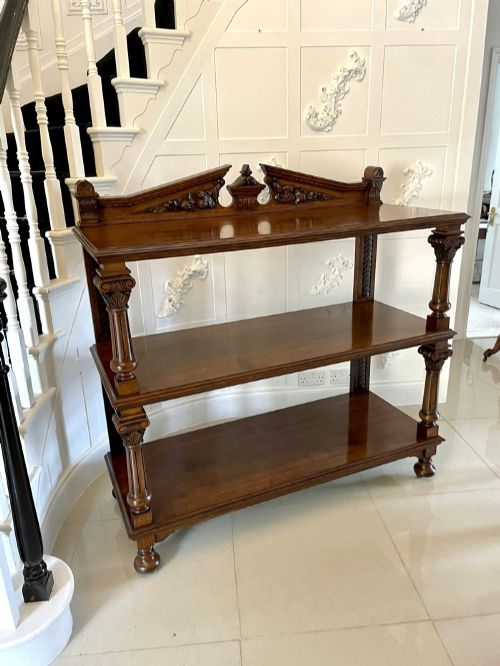
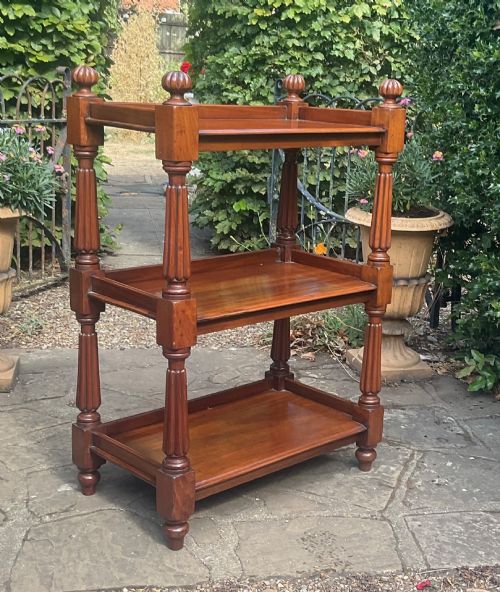
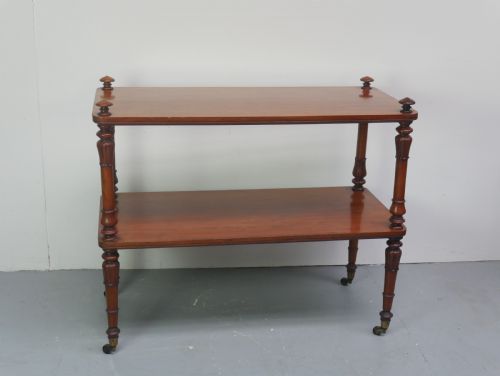
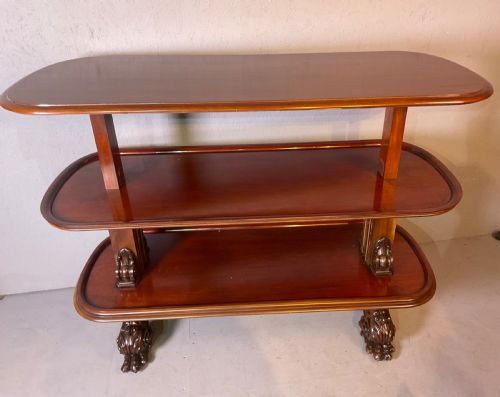
A victorian server trolley encompasses multi-tiered dumbwaiters, buffets, and étagères designed for practical service in nineteenth-century dining rooms. Buyers seeking a victorian server trolley will encounter predominantly three-tier mahogany and walnut structures fitted with original castors.
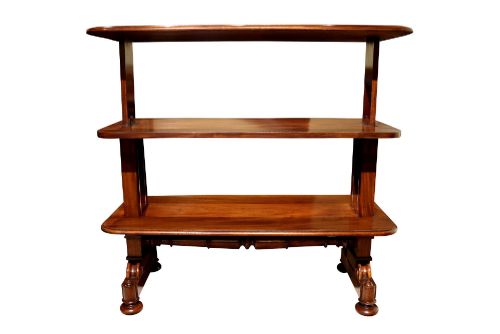
The form spans straightforward static shelves alongside complex metamorphic and rise-and-fall examples that adjust in height. These pieces bridge the gap between heavy sideboards and mobile serving tables, operating with mechanical ingenuity.
Materials and construction
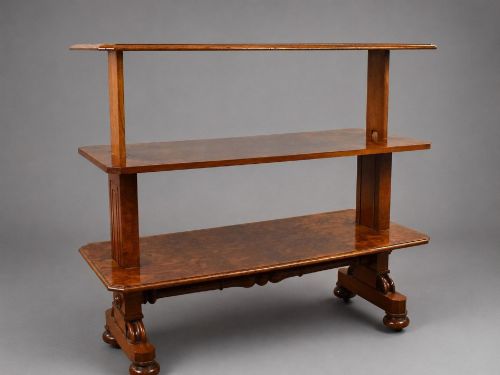
Makers utilised dense timbers like mahogany and walnut, frequently selecting burr walnut veneers for rich figuring across the tiers. Ebonised wood and carved oak also appear, providing heavier alternative finishes for period interiors.
Castors made of brass support the base of these mobile pieces, allowing smooth movement across dining room floors. Telescopic mechanisms and rise-and-fall actions incorporate robust internal engineering to sustain heavy service use.
Assessing construction and mechanics
The sophistication of the lifting mechanism dictates the tier of quality in adjustable dumbwaiters and rise-and-fall buffets. Smooth, reliable movement in the telescopic action separates standard shelves from superior metamorphic examples.
Timber selection and the depth of carving define the visual standard across these serving pieces. Fine figuring in walnut or burr walnut paired with original brass castors elevates the piece beyond utility into high craftsmanship.
Maple & Co
The Victorian Server Trolley Glossary
- Dumbwaiter
- A multi-tiered serving stand used to hold dishes and silverware without the need for a servant during meals. These items feature two or three levels supported on central columns or corner posts.
- Étagère
- A set of open shelves for displaying small objects or serving items. This French-derived form offers lighter proportions than a traditional buffet.
- Rise and fall
- A mechanical function allowing tiers to adjust in height via a central screw or ratchet mechanism. This innovation enabled the furniture to adapt during service.
- Metamorphic
- Furniture designed to transform from one form or height into another through clever hidden joints. These pieces combine multiple functions into a single footprint.
- Castor
- A small wheel mounted on a swivel attached to the base of furniture for easy rolling. Original brass examples enhance both mobility and period authenticity.
Victorian Server Trolley: Frequently Asked Questions
What is a victorian server trolley?
A victorian server trolley is a multi-tiered mobile piece of dining room furniture designed to hold dishes, glassware, and silverware.
These items range from simple three-tier mahogany stands to complex metamorphic and rise-and-fall dumbwaiters.
How were these trolleys used?
They served as auxiliary tables during formal meals to hold courses, plates, and bottles close to the dining table.
By keeping serving items accessible on mobile shelves, hosts could manage dining rooms with fewer attendants.
How do I date a victorian server trolley?
Dating relies on identifying timber choices, stylistic markers such as Aesthetic Movement details, and mechanical patents.
Pieces span from the William IV era through the late nineteenth century, showing shifts from heavy mahogany to figured walnut and ebonised finishes.
Do the tiers adjust in height?
Certain examples feature rise-and-fall mechanisms or telescopic columns that alter the vertical distance between shelves.
These adjustable versions allow the furniture to adapt to different serving heights and clearance requirements.
How do I care for the wood?
Maintain the mahogany or walnut surfaces by keeping them away from direct heat sources and sudden humidity changes.
Apply traditional wax polish sparingly to nourish the timber grain and preserve the original finish.