



Victorian Servant Bell
These Victorian servant bell pieces summon household staff from another room, offering tangible links to grand historic domestic interiors.
Victorian Servant Bell
When you search for a victorian servant bell, you encounter mechanical systems and signaling devices designed for communication within large houses. The selection ranges from wall mounted units and floor mounted gongs to intricate desk bells and name plates.
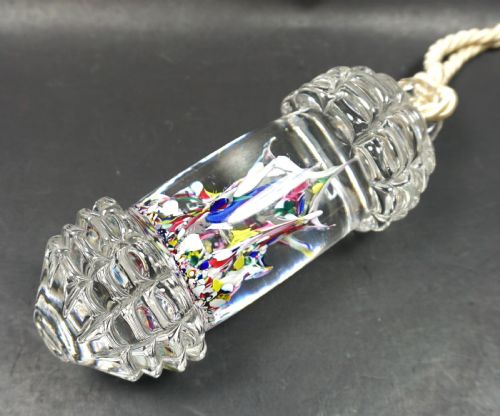
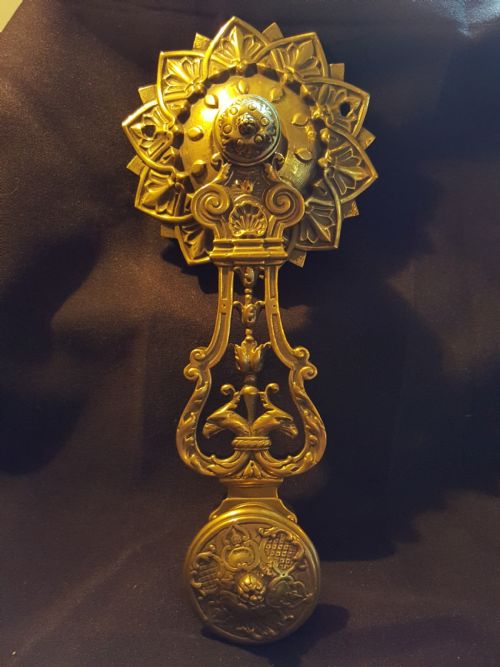
You are most likely to meet wall mounted brass and cast iron bells, alongside mechanical pulls constructed from glass, silk, or wrought iron. These items originate from the Victorian and Georgian eras, spanning the nineteenth century.
How they were made
Maker construction combines cast brass, wrought iron, and oak panels to house the striking mechanisms. These metals provide the durability required for daily mechanical use.
Flexible elements utilise cord, rope, hand embroidered silk, and beadwork to transmit the pull action across the room. Horn and glass appear as decorative details on handles and ringers.
Materials across the listings include brass, cast brass, glass, cord, wrought iron, bronze, rope, and oak.
What varies in quality
Quality depends on the complexity of the mechanical action and the preservation of original boards and mountings. Complete sets mounted on mahogany or pine boards demonstrate higher integrity than isolated components.
Artistry in the casting of brass brackets and the intricacy of beadwork on silk pulls separate standard utility items from finer domestic examples.
The Victorian Servant Bell Glossary
- Bell pull
- A hanging strap or cord connected to wirework that activates a remote bell. These often feature silk, glass, or bead embroidery.
- Dinner gong
- A suspended metal disc or tube struck with a mallet to announce meals. They frequently incorporate oak frames and brass fittings.
- Desk bell
- A compact spring loaded counter bell used in reception areas or large country houses. They date primarily to the late nineteenth century.
- Name plate
- An inscribed indicator identifying the specific room or caller. Sets of these panels originated in large estates such as Gunton Hall.
Victorian Servant Bell: Frequently Asked Questions
How did servant bells work?
These mechanical systems relied on a network of wires, cranks, and springs connecting a pull in one room to a bell hanging elsewhere. Pulling the cord caused the attached bell to strike and swing.
Indicators on a central board would then show staff precisely which room required attention.
Where were they placed in houses?
Bells and gongs hung in dedicated servants quarters or kitchens where staff could hear the summons promptly. Pulls were mounted beside fireplaces or dining tables in the principal rooms.
Desk bells sat upon reception counters or butler pantries for immediate local alerts.
Can these bells still ring today?
Many surviving brass bells and desk mechanisms retain their original striking capability when triggered manually. Wall mounted units mounted on boards remain fully functional acoustic pieces.
Complex internal wire runs inside walls require restoration if you wish to connect pulls to remote bells.
How do I identify a Victorian piece?
Victorian examples display characteristic heavy cast brass construction, iron brackets, and specific nineteenth century manufacturing marks. Mahogany or pine mounting boards often accompany multi bell sets from this era.
Stylistic details like French Rococo Revival ornamentation also help date specific hardware components.