



Brass Servant Bell
A brass servant bell brings tactile Victorian and Georgian charm into your home, offering a mechanical connection to the past through cast metal and polished metalwork.
Brass Servant Bell
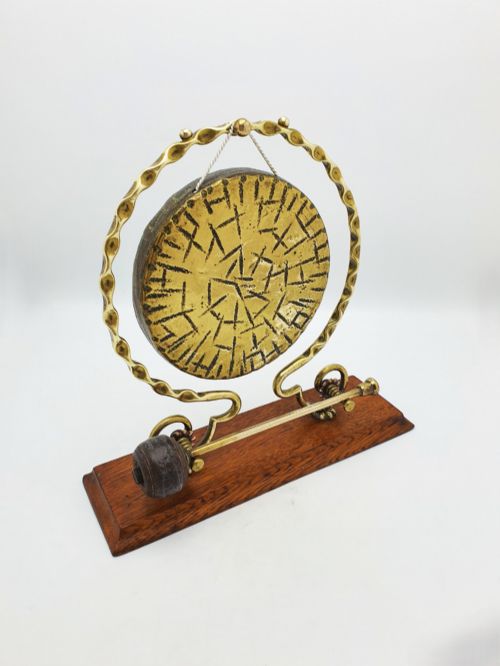
A brass servant bell encompasses utilitarian door hardware, wall-mounted gongs, and desk counter reception pieces designed for historical communication within a house. When you search for a brass servant bell, you will encounter diverse forms including wall bells, bell pulls, and dinner gongs mounted on oak bases.
The Victorian and Georgian periods dominate the selection, bringing substantial metalwork and architectural hardware into domestic spaces. You are most likely to meet wall-mounted servant bells featuring cast iron and brass assemblies, alongside handheld bell ringers and desk counters.
Country house pieces occasionally feature hand-embroidered silk and bead bell pulls with cord and wool, reflecting the elaborate interior schemes of the nineteenth century. Alternatively, simpler table bells and tavern candlesticks provide straightforward desktop functionality.
How they were made
Makers utilised cast brass and cast iron to create the robust mechanisms and structural plates necessary for daily use. Oak bases provided stable mountings for dinner gongs and wall chimes, combining dense timber with resonant metal.
Textile elements in bell pulls incorporated hand-embroidered silk, glass beads, cord, and wool to create decorative hanging pulls that connected rooms to mechanical bells. Metalwork involved casting and turning brass components to achieve ornate shapes and smooth operating actions.
Listings feature Victorian, Georgian, and 1920s periods, incorporating brass, oak, cast iron, silk, and glass beads across various hardware forms.
What varies in quality
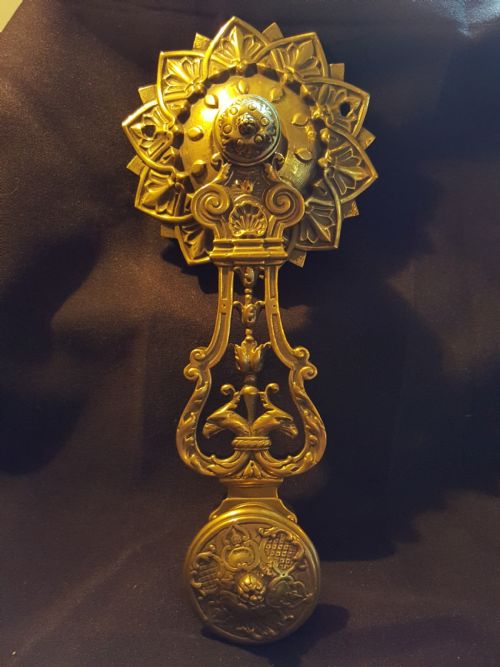
The distinction between ordinary utility items and superior pieces lies in the crispness of the brass casting and the intricacy of period ornamentation, such as French Rococo Revival detailing. Simpler utilitarian door hardware prioritises sturdy cast iron and plain brass construction over decorative flourish.
Material combination also defines the standard of a piece, where solid oak mounts, horn accents, or complex silk and beadwork elevate domestic hardware into refined decorative art. Fully restored mechanical actions demonstrate greater care in preservation than incomplete assemblies.
The Brass Servant Bell Glossary
- Bell pull
- A hanging strap or cord connected to a mechanical wire system that rang a servant bell in another part of the house. These often featured embroidered silk and glass beads.
- Dinner gong
- A resonant metal disc or tube struck with a handheld mallet to announce meals in country houses. They frequently sat upon fitted oak bases.
- Desk bell
- A compact table-mounted mechanism used in hospitality and domestic settings to summon attention with a quick press or strike. They appear in Victorian desk counter styles.
- Architectural hardware
- Functional metal fixtures built into the structure of a building, including door pulls and wall bells. These reflect the period style of their installation.
- Cast brass
- Molten brass poured into a mould to create solid, shaped components with detailed surface relief. This technique produced ornate bell ringers and brackets.
Brass Servant Bell: Frequently Asked Questions
How did a servant bell system work?
A servant bell operated via mechanical wires and pivots connected from rooms throughout a house to a central panel of bells. Pulling a hanging strap or lever caused the corresponding bell to ring.
Most domestic setups utilised wall-mounted bells in kitchens or basements to alert staff which specific room required attention.
Where were brass gongs used?
Dinner gongs were placed in hallways or dining rooms of country houses to sound signals for meals and gatherings. They relied on a handheld striker to produce a resonant tone.
These larger pieces combined brass hanging plates with wooden oak bases to enhance acoustics and visual presence.
How do I date a brass bell?
Dating relies on stylistic clues, manufacturing techniques, and materials associated with Georgian, Victorian, or Edwardian periods. Ornate Rococo Revival motifs and heavy cast iron components often point to nineteenth-century production.
Maker methods and accompanying materials like hand-embroidered silk help narrow the origin to specific decades.