



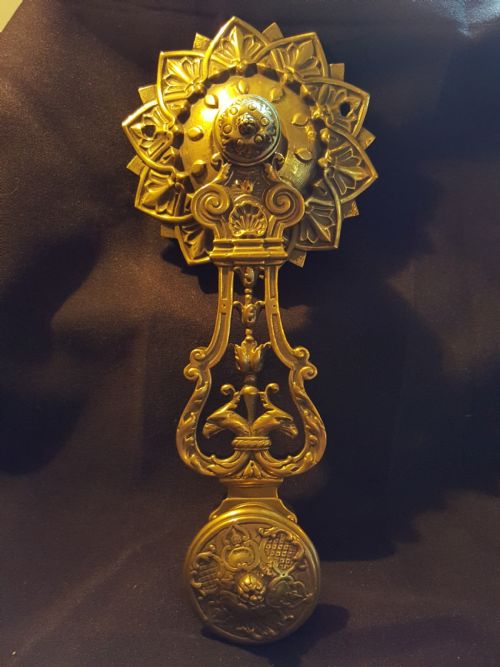


Antique Bell Pull
An antique bell pull summons service with period style, bringing tactile brass and textile charm to a traditional doorway.
Antique Bell Pull
An antique bell pull functions as mechanical door hardware designed to ring a household bell before the advent of electricity. These architectural fittings range from robust Georgian and Victorian brass handles to elaborate hand-embroidered textiles.
Buyers meet varied forms across this selection, including solid brass levers, cast brass ringers, and long hanging pulls adorned with glass beads. Origins span British country houses and continental workshops from the Georgian period through the late nineteenth century.
The objects serve as functional items and decorative wall accents that reflect the domestic organisation of historic estates. Each surviving example demonstrates the specific mechanical needs of summoning servants in large rooms.
How they were made
Maker construction combines cast brass mountings with flexible hanging materials like cord, silk, and wool. Metal elements utilise durable brass and horn, shaped into ornate plates and gripping handles through period foundry methods.
Textile versions incorporate detailed hand embroidery using silk and glass beads to create long decorative panels. These fabric sections attach to wall cranks and internal wire systems via sturdy mounting loops.
Some nineteenth century bell pulls measure up to one hundred and fifty centimetres long, ensuring servants heard the summons from distant kitchens.
What varies in quality
Quality rests in the weight of the metal casting and the intricacy of the decorative surface work. Heavier brass mountings with deep relief ornamentation separate standard utilitarian hardware from finer domestic pieces.
Textile examples depend on the tightness of the needlework and the preservation of the delicate silk and bead components. Complete assemblies retaining their original mechanics show superior historical integrity.
The Antique Bell Pull Glossary
- Bell Ringer
- An architectural hardware fitting mounted beside a door to strike a mechanical bell. This term often describes compact brass pulls rather than hanging straps.
- Silk and Bead
- A textile construction method using needlework and glass beads on a fabric backing. These materials create flexible hanging pulls typical of mid-nineteenth century country houses.
- Georgian
- A design period spanning the eighteenth and early nineteenth centuries characterised by classical proportions. Hardware from this era displays restrained brass casting and balanced geometric forms.
- Victorian
- A nineteenth century stylistic era known for ornate revival designs. Pieces from this time often feature heavy ornamentation and French Rococo influences.
Antique Bell Pull: Frequently Asked Questions
How did bell pulls work?
These mechanisms connected a handle or hanging strap near a room's entrance to a mechanical bell hung below stairs. Pulling the handle operated a system of cranks and wires that sounded the alarm.
Servants relied on this audible signal to identify which specific room required attention in large houses. The hardware formed an essential part of historic domestic communication networks.
Can I install an antique bell pull?
Many surviving examples work well as decorative wall hangings rather than active mechanical linkages. Modern interior walls rarely accommodate the historical wire and crank systems required for operation.
Collectors frequently mount them as architectural accents alongside period doorways. Some brass handles can be adapted for modern doorbells with careful restoration.
What materials are used?
Construction relies heavily on cast brass, horn, and durable metals for the mounting plates and gripping handles. These rigid components often pair with flexible hanging elements.
Fabric versions incorporate silk, wool, cord, and glass beads stitched onto strong backings. The combination depends on whether the piece was meant for a formal parlour or a utilitarian corridor.
How do I date a bell pull?
Dating relies on stylistic clues found in the brass casting and textile patterns. Georgian examples show simpler classical lines, while Victorian pieces often display heavier ornamentation or French revival details.
Materials such as hand-embroidered silk beadwork point directly to mid-nineteenth century production methods. Comparing the form against established period hardware styles clarifies the age.