


Victorian Semainier Chest
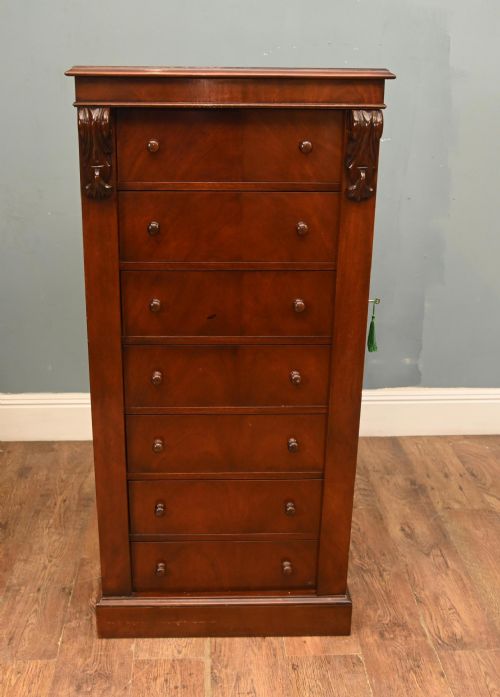
A victorian semainier chest is a tall, narrow drawer unit designed to hold a week of linen, offering considerable storage without taking up floor space.
Victorian Semainier Chest
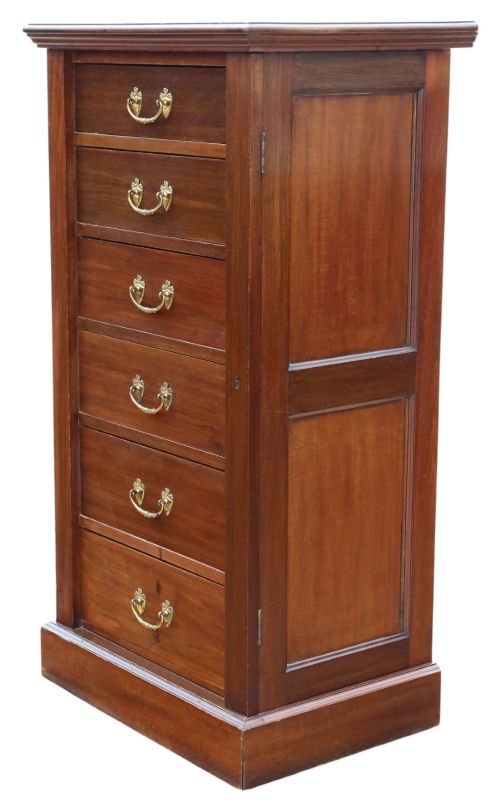
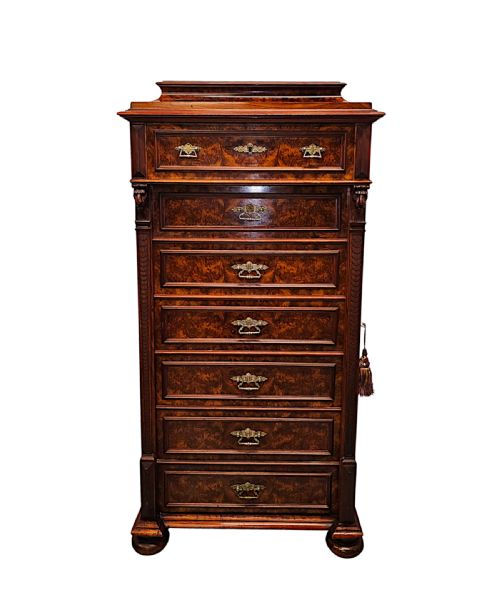
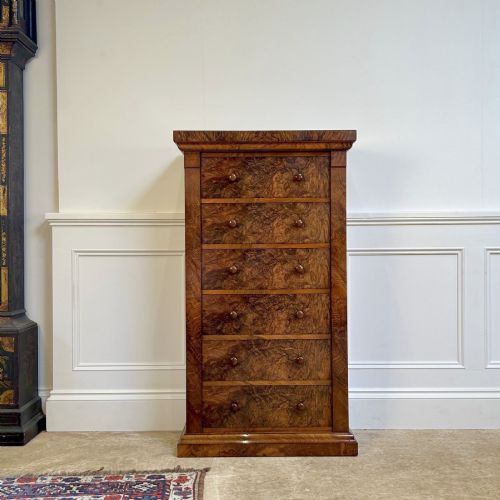
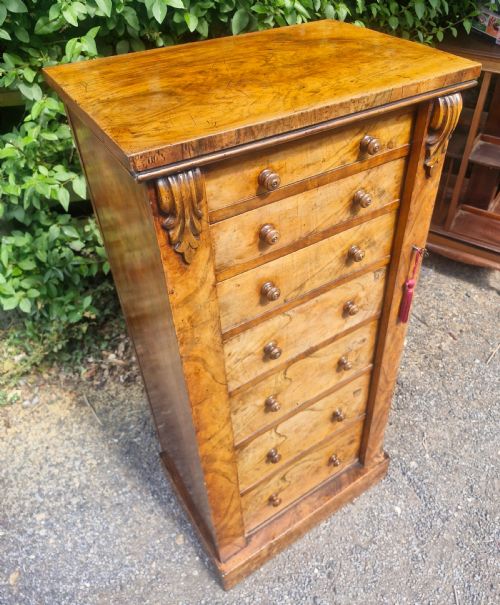
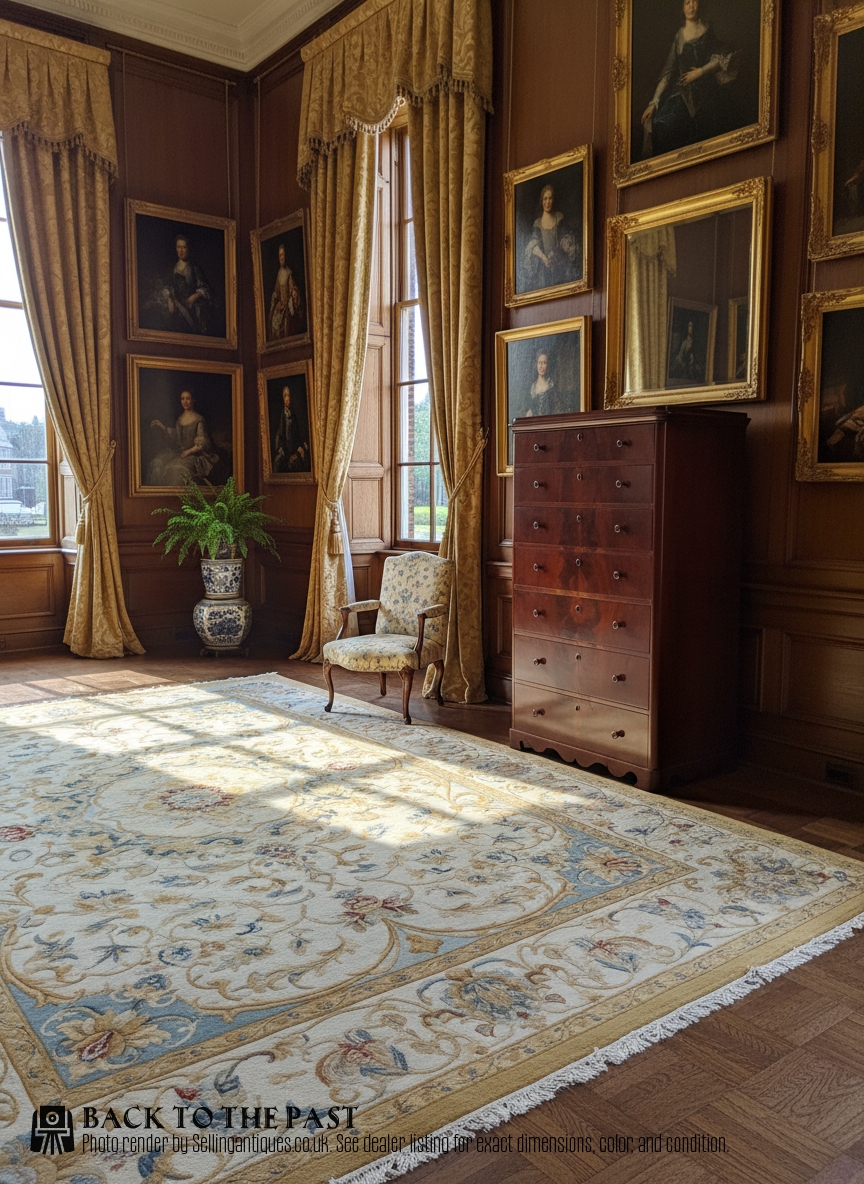
A victorian semainier chest stands tall and slender, usually containing seven drawers corresponding to the days of the week. Most examples found here date from the nineteenth century, often appearing as Wellington chests or tall narrow pedestal pieces.
The form prioritises vertical capacity over floor area, making these pieces suitable for compact rooms or dressing spaces. Alongside traditional British mahogany and walnut, continental pieces sometimes introduce marquetry or ormolu mounts to the tall silhouette.
Makers utilised locking mechanisms, such as a hinged side stile secured by a key, to protect the contents of every drawer simultaneously. Buyers will encounter various iterations, including pieces featuring secret locks, marble tops, or an integrated secretaire drawer.
Materials and construction
Cabinetmakers constructed the carcassing primarily from pine, applying dense hardwoods such as mahogany, walnut, or burr walnut as fine veneers to the exterior surfaces. Flame mahogany and figured walnut were selected for their striking grain patterns, which were carefully matched across the drawer fronts.
Structural integrity relied on dovetailed drawer construction and robust vertical stiles, one of which pivoted or lifted to release the locking bar. Brass fittings, ormolu mounts, and occasionally marble tops completed the construction of these substantial tall chests.
Listings feature pieces spanning the nineteenth century into the Edwardian era, incorporating mahogany, walnut, satin birch, and rosewood.
Distinctions in quality
Quality rests upon the choice of timber veneer and the precision with which the grain matches across the elevation of the chest. Finer examples display symmetrical burr walnut or rich flame mahogany rather than plain or uniform boards.
The complexity of the mechanism also defines the tier of the piece, particularly the smooth operation of the locking side stile and its original key. Secondary timbers inside the drawers and the crispness of any applied marquetry or ormolu further separate standard workshop production from finer cabinet work.
Gillows
The Victorian Semainier Chest Glossary
- Semainier
- A tall, narrow chest traditionally featuring seven drawers, one for each day of the week. This French form shares characteristics with the British Wellington chest.
- Wellington chest
- A sturdy tall chest of drawers featuring a hinged locking stile on one side that secures all drawers at once. It originates from the nineteenth century.
- Burr walnut
- Timber taken from a tree growth that produces intricate, swirling grain patterns. Cabinetmakers prized this material for high-status drawer fronts.
- Ormolu
- Gilt-bronze mounts applied as decorative ornaments to furniture. They appear on select continental pieces.
- Secretaire
- A drawer fitted with a drop-front writing surface and small internal compartments. It adds a desk function to the upper section of a tall chest.
Victorian Semainier Chest: Frequently Asked Questions
How were semainier chests used?
These tall chests were originally designed in France and Britain to hold a week's supply of undergarments or linens, with each drawer dedicated to a specific day.
Over time, their compact footprint made them practical for bedrooms and dressing rooms where floor space was limited.
What is a locking stile?
A locking stile is the vertical wooden bar on the side of a Wellington chest that secures all the drawers when locked in place.
This mechanism required the top drawer to be opened first before the side bar could swing free.
How do I date a Victorian piece?
Dating relies on observing timber choices, construction methods like hand-cut dovetails, and stylistic influences ranging from William IV to late Victorian.
Secondary woods inside the drawers and the presence of original locks also help establish the approximate decade of manufacture.
Where should I place a tall chest?
Their narrow profile allows them to fit easily into alcoves, tight corners, or beside a bed where a wider chest would not go.
Ensure there is sufficient clearance beside the piece for any hinged locking stile or side-opening mechanism to operate freely.