


Victorian Seed Pearl Ring
A victorian seed pearl ring brings together delicate natural lustre and warm gold, offering subtle charm for everyday wear.
Victorian Seed Pearl Ring
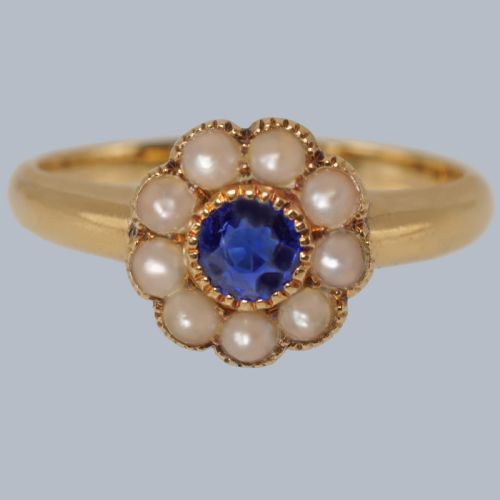
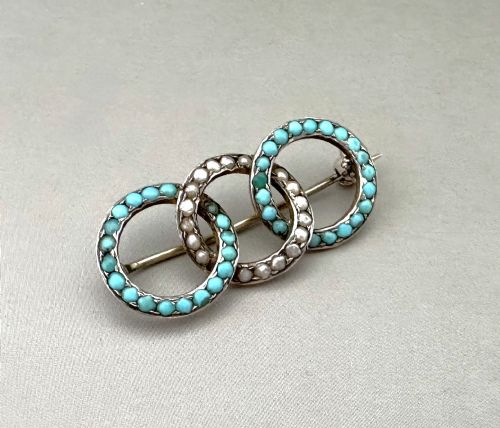
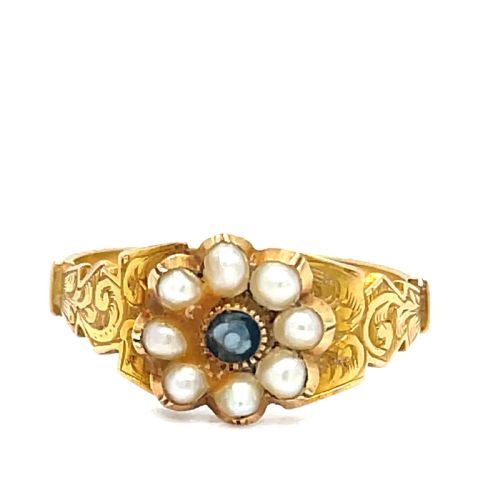
A victorian seed pearl ring consists of tiny, finely matched pearls set into gold bands or clustered around coloured stones. The listings show these pieces appearing predominantly in Victorian and Edwardian periods, alongside occasional later items.
Buyers will most frequently encounter cluster configurations where pearls surround amethysts, turquoise, garnets, or rubies. Band rings and navette designs also appear, frequently incorporating split pearls or seed pearls alongside various gemstones.
The materials span different gold purities including nine carat, fifteen carat, and eighteen carat, as well as silver gilt and platinum settings. Beyond rings, related jewellery forms such as necklaces and earrings occasionally surface in the archive.
How they were made
Jewellery of this period relies on carefully cast or hand-formed gold shanks paired with securely mounted stones. Seed pearls are typically threaded onto fine wire or pegged and glued into tiny collets, demanding precise hand assembly.
Makers paired seed pearls with turquoise, amethyst, garnet, coral, and diamond, using contrasting colour to highlight the soft white sheen of the pearls. Settings frequently employ closed or open-backed claw mounts and cluster arrangements designed to maximise visual impact.
Victorian Seed Pearl Ring Retail Price Guide 2026
Typical asking prices for victorian seed pearl ring among the pieces listed under this phrase on Sellingantiques today, from the lower quarter to the upper quarter. They describe what is for sale here now, not the wider market.
The documented periods span the Victorian era, Edwardian period, and mid twentieth century.
What varies in quality
Quality rests in the uniformity of the seed pearls and the security of their individual settings. Even pearl sizing, good retention of original lustre, and minimal glue residue distinguish finer examples.
The weight and purity of the gold, whether nine, fifteen, or eighteen carat, alters the substance of the piece. Superior craftsmanship shows in the crispness of surrounding chased details and the balanced geometry of cluster designs.
The Victorian Seed Pearl Ring Glossary
- Seed pearl
- A very small natural or saltwater pearl, typically under two millimetres in diameter. These tiny spheres form the delicate focal points of nineteenth-century cluster rings.
- Cluster ring
- A ring featuring a central stone encircled by a border of smaller stones, such as seed pearls. This arrangement was immensely popular during the Victorian era.
- Navette ring
- A ring featuring a pointed, boat-shaped silhouette designed to sit lengthways along the finger. The elongated shape allows for intricate arrangements of pearls and coloured gems.
- Split pearl
- A half-pearl sliced or worked to sit flat against a metal backing. This technique was common in Victorian mourning and commemorative jewellery.
Victorian Seed Pearl Ring: Frequently Asked Questions
How do I clean a seed pearl ring safely?
Seed pearls are delicate organic gems that can be damaged by harsh chemicals, ultrasonic cleaners, and prolonged immersion in water.
Wipe them gently with a soft, damp cloth after wearing and store them separately from harder gemstones to prevent scratching.
Can I wear a victorian seed pearl ring daily?
These rings can be worn daily provided they receive careful treatment. Because seed pearls are softer than gold and precious stones, they require removal during heavy manual tasks.
Checking the settings regularly ensures the tiny pearls remain secure in their mounts.
What gold purities appear in these rings?
The listings show gold purities ranging from nine carat up to eighteen carat, alongside fifteen carat gold which was common in the nineteenth century.
Colour variations include yellow gold and rose gold, reflecting the shifting aesthetic preferences of the Victorian and Edwardian periods.
How can I tell a Victorian ring from an Edwardian one?
Victorian pieces often feature warmer rose gold settings and romantic cluster arrangements incorporating amethysts, garnets, or turquoise.
Edwardian jewellery frequently leans towards lighter yellow gold or platinum, often pairing pearls with diamonds and delicate openwork filigree.