



Victorian Seascape Art
Victorian seascape art captures the power of the nineteenth-century sea and coastal life through oil and watercolour.
Victorian Seascape Art
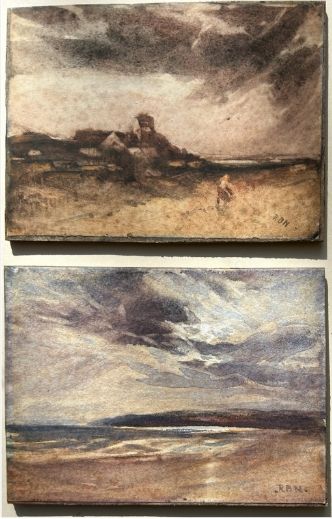
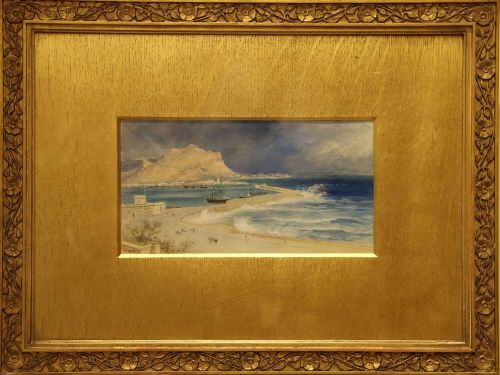
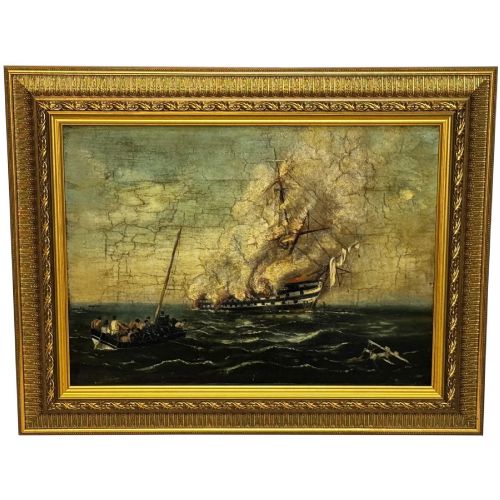
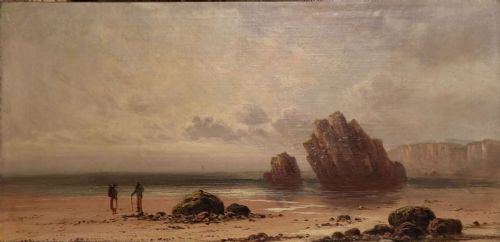
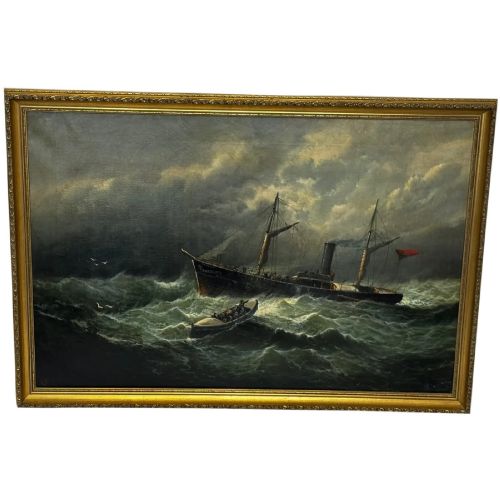
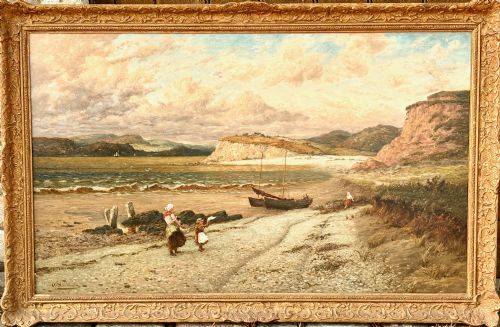
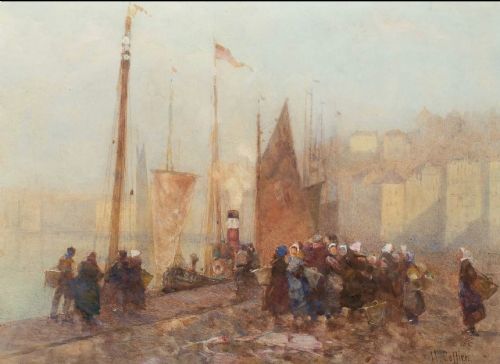
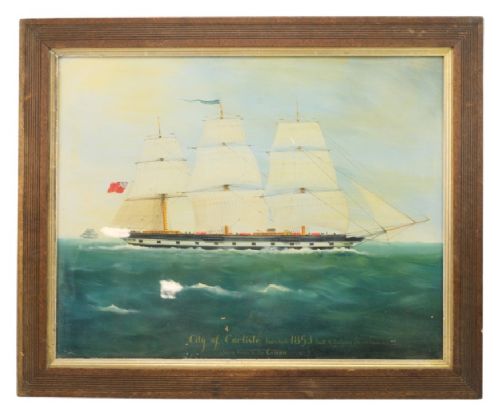
Victorian seascape art encompasses original paintings and watercolours depicting coastal scenes, harbour views, and maritime vessels from the nineteenth century. Buyers encounter works ranging from quiet British beach scenes and bustling fishing ports to dramatic shipwrecks in heavy seas.
The pieces on this page span the Victorian era and the turn of the twentieth century, created by named British and international artists as well as traditional English schools. Common subjects include local shipping, famous lighthouses, and iconic coastal locations from Cornwall to Scotland.
How They Were Made
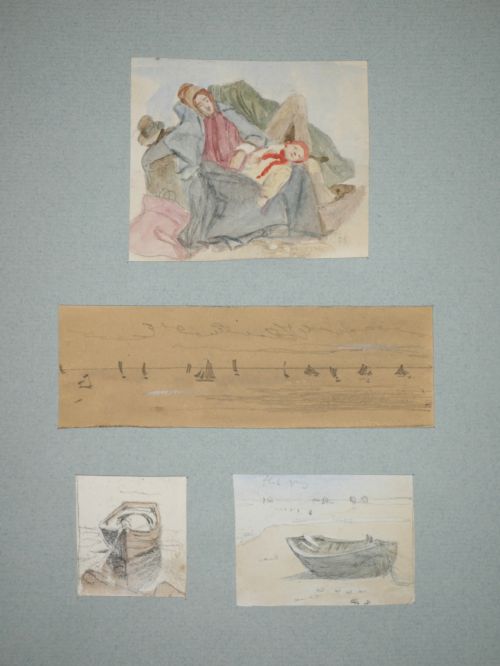
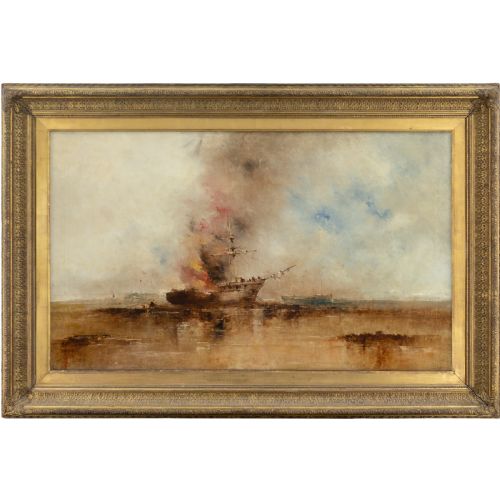
Artists produced these works primarily using oil paint on canvas or board, and watercolours on paper. The application of oil paint allowed for rich, layered textures representing turbulent water and clouded skies, whilst watercolour provided fluid transparency for light upon coastal waves.
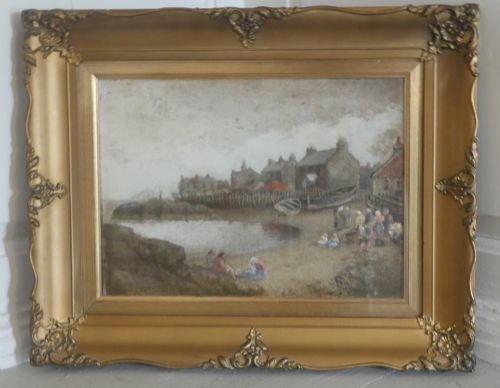
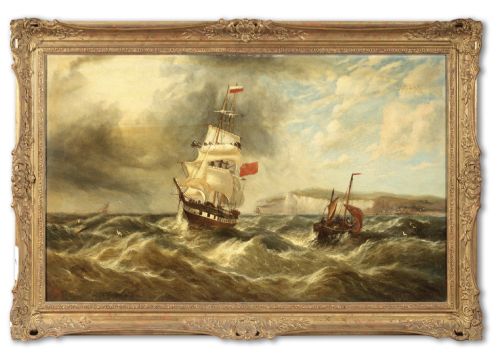
Many of these historic paintings retain their original gilt wood frames, constructed to complement the maritime subject matter. Support materials typically include heavy woven canvas or traditional paper mounted securely for display.
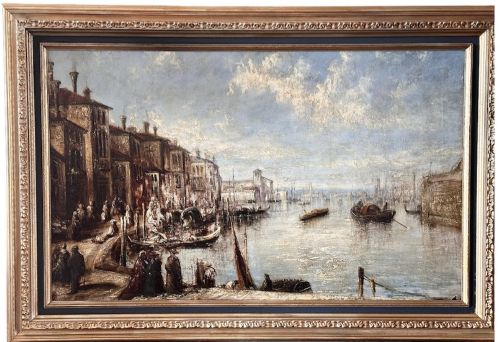
The selection includes coastal views from British harbours, Venice, and transatlantic shipping routes.
What Varies in Quality
Quality in these coastal paintings rests upon the artist's command of light, atmosphere, and maritime architecture. Master painters capture the weight of rough seas and the precise rigging of sailing ships with convincing anatomical and spatial accuracy.
The handling of the medium distinguishes standard decorative works from fine art pieces. Superior examples demonstrate confident brushwork in oils or delicate control in watercolours, bringing vitality to the sky and movement to the water.
James Orrock·James Smetham·William McAlpine·Edward Mills·William Banks Fortescue·John Rose Miles·Francis Moltino·Hector Caffieri·Bernard Benedict Hemy·Thomas Creswick·John Wilson Carmichael·Lai Fong·Joseph Farquharson·John Moore of Ipswich·Nicholas Condy·William Henry Williamson·John Holland·George Stanfield Walters·Abraham Hulk I·Henry Barlow Carter·John Moxon·William Frederick Settle·Charles William Wyllie
The Victorian Seascape Art Glossary
- Seascape
- A work of art depicting the sea, coastal views, or maritime vessels. These pieces focus centrally on marine subjects rather than land landscapes.
- Watercolour
- A painting method where fine pigment is suspended in a water-soluble binder on paper. Artists utilised this medium for its translucent qualities.
- Gilt Wood
- Timber framing finished with a thin layer of gold leaf. This traditional framing enhances the visual depth of nineteenth-century oil paintings.
- Maritime
- Pertaining to the sea, shipping, and navigation. This category covers both commercial merchant vessels and naval subjects.
Victorian Seascape Art: Frequently Asked Questions
What subjects appear in these paintings?
The artworks depict a wide variety of maritime and coastal subjects, including fishing boats returning to harbour, merchant ships navigating rough seas, and calm river estuaries. Scenes often feature identifiable locations such as British coastal towns, Venetian canals, and busy trading rivers.
Artists recorded the changing conditions of the sea, from tranquil beach settings with figures gathering shellfish to dramatic storms involving three-masted schooners and rescue vessels.
How do I care for these watercolours?
Watercolours on paper require careful placement away from direct sunlight to prevent the pigments and paper support from fading over time. Maintaining a stable indoor environment helps protect the paper from moisture damage.
Framing under glass with acid-free mounts ensures the historic paper remains protected from dust and atmospheric pollutants while on display.
Are these paintings signed by the artists?
Many of the listed works bear original signatures, monograms, or inscriptions by the nineteenth-century artists who created them. Attribution for unsigned pieces often relies on stylistic comparison, historical records, or archival documentation associated with specific regional schools.
Signatures are typically found in the lower corners of the canvas or paper, sometimes accompanied by a dated year of completion.
How do oils and watercolours differ?
Oil paintings utilise thick, opaque pigments on canvas or board, allowing artists to build heavy textures and rich, deep tones for stormy seas. Watercolours employ translucent washes on paper, capturing bright natural light and atmospheric coastal haze with soft luminosity.
Both mediums were widely practised during the Victorian period, offering distinct visual interpretations of maritime environments.