
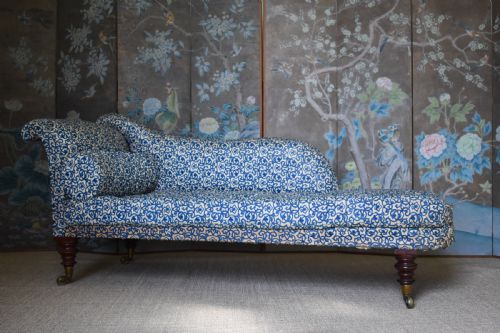


Victorian Scrolled Daybed
These Victorian scrolled daybed examples combine 19th-century timber frames with upholstered comfort for relaxed reclining.
Victorian Scrolled Daybed
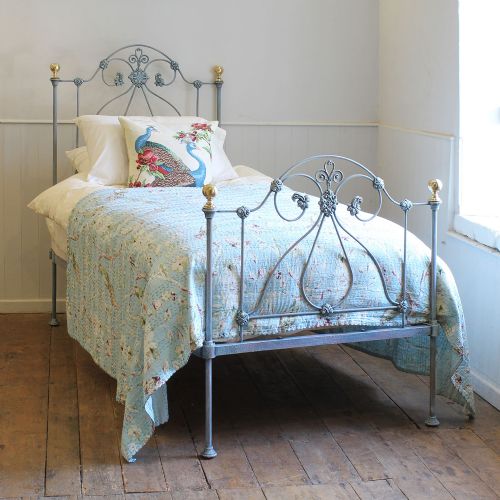
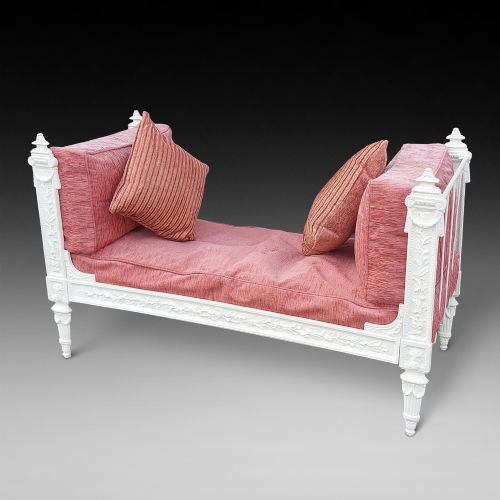
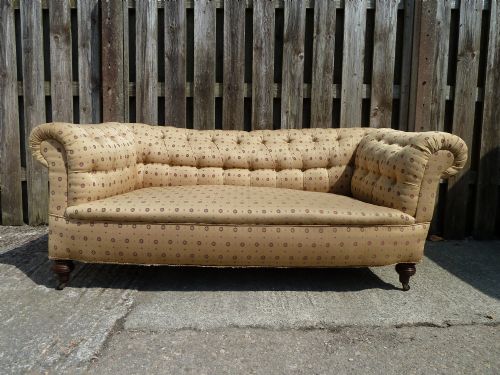
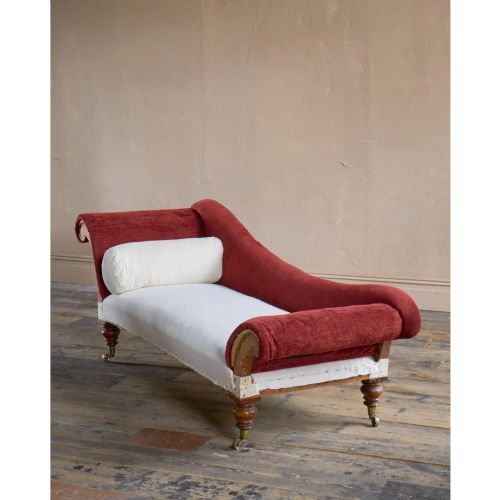
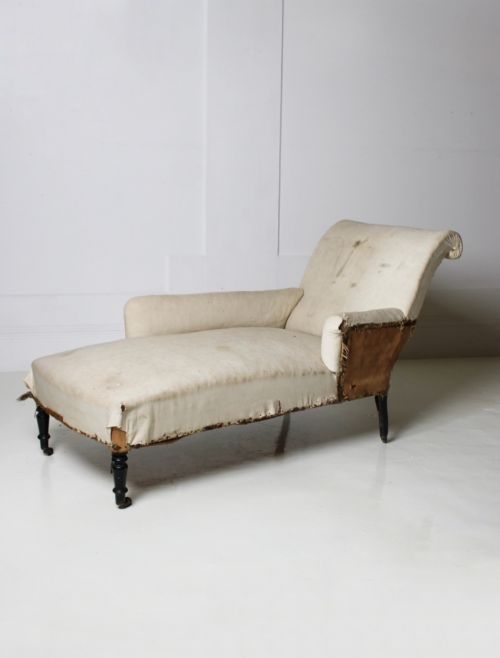
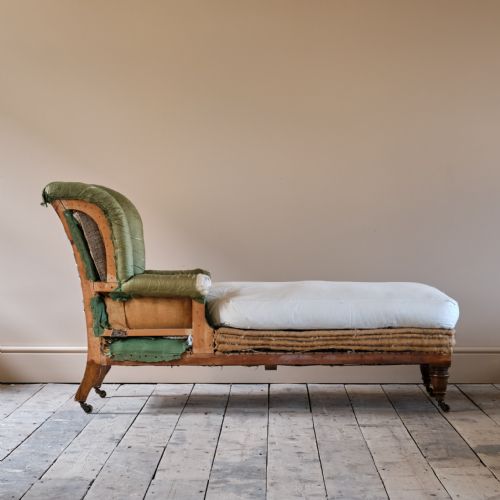
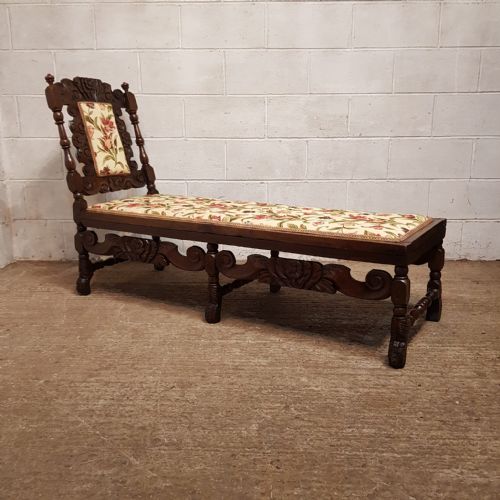
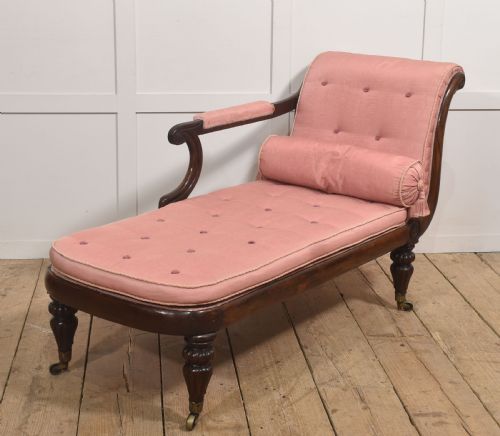
A victorian scrolled daybed provides a singular reclining form combining the backrest of a sofa with the extended seat of a bed. Most pieces seen on this page date from the 19th century and incorporate characteristic scrolled ends.
The selection includes variations spanning the Victorian, Regency, and William IV eras. Common formats range from heavy rosewood and mahogany frames to iron daybeds and upholstered chaise longues.
Assessing quality in 19th-century frames
Quality rests upon the crispness of timber carving and the architectural integrity of the scrolled ends. Solid rosewood and mahogany structures demonstrate superior durability compared to secondary woods.
The degree of maker attribution and the preservation of original castors and cane work elevate individual examples. Finer pieces maintain substantial proportions suited to large country house settings.
Compact spaces can accommodate miniature ebonised chaises when full-sized country house sofas prove too grand.
Holland and Sons·Miles and Edwards
The Victorian Scrolled Daybed Glossary
- Chaise Longue
- A long reclining chair or daybed designed for one person. It combines seating with an extended footrest area.
- Scroll Arm
- A curved terminal end shaped like a scroll, frequently seen on 19th-century seating. This feature defines the profile of many daybeds.
- Ebonised
- Timber treated with a dark finish to imitate ebony. This technique was popular for decorative effect on Victorian furniture.
- Cane Seating
- Woven rattan or plant material forming a seat panel. It provides flexible support within a rigid wooden frame.
Victorian Scrolled Daybed: Frequently Asked Questions
How do I date a daybed?
Dating relies upon stylistic markers such as Regency, William IV, or Victorian design characteristics recorded in the listings. Timber choice and leg turning also provide chronological indicators.
Construction details, including the presence of original castors or specific upholstery types, help narrow the period of manufacture.
Are daybeds comfortable for sleeping?
These pieces were originally designed for daytime lounging and reclining rather than overnight sleeping. Their length and upholstered surfaces accommodate resting while seated upright or semi-recumbent.
Modern use depends on the firmness of the underlying upholstery and the length of the specific frame.
How do I care for antique upholstery?
Maintenance requires gentle vacuuming with a soft brush attachment to remove dust from fabrics like velvet and damask. Direct sunlight should be avoided to prevent textile fading.
Wooden frames benefit from periodic polishing with appropriate wax to maintain the finish.