
Upholstered Daybed Couch
An upholstered daybed couch brings nineteenth-century elegance and reclining comfort into a room through carved timber frames and rich textile coverings.
Upholstered Daybed Couch
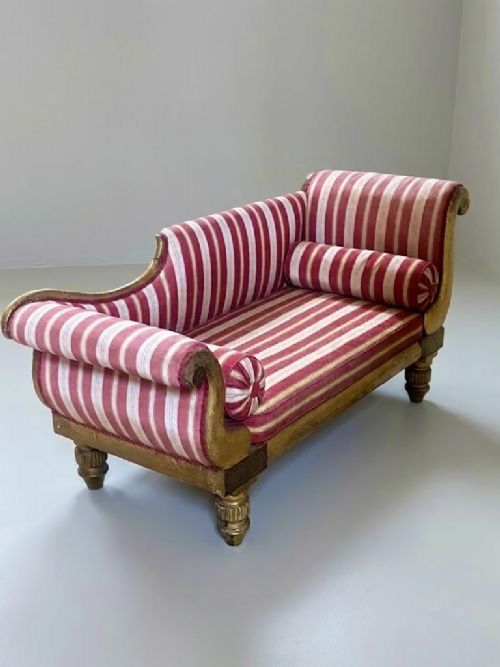
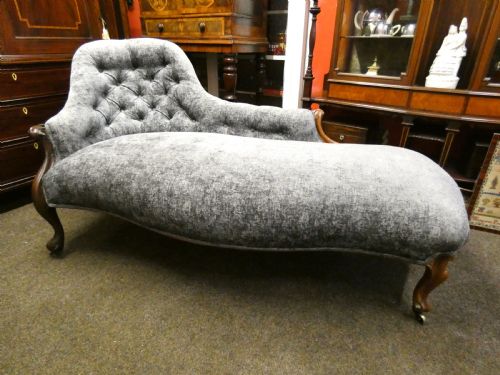
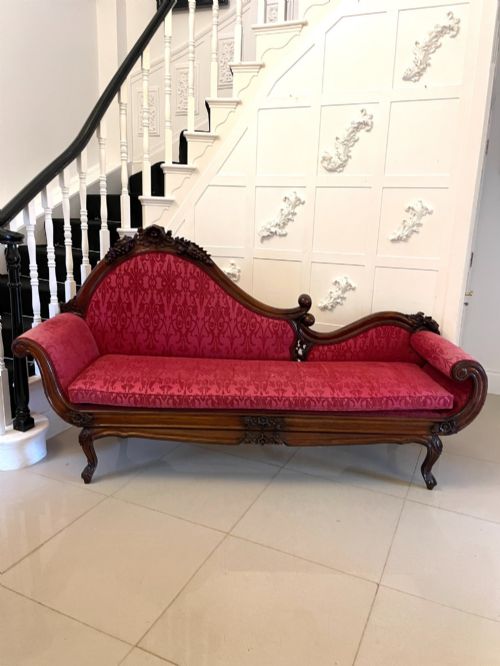
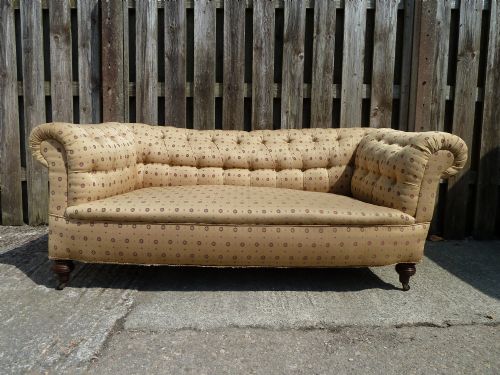
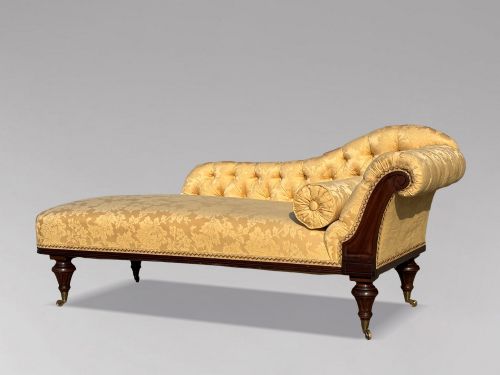
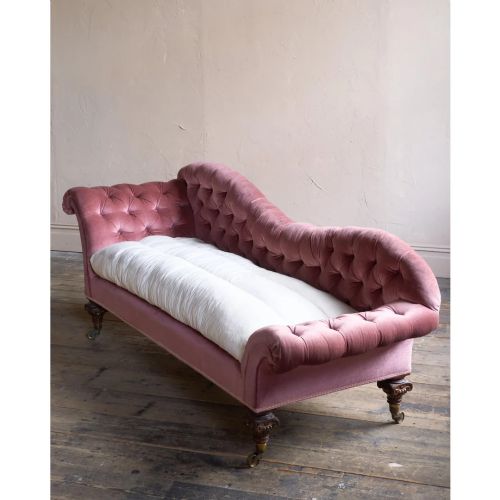
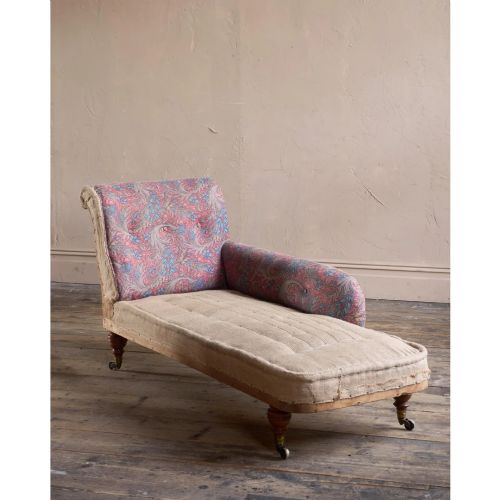
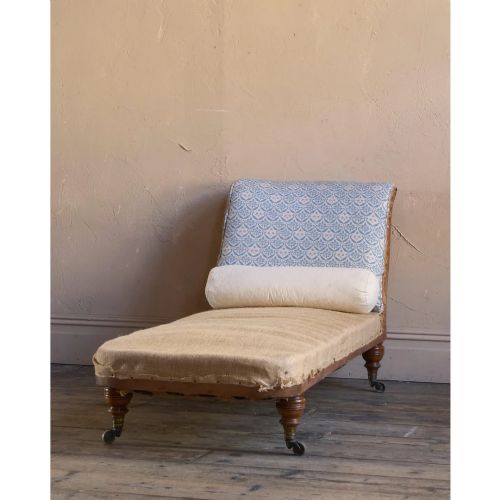
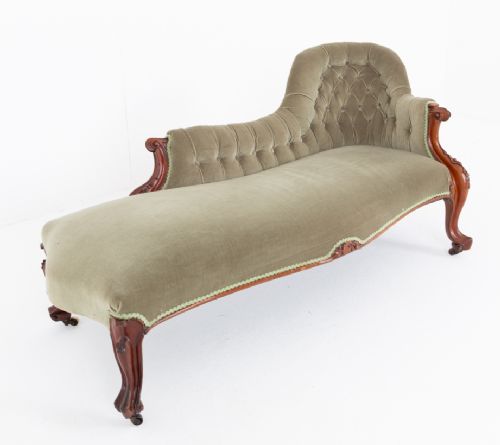
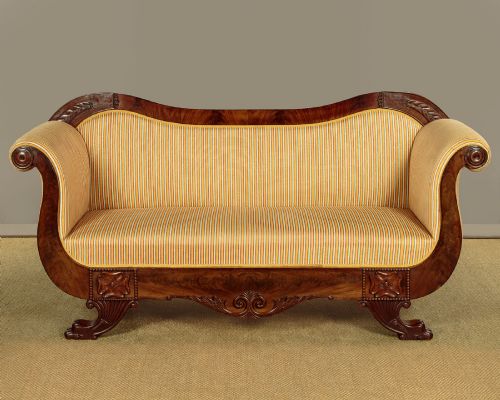
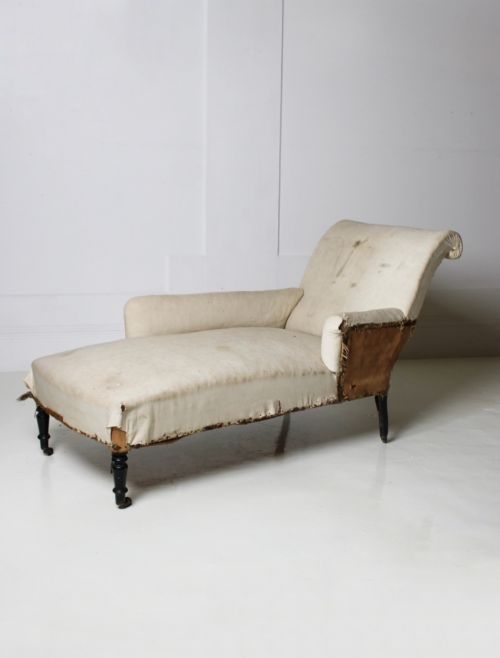
When you search for an upholstered daybed couch, you encounter a selection of nineteenth-century seating forms that combine the utility of a sofa with the extended length of a daybed or chaise longue. These pieces merge decorative woodwork with cushioned surfaces designed for reclining in domestic settings.
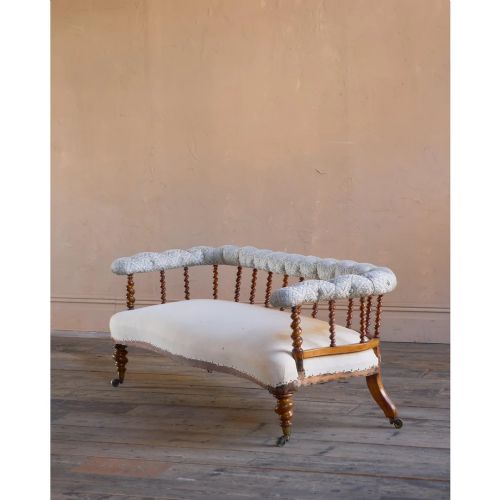
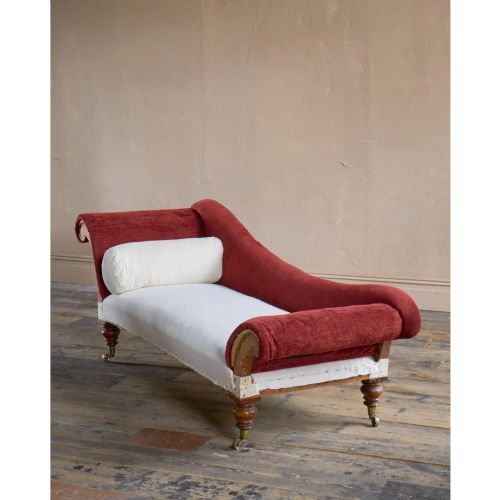
The selections span distinct periods from the Regency era through to the late Victorian years, alongside Edwardian examples. You will frequently find variations including scroll-end couches, mahogany chaise longues, and spindle-back salon sofas.
Origins vary from country house daybeds to formal parlour seating, reflecting the diverse domestic architecture and interior design preferences of the nineteenth century. These forms provide deep seats and raised headrests tailored for daytime rest.
How they were made
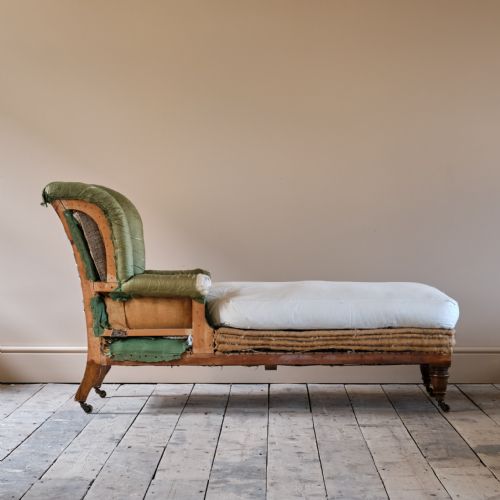
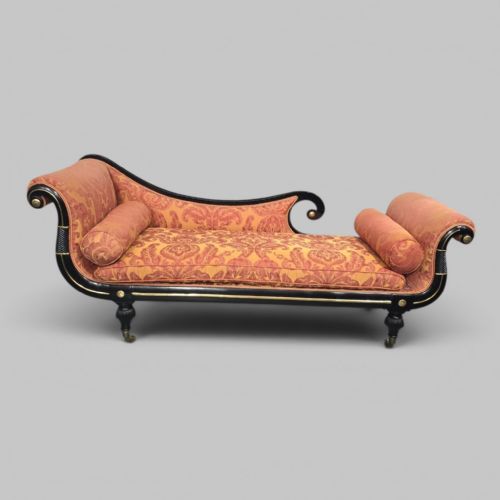
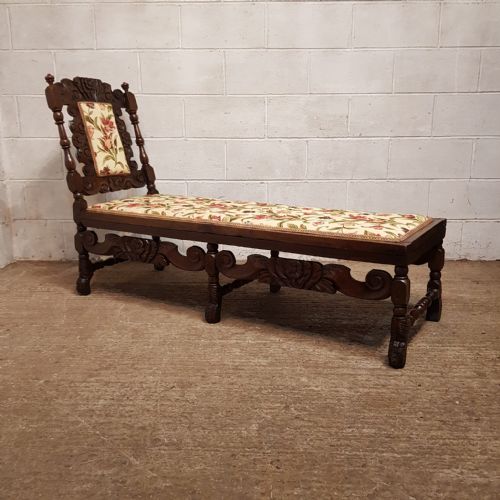
Makers utilised solid timbers such as mahogany, walnut, rosewood, and oak for the structural frames, often shaping them with carved details, giltwood, or turned legs fitted with original castors. Some examples incorporate brass mounts, inlaid details, or column supports.
Upholstery techniques involved traditional stuffing applied over supportive webbing and springs, finished with fabrics ranging from velvet and silk to damask, calico, and patterned upholstery fabric. Frames were frequently constructed with scroll arms or asymmetric backs to support the sleeper or recliner.
Original castors on these couches remind us that nineteenth-century drawing rooms were constantly rearranged for afternoon gatherings.
What varies in quality
Quality rests primarily in the crispness of the timber carving, the choice of dense hardwoods like rosewood or figured mahogany, and the structural integrity of the frame joints. Superior examples display balanced proportions, harmonious scrollwork, and detailed joinery rather than plain construction.
The execution of the upholstery work and the choice of textile coverings also distinguish standard pieces from exceptional ones. Finer items retain sophisticated frame detailing such as ionic column legs, boulle inlay, or gilt decoration that elevates their visual presence.
C. Hindley & Sons·Holland and Sons·Howard and Sons·H. Goodall & Sons of Newcastle
The Upholstered Daybed Couch Glossary
- Chaise longue
- An upholstered sofa in the form of a chair with a long seat large enough to support the user's legs. This form emerged in various stylistic iterations throughout the nineteenth century.
- Scroll end
- A sweeping, curved wooden arm or back termination reminiscent of a scroll. This profile is frequently seen on Regency and Victorian daybeds.
- Giltwood
- Timber that has been coated with gold leaf or a gold-coloured finish. It appears on decorative frames from the Regency and later periods.
- Castor
- A small wheel mounted on a swivel assembly attached to the base of furniture legs. They allowed heavy nineteenth-century couches to be repositioned across carpets.
- Bolster
- A long, narrow padded pillow used for support on couches and daybeds. These accessories complemented the scroll arms of nineteenth-century seating.
Upholstered Daybed Couch: Frequently Asked Questions
What is a nineteenth-century daybed?
A nineteenth-century daybed is a hybrid seating form designed for reclining during the day, combining the backrest of a sofa with an extended seat. These pieces were constructed in styles ranging from Regency scroll-end couches to Victorian carved chaise longues.
They served as versatile furniture for drawing rooms, libraries, and bedrooms, offering a comfortable place to lie down without retiring to a bed.
How do I identify a Regency daybed?
Regency daybeds typically exhibit classical revival motifs, scroll ends, and dark hardwoods such as mahogany or simulated rosewood. Their forms often draw inspiration from ancient Roman and Greek designs, popularized by figures like Thomas Hope.
Look for architectural elements like ionic column legs, clean classical lines, and restrained carved ornament rather than heavy Victorian ornamentation.
Where were these couches used?
These couches were placed in principal entertaining rooms, private boudoirs, and country house libraries. They accommodated the relaxed etiquette of daytime resting and reading.
Their placement often highlighted the decorative arts preferences of the household, positioned to catch light or showcase fine timber and upholstery.
How do I care for antique upholstery?
Care involves gentle vacuuming with a soft brush attachment to remove dust and protecting the textiles from direct sunlight to prevent fading. Professional cleaning is recommended for delicate fabrics like silk or velvet.
Maintaining stable indoor humidity helps preserve the underlying wooden frames and prevents the timber from drying out or cracking.