



Victorian Scottish Pebble Brooch
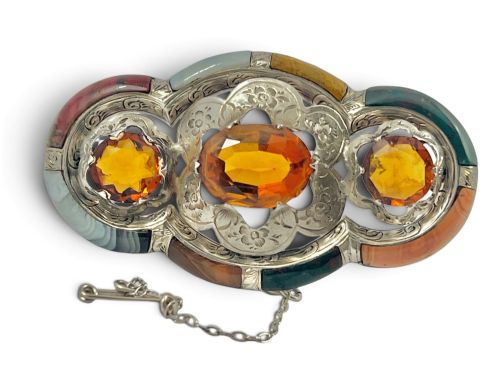
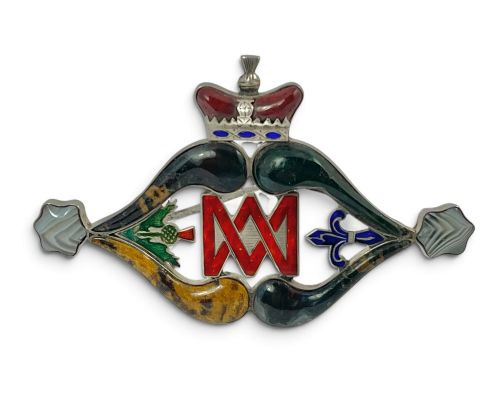
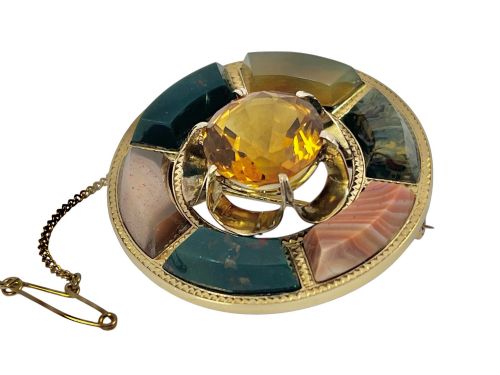
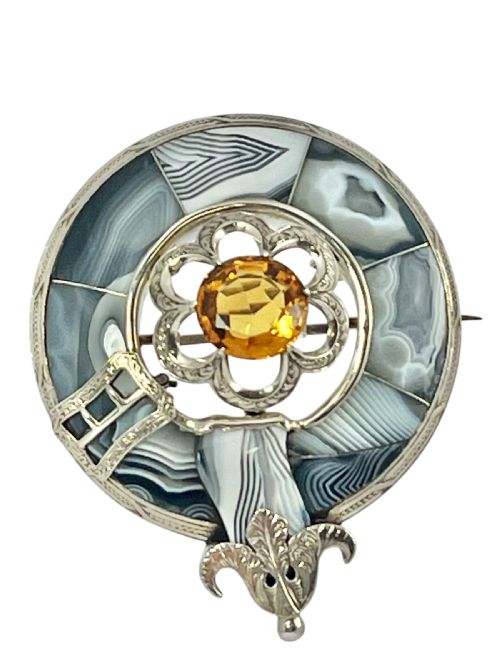
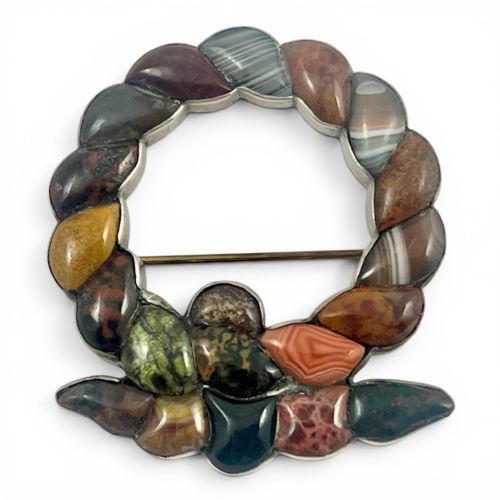
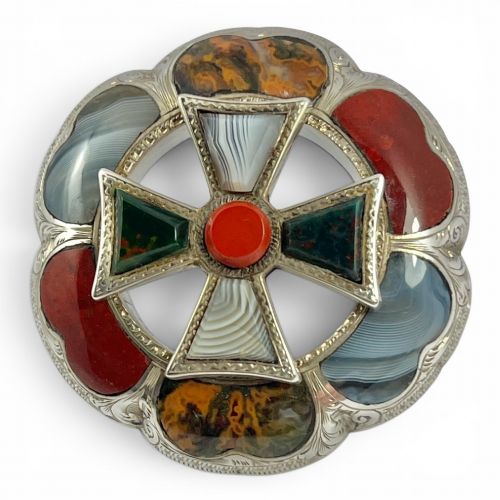
A victorian scottish pebble brooch is a distinctive piece of hardstone jewellery combining regional forms with natural mineral specimens.
Victorian Scottish Pebble Brooch
A victorian scottish pebble brooch is typically encountered as a sterling silver or provincial silver mount set with patterned stones from the nineteenth century.
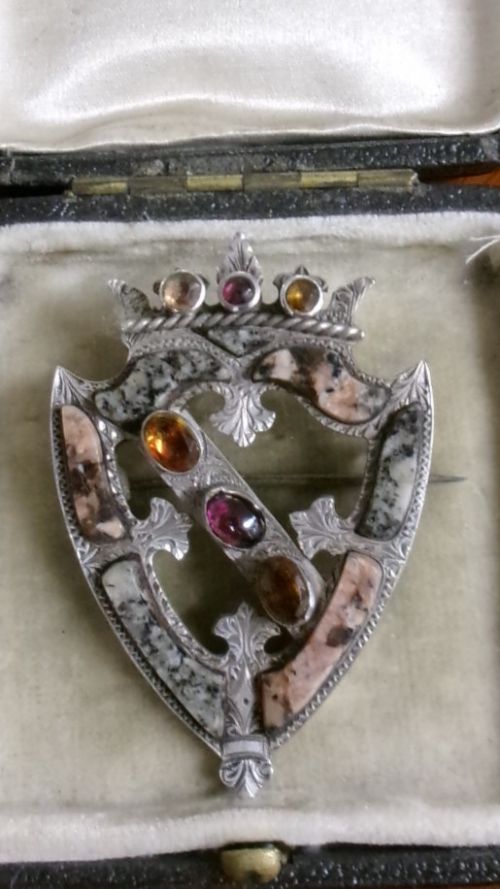
The form often follows traditional regional shapes such as dirks, broadswords, shields, bows, or padlocks, reflecting the nineteenth-century revival of interest in Highland motifs.
Pieces frequently date from the mid to late nineteenth century, spanning periods from the eighteen-forties to nineteen hundred, and occasionally appear alongside matching bracelets or earrings.
How they were made
Silversmiths shaped local metals into detailed framework mounts, utilising sterling silver, gold, pinchbeck, or provincial silver to house the hardstone inserts.
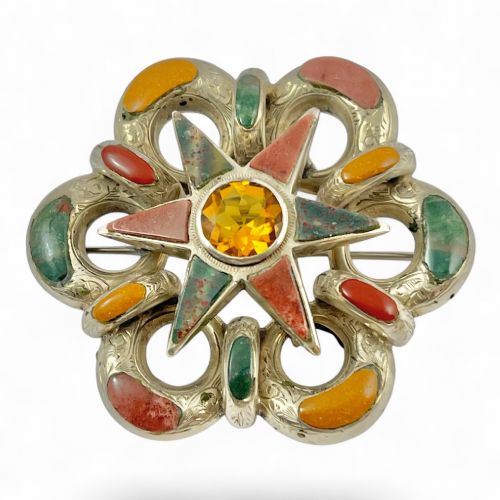
Lapidaries cut and polished native minerals into precise geometric or faceted forms, arranging agates, jaspers, bloodstones, and citrines directly into the metal settings.
Victorian Scottish Pebble Brooch Retail Price Guide 2026
Typical asking prices for victorian scottish pebble brooch among the pieces listed under this phrase on Sellingantiques today, from the lower quarter to the upper quarter. They describe what is for sale here now, not the wider market.
Listings for a victorian scottish pebble brooch span the nineteenth century, featuring materials such as Montrose agate, silver, jasper, and citrine.
What varies in quality
The fineness of a victorian scottish pebble brooch rests upon the variety and visual depth of the hardstones used, alongside the complexity of the silversmith work in forms like broadswords or dirks.
Mounts displaying rarer individual stones such as Montrose agate, blue lace agate, or incorporated citrine crystals distinguish themselves from simpler arrangements.
The Victorian Scottish Pebble Brooch Glossary
- Agate
- A form of chalcedony displaying natural banded patterns, commonly utilised in nineteenth-century scottish jewellery. These hardstones were polished to highlight their distinct geological layers.
- Citrine
- A yellow variety of quartz occasionally set alongside agates in nineteenth-century brooches. It provides a warm accent tone to the cooler greys and browns of the hardstones.
- Dirk
- A traditional highland dagger shape adapted into nineteenth-century brooch and kilt pin designs. These pieces mimic the handle and blade proportions of the weapon.
- Pinchbeck
- An alloy of copper and zinc developed to imitate gold in historic jewellery. It appears in several nineteenth-century brooch mounts.
- Hardstone
- An umbrella term for decorative minerals like jasper, bloodstone, and agate used in lapidary work. These durable materials formed the primary visual elements of regional nineteenth-century pins.
Victorian Scottish Pebble Brooch: Frequently Asked Questions
What is a victorian scottish pebble brooch?
A victorian scottish pebble brooch is a nineteenth-century piece of jewellery fashioned from native hardstones set in silver or gold. These items draw on traditional regional motifs.
They reflect the nineteenth-century revival of interest in Highland culture and geology. Makers arranged polished stones into specific regional forms.
How were these brooches worn?
These pieces served both as dress fasteners and decorative ornaments on plaid garments, shawls, and kilts. Larger examples functioned directly as kilt pins.
Victorian wearers pinned them to heavy woollens and daily attire. They also appeared alongside matching bracelets and earrings as part of a jewellery suite.
What stones are found in them?
The stones include various forms of agate, jasper, bloodstone, and malachite. Faceted citrines and smoky crystals also appear as central elements.
Lapidaries sourced these minerals locally in Scotland. The stones were polished and fitted tightly into silver or gold frameworks.
How do I date a scottish pebble brooch?
Dating relies on stylistic markers, hallmarking conventions, and recorded dates on specific pieces from the nineteenth century. Most examples date from the eighteen-forties to nineteen hundred.
Earlier pieces often feature provincial silver work from towns like Inverness. Later nineteenth-century items incorporate specific revival forms such as broadswords and shields.