
Victorian Scottish Landscape Art
Victorian scottish landscape art captures rugged terrain, misty lochs and Highland livestock through evocative nineteenth-century painting.
Victorian Scottish Landscape Art
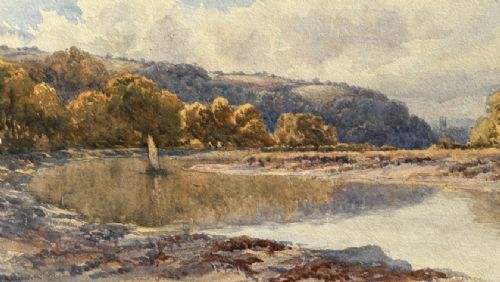
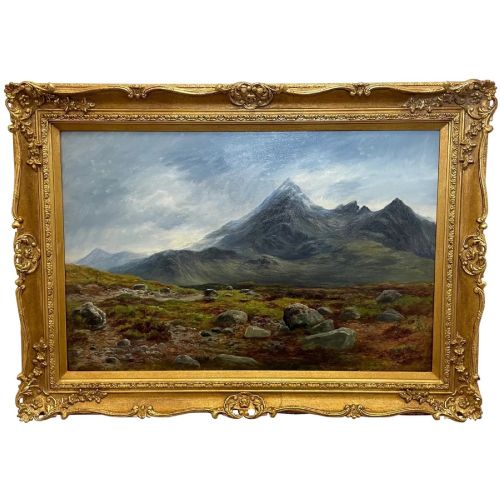
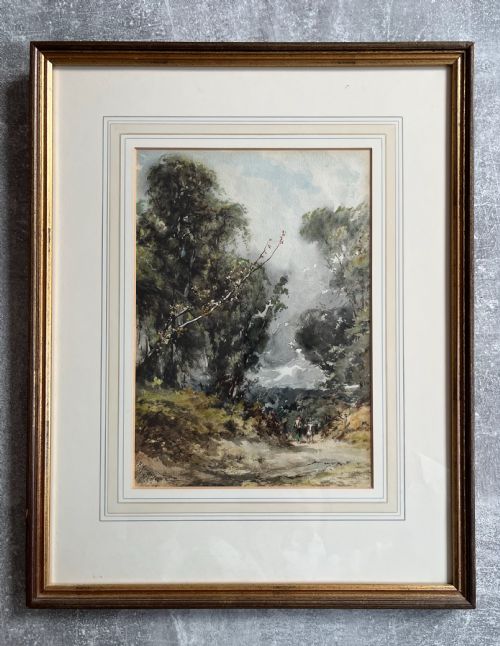
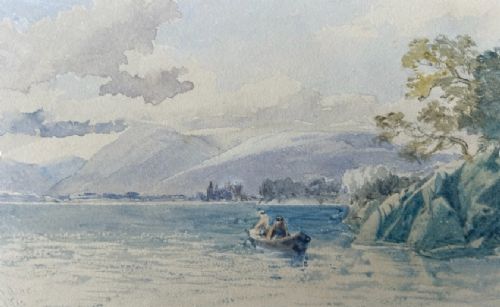
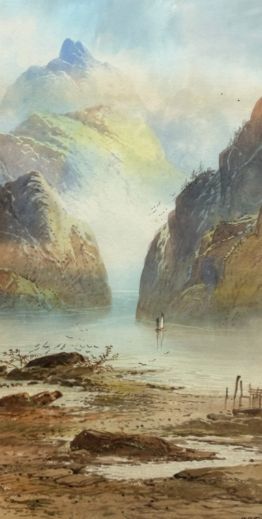
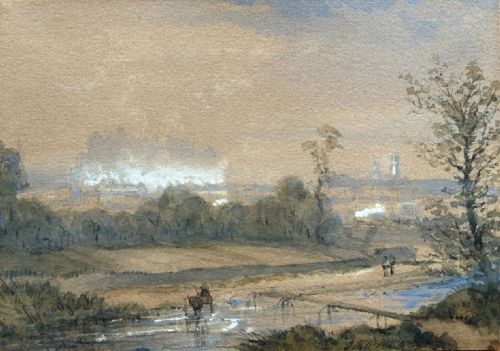
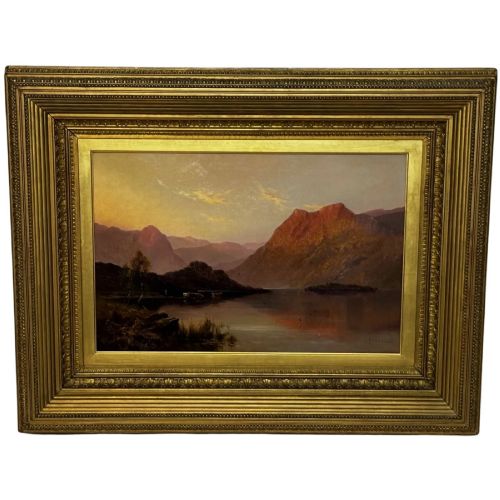
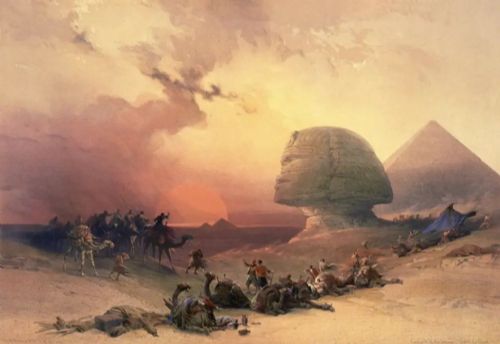
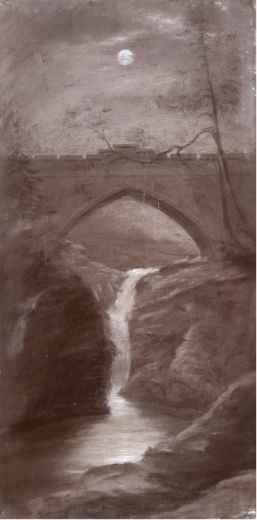
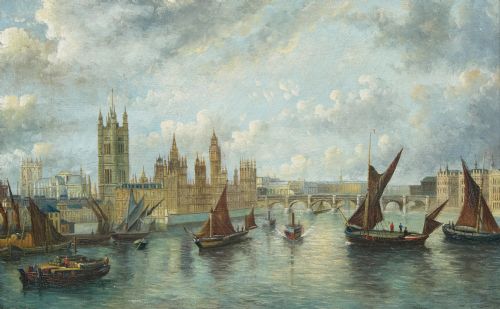
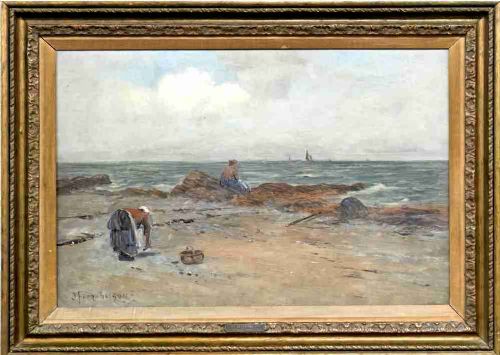
Victorian scottish landscape art encompasses framed works depicting the topography, coastlines and rural scenes of Scotland during the nineteenth and early twentieth centuries. Buyers seeking these pieces encounter both expansive oil paintings on canvas and delicate watercolour paintings on paper.
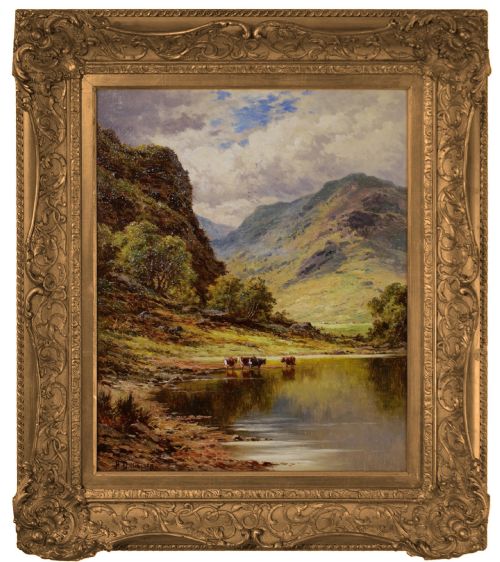
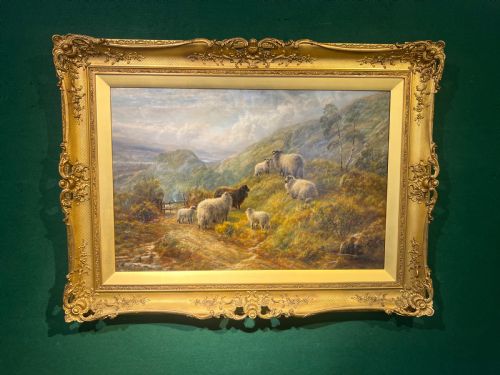
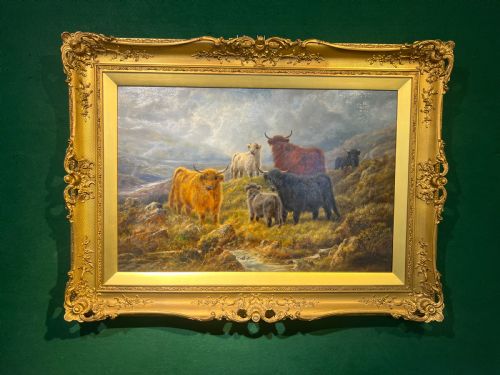
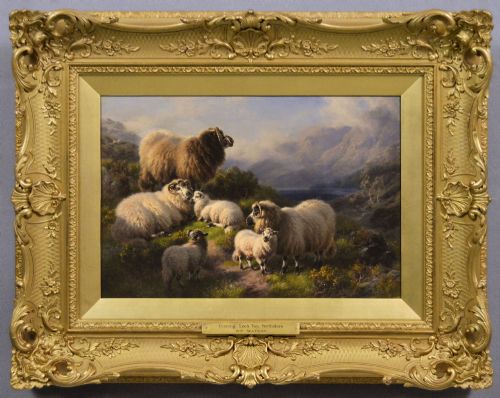
The works on this page frequently feature notable Highland motifs, including cattle and sheep resting by lochs or mountain paths. Landscapes range from quiet woodland glades to dramatic rocky summits rendered by period artists.
Materials and Technique
Artists primarily utilised oil paint on canvas or wood panels, alongside watercolour pigment applied to paper sheets. These mediums allowed creators to build rich textures and atmospheric washes characteristic of the period.
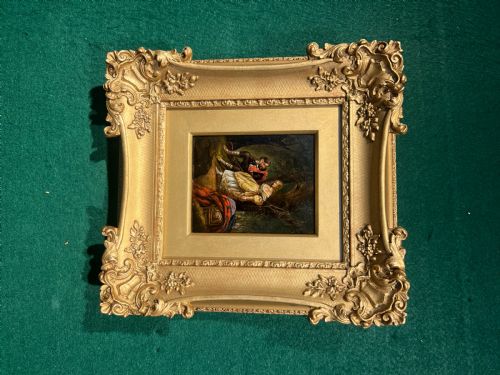
Surviving works are frequently housed within period frames constructed from wood, gesso and giltwood. The combination of painted surface and ornate gilded framing defines the physical presence of these antiques.
Listings span periods from the Victorian era into the Edwardian age, utilising oil on canvas, wood panel and paper.
Quality Variations
Quality within victorian scottish landscape art rests upon the dexterity of the brushwork and the artist's command of atmospheric light and weather. Superior examples capture the distinct moisture and vast scale of northern skies with confident, purposeful application.
Compositional balance and the handling of foreground detail also differentiate the output. Finer pieces demonstrate careful observation of geology and livestock rather than relying on formulaic studio repetition.
William Beattie Brown·Thomas Miles Richardson Jnr·David Roberts·Joseph Farquharson·William Watson Jnr·Robert Cleminson
The Victorian Scottish Landscape Art Glossary
- Oil on Canvas
- Pigment suspended in drying oil applied to a stretched woven fabric support. This was the primary medium for major nineteenth-century exhibition works.
- Watercolour
- A paint consisting of water-soluble pigments used on paper. It allowed artists to capture transient effects of Highland mist and weather swiftly.
- Giltwood
- Timber that has been carved and coated with a thin layer of gold leaf. Period frames often employ this finish to enhance the painting within.
- Gesso
- A plaster-like material applied to wooden frames before gilding. It provides a smooth base for intricate decorative mouldings.
Victorian Scottish Landscape Art: Frequently Asked Questions
How do I identify a genuine period frame?
Period frames generally utilise traditional gesso and giltwood construction over timber moulding, showing authentic ageing and minor losses consistent with nineteenth-century manufacture.
Inspect the corners and reverse of the frame to check for traditional joinery and period fixings that match the era of the painting.
What subjects are most common?
Common subjects include Highland lochs, mountainous terrain, misty glens and coastal castles. Livestock such as sheep and cattle near water also feature frequently.
Artists frequently portrayed these rural themes to satisfy Victorian enthusiasm for romanticised Scottish scenery.
Are watercolours as durable as oils?
Watercolour paintings on paper require careful protection from direct sunlight to prevent fading of the pigments over time. Glazing with appropriate conservation glass helps safeguard the delicate medium.
Oil paintings on canvas are generally more resilient but still benefit from stable indoor humidity and temperature.
How should I hang these artworks?
Display paintings away from direct heat sources and strong sunlight to protect both the canvas or paper and the gilded wooden frame. Ensure wall fixings are suited to the substantial weight of large framed oils.
Maintain consistent room conditions to prevent the wood and canvas from expanding or contracting excessively.