


Highland Cattle Oil Painting
A highland cattle oil painting brings the dramatic scenery and iconic beasts of nineteenth-century Scottish landscapes directly into a room.
Highland Cattle Oil Painting
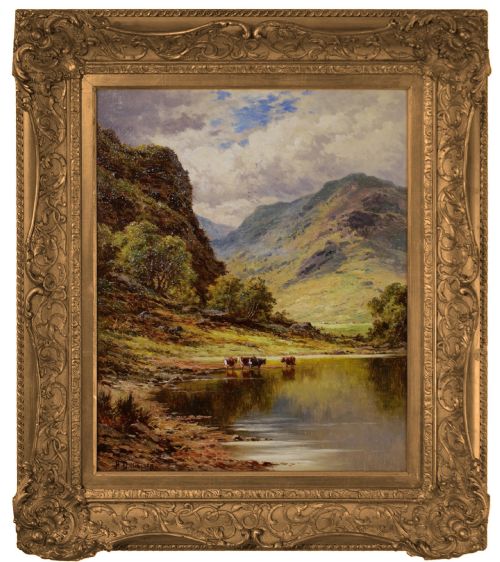
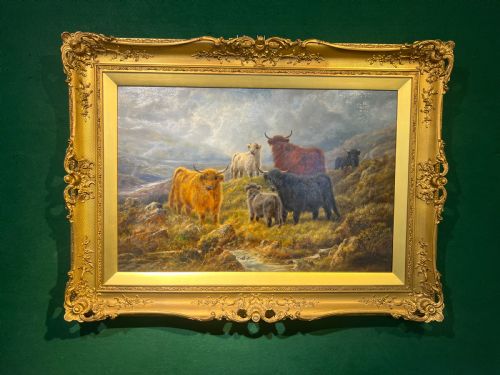
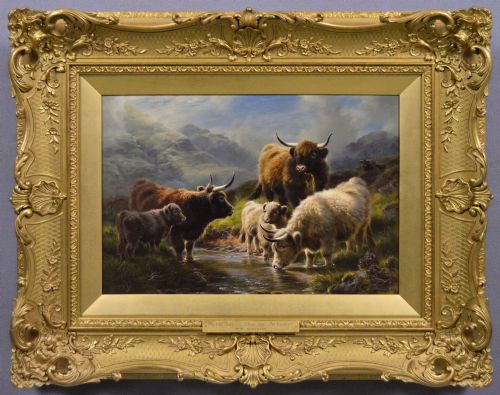
A highland cattle oil painting depicts shaggy-haired cattle set against expansive Scottish mountains, misty lochs, and sweeping glens. These works frequently capture animals watering at the edge of a stream or grazing under heavy skies on open moorland.
Most examples found here originate from the Victorian era and the early twentieth century, spanning decades of British realism and pastoral landscape painting. Painters of this period focused heavily on natural light, atmospheric weather conditions, and detailed portraiture of the cattle themselves.
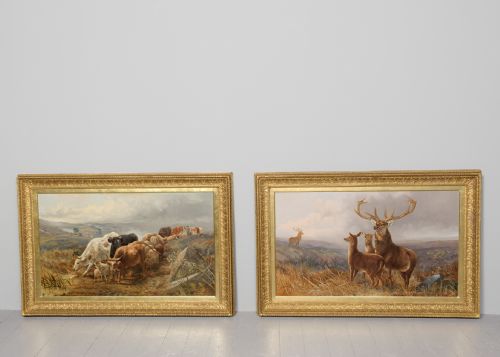
Buyers will encounter both intimate cabinet-sized canvases and large, imposing framed statements intended for principal reception rooms. Many pieces form natural pairs, matching compositions of morning mist and evening light across identical highland terrains.
How They Were Made
Artists built these compositions using oil paint on stretched canvas or wooden panel supports, applying pigments with varying brush techniques to render the distinctive texture of thick animal coats. Background landscapes utilise thin, translucent glazes to suggest distant mountain ranges and atmospheric moisture.
The physical framing forms an integral part of the piece, combining heavy wooden mouldings with elaborate plaster gesso work finished in gold leaf. These ornate frames provide a dense, reflective boundary that projects the depth of the painted Scottish scenery forward into the room.
Listings feature works spanning the nineteenth century through the nineteen-twenties, predominantly rendered in oil on canvas with elaborate giltwood frames.
What Varies in Quality
Quality rests upon the artist's ability to render the anatomy, weight, and characteristic hair texture of the cattle with anatomical conviction rather than formulaic repetition. Superior canvases capture individual disposition and intelligent expression in the beasts, avoiding stiff or generic animal placement within the landscape.
Depth of atmosphere distinguishes accomplished pastoral realism from routine commercial output, particularly in the handling of shifting weather, water reflections, and mountain light. The integration of cattle with their surrounding terrain - showing mud, heather, and atmospheric haze - separates masterworks from simpler decorative views.
Robert Watson·Henry H Parker·Alfred de Breanski Snr·Henry Robinson Hall·Charles Jones·Louis Bosworth Hurt
The Highland Cattle Oil Painting Glossary
- Gesso
- A plaster-like mixture applied to wooden frame mouldings as a smooth base before gilding. It allows craftsmen to carve intricate relief patterns that catch candle or window light.
- Glaze
- A thin, transparent layer of oil paint brushed over a dry underlayer to deepen shadows and unify colours. It creates the luminous, atmospheric depth seen in distant mountain skies.
- Impasto
- Paint applied thickly to a canvas so that it stands proud of the surface and holds the mark of the brush. Artists utilise this technique to accentuate the tangible texture of a beast's shaggy coat.
- Provenance
- The documented history of a painting's ownership and exhibition record. Verified lineage adds historical weight to nineteenth-century British realisms.
- Panel
- A rigid wooden support used by artists instead of woven canvas. Panels provide a completely stable surface that prevents the cracking common in older fabric grounds.
Highland Cattle Oil Painting: Frequently Asked Questions
How do I light an antique pastoral painting?
Position a low-wattage, warm picture light directly above the frame to illuminate the canvas without generating damaging heat or glare.
Keep the piece away from direct sunlight to preserve the oil pigments and prevent the heavy gilt frame from drying out.
Where should I hang a large highland scene?
These expansive landscapes suit principal reception rooms or hallways where viewers can step back to appreciate the scale of the mountains and lochs.
Ensure the wall supports the substantial combined weight of the heavy canvas and its original gesso frame securely.
How do I tell Victorian works from later ones?
Nineteenth-century examples often lean towards dramatic, moody skies and highly detailed brushwork focusing on the rugged realism of the cattle.
Later Edwardian canvases sometimes adopt looser, more impressionistic brush strokes and brighter palettes reflecting changing tastes in landscape art.