
Framed Highland Landscape Artwork
Framed highland landscape artwork captures rugged Scottish topography through 19th-century and Edwardian oil and watercolour paintings.
Framed Highland Landscape Artwork
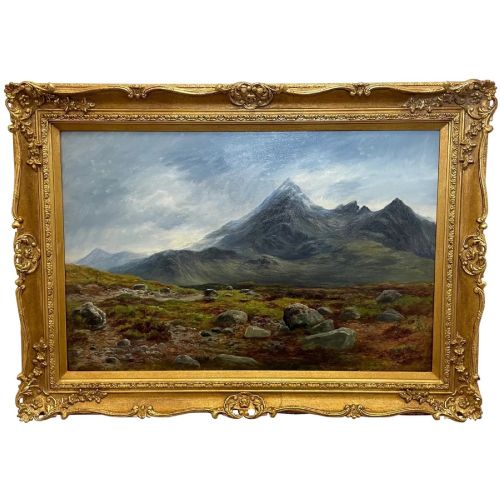
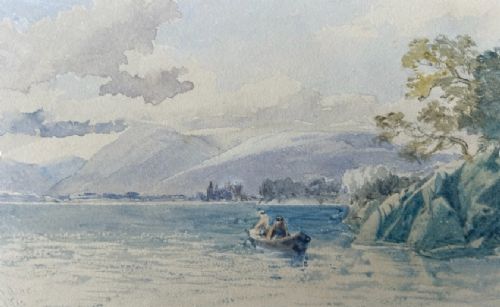
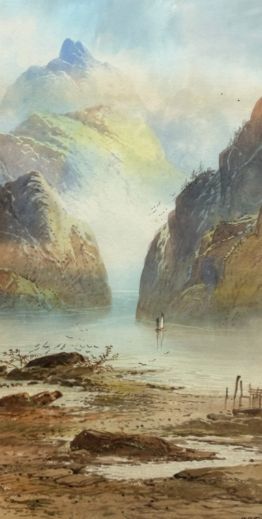
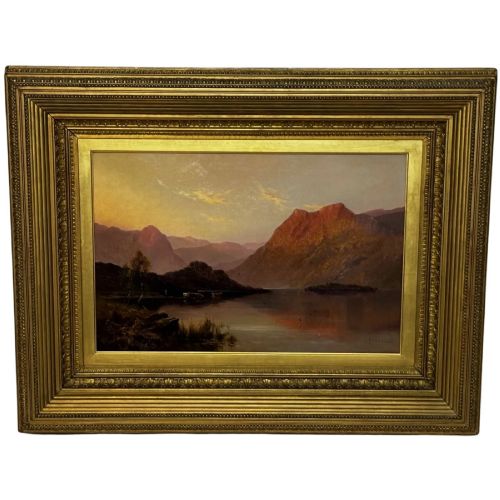
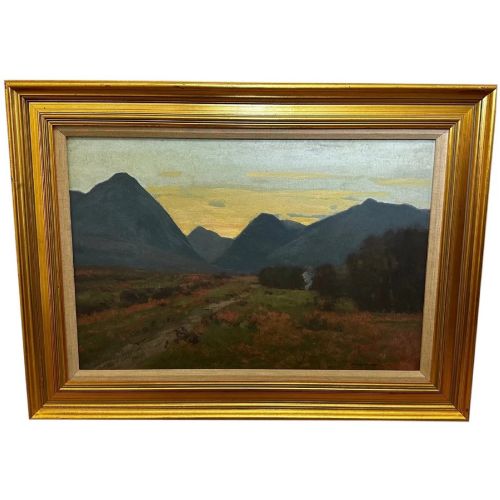
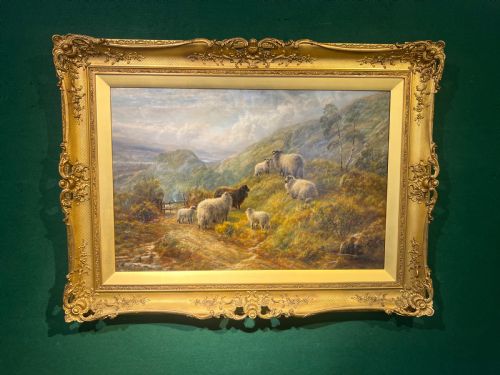
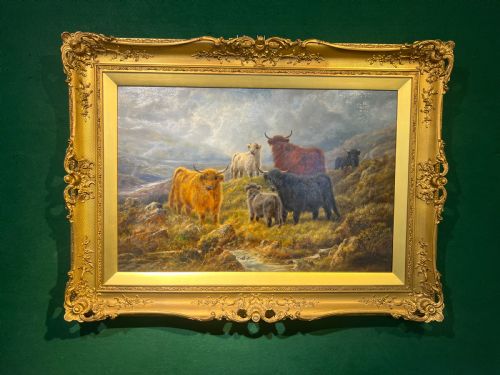
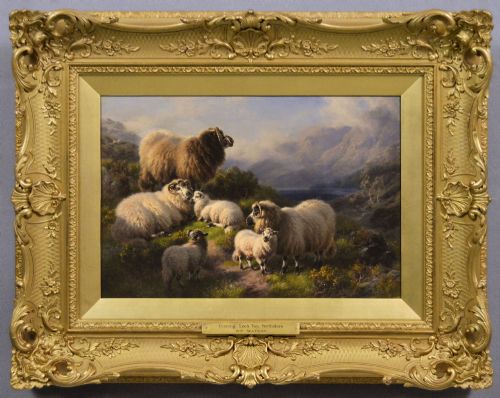
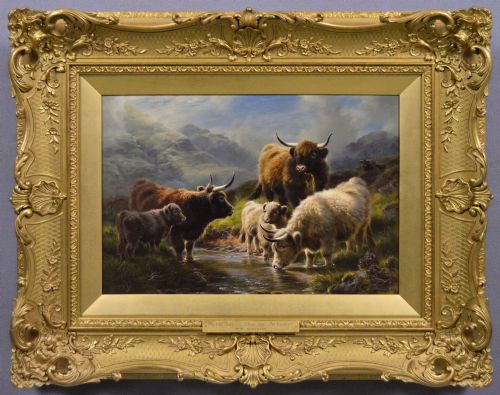
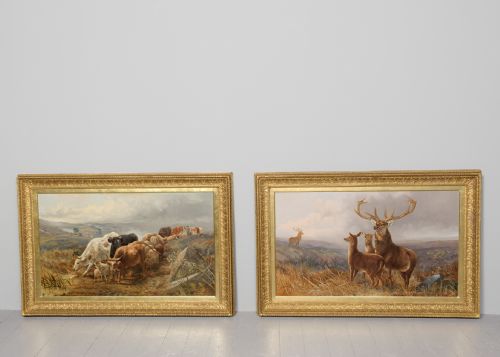
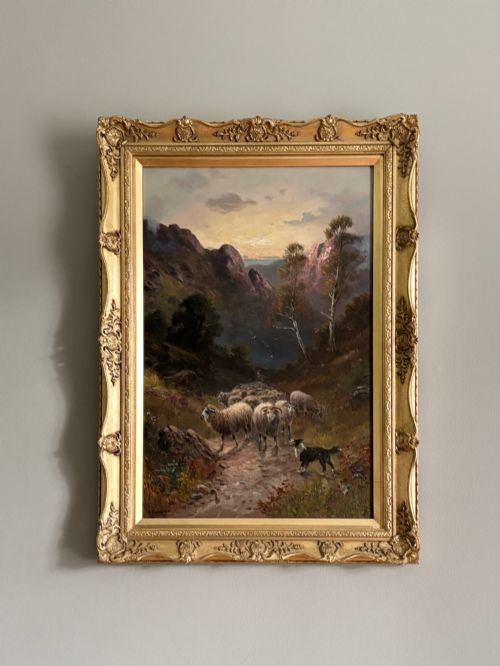
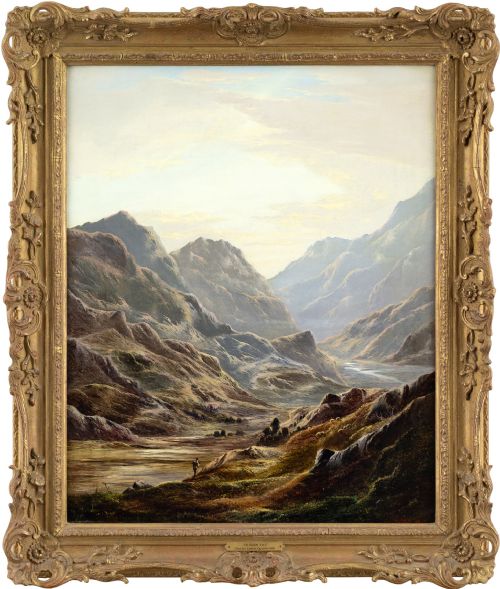
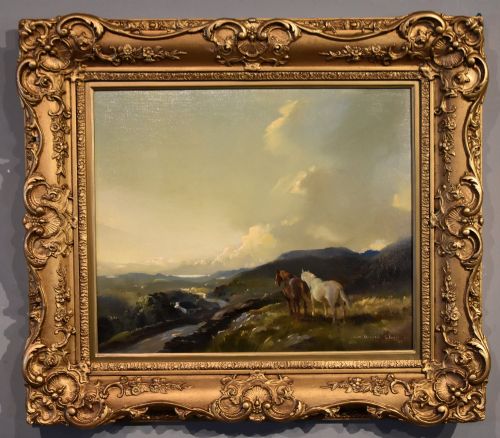
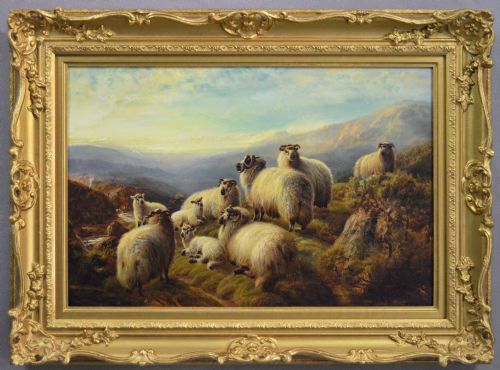
Framed highland landscape artwork depicts remote lochs, glens and mountainous terrain using oil on canvas, wood panel or watercolour on paper. These paintings often include cattle or sheep grazing near water under moody skies.
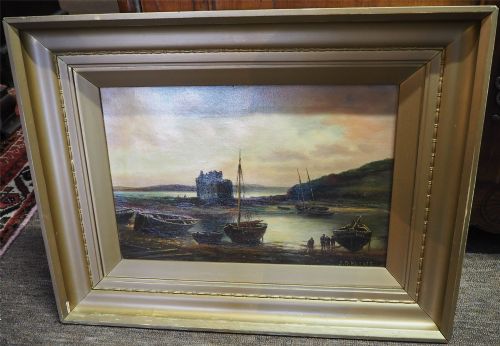
Victorian and Edwardian examples dominate the selection, created by artists working within Scottish Impressionism, Scottish Romanticism and British Realism. Most pieces arrive housed in period giltwood or gesso frames.
Subjects range from named locations such as Loch Tay, Ben Lawers and Glen Tilt to intimate studies of stone bridges and crofts. The execution varies from tightly detailed Victorian naturalism to looser post-impressionist brushwork.
How they were made
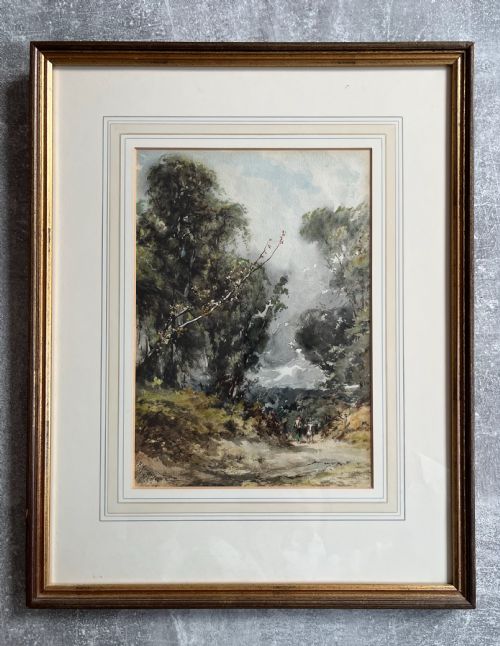
Painters applied oil paint to primed canvas or wood panels, building rich textures and atmospheric light effects across expansive vistas. Watercolour on paper was also common, capturing the translucent mists of northern hills.
Heavy wooden frames finished with gilt and moulded gesso ornamentation were standard for larger oil paintings, while watercolours received traditional card mounts and glazed wood protection.
Highland sheep and cattle frequently wander into the scenery, serving as steadfast companions to misty lochs and rolling glens.
What varies in quality
The sophistication of the handling separates routine regional studies from masterworks. Superior canvases demonstrate precise control over atmospheric moisture, subtle colour transitions in distant peaks and confident, expressive brushwork.
Original frames in matching period giltwood contribute significantly to the integrity of a piece. The presence of clear artist signatures, exhibition labels or documented provenance elevates the standing of individual works.
William Beattie-Brown·George Fotherly Hargitt·Thomas Miles Richardson Jnr·William Henry Earp·Alfred Fontville de Breanski Jr·George Houston·Robert Watson·William Watson Jnr·Robert Cleminson·Douglas Cameron·Charles Leslie·Vernon DeBeauvoir Ward·Everett Watson Mellor·Joseph Knight·William George Tennick·Archibald Kay·Henry Robinson Hall·William Henry Mander·Henry Hillier Parker·William Grant Murray·Tom Seymour·James Bell Anderson·Sidney Yates Johnson·Stanley Orchart·John Charles Tunnard
The Framed Highland Landscape Artwork Glossary
- Giltwood
- Wood carved and coated with a thin layer of gold leaf or gilt finish. These decorative frames surround many period oil paintings.
- Gesso
- A plaster-like mixture applied to wooden frames before gilding, allowing intricate moulded ornamentation. It provides a durable base for decorative flourishes.
- Oil on Canvas
- Pigment mixed with drying oil applied to stretched woven fabric. This medium allowed artists to achieve deep tones and varied surface textures.
- Watercolour
- Paint consisting of water-soluble pigments applied to paper. It produces transparent washes ideal for depicting soft mountain light and weather.
- Scottish Romanticism
- An artistic movement focusing on the dramatic, untamed aspects of the landscape. It emphasises emotional response to wild terrain and shifting weather.
Framed Highland Landscape Artwork: Frequently Asked Questions
What periods do these paintings come from?
The works originate predominantly from the Victorian and Edwardian eras, spanning the mid-nineteenth century through to the early twentieth century. Painters of this epoch frequently travelled north to record the dramatic scenery of the Highlands.
Dates recorded on the pieces point toward a strong concentration of output between eighteen-seventy and nineteen-twenty. Later twentieth-century watercolours also appear among the selection.
Are these paintings signed by the artists?
Many examples bear artist signatures, monograms or contemporary inscriptions on the canvas, stretcher bars or backing paper. These signatures help connect specific works to known nineteenth-century painters.
Unsigned pieces still surface, often reflecting the widespread popularity of Highland scenery among provincial artists who left their canvases anonymous.
What framing is typically found on these artworks?
Surviving pieces frequently retain their original heavy wood frames adorned with moulded gesso and gilt finishes. These ornate borders were designed to complement the scale and mood of the landscape.
Some watercolours arrive beneath glass within simpler wood mouldings or period card mounts that protect the delicate paper surface.
How do I care for an antique oil painting?
Keep the canvas away from direct sunlight and steady temperature fluctuations to prevent cracking in the paint layer. Dust the surface gently with a soft, dry brush without applying pressure.
Avoid using liquid cleaners on the paint or the gilt frame. Professional conservators should handle any deeper cleaning or canvas repairs.