


Antique Highland Loch Artwork
Antique highland loch artwork captures the dramatic scale and atmospheric light of Scottish waters, prized by collectors for romantic depictions of lochs and mountains.
Antique Highland Loch Artwork
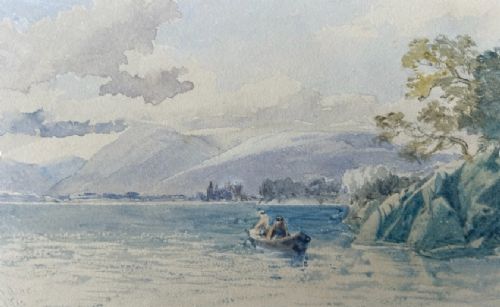
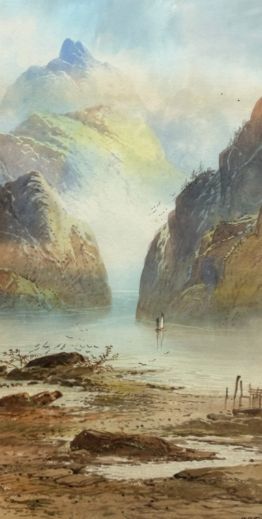
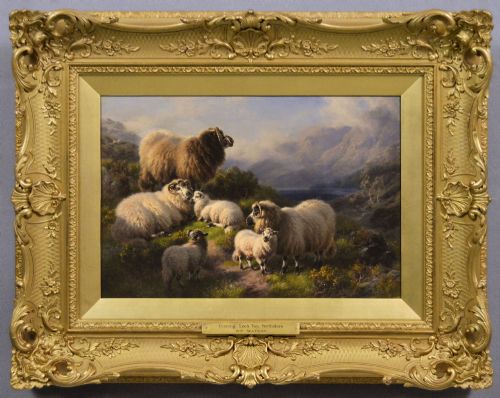
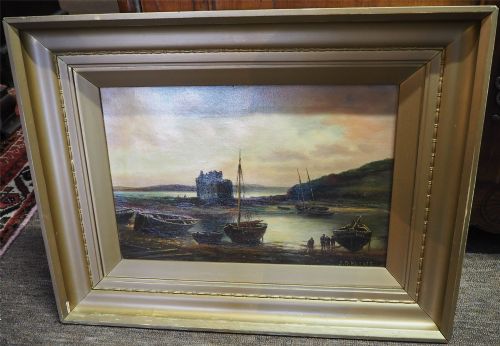
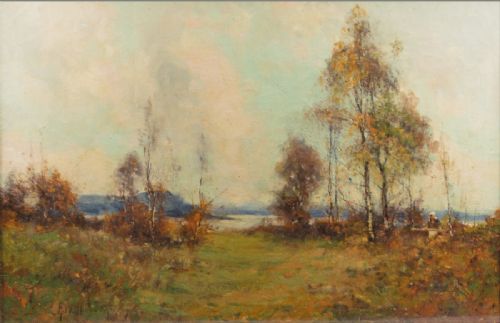
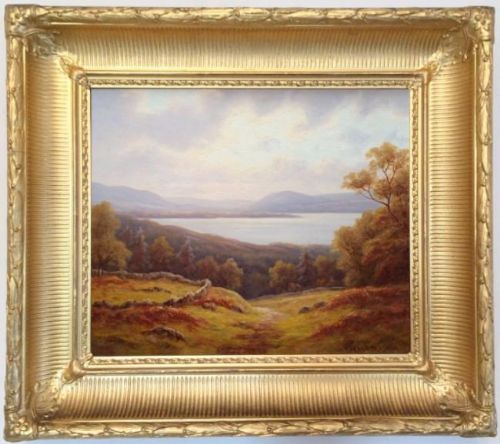
When you search for antique highland loch artwork, you encounter framed paintings depicting Scottish bodies of water alongside mountainous terrain, often populated by Highland cattle or sheep. These works span the Victorian period into the mid-twentieth century, capturing rural scenery through traditional British and Scottish Impressionist lenses.
The most common formats on this page are oil on canvas and watercolour paintings, housed within wooden and gesso gilt frames. Subjects frequently focus on specific Scottish locations such as Loch Awe, Loch Tay, and Loch Ness under varying atmospheric conditions like morning mist and moonlight.
Materials and Technique
Artists painted primarily with oil paint on canvas or watercolour and gouache on paper, applying pigments to build texture and depth in the mountainous terrain. Canvases were secured in wooden stretchers and mounted within decorative moulded frames finished with gesso and gilt highlights.
Watercolour paintings on paper employed transparent washes to capture the pale light of loch mists, whilst oil works utilised heavier impasto to render the rugged texture of Highland cattle and rocky shores.
The listings here feature oil on canvas, watercolour, and gouache, spanning the Victorian period to nineteen-sixty.
Distinctions in Quality
Quality rests in the handling of atmospheric light and the precision of the landscape composition, separating works by accomplished named artists from uncredited studio pieces. Superior examples convey a distinct sense of place and weather, integrating animals and water into a balanced natural setting rather than relying on formulaic formulas.
The preservation of the original painted surface and the condition of the gesso and gilt frame contribute significantly to the standing of a piece. Works retaining their original signed attribution and untouched canvas display greater artistic integrity.
Thomas Miles Richardson Jnr·William Henry Earp·William Watson Jnr·Alexander Wellwood Rattray·Everett Watson Mellor·Henry Robinson Hall·Henry Hillier Parker·James Bell Anderson·William Miller Frazer·Daniel Sherrin·Alfred de Breanski Snr·AJ Thornton·George Cole·George Melvin Rennie·E M Seaton
The Antique Highland Loch Artwork Glossary
- Gouache
- An opaque water-based paint that provides solid colour and matte finishes. It appears frequently in nineteenth-century works on paper to create highlights on water.
- Gesso
- A plaster mixture applied to wooden frames before gilding or painting. It provides a smooth base for intricate moulded decoration.
- Impasto
- Paint applied thickly to a canvas so that it stands proud of the surface. This technique renders the tactile quality of rocks and Highland wool.
- Watercolour
- Pigments ground in a water-soluble binder and applied in transparent washes to paper. It allows artists to capture subtle atmospheric effects over lochs.
- Monogram
- A motif made by overlapping or combining letters to form a signature. Many period watercolours bear these rather than full names.
Antique Highland Loch Artwork: Frequently Asked Questions
What periods do these artworks cover?
The selection spans from the Victorian era and the nineteenth century through to the mid-twentieth century. Most examples date from the late Victorian period up to the nineteen-twenties.
Artists working across these decades drew on Scottish Romanticism and the Highland School to depict traditional landscapes.
Are these works signed by the artists?
Several pieces feature clear signatures, monograms, or attribution to notable painters from the Scottish and British schools. Signatures typically appear in the lower corners of the canvas or paper.
Unsigned works often reflect the style of specific regional painters or studio traditions of the period.
How should I display a framed oil painting?
Hang paintings away from direct sunlight and steady heat sources to protect the oil paint and canvas from drying out or cracking. Stable indoor humidity prevents warping in the wooden stretchers and gesso frames.
Ensure the wall fixings are adequate for the weight of the timber and plaster frames.