


Victorian Satinwood Vitrine
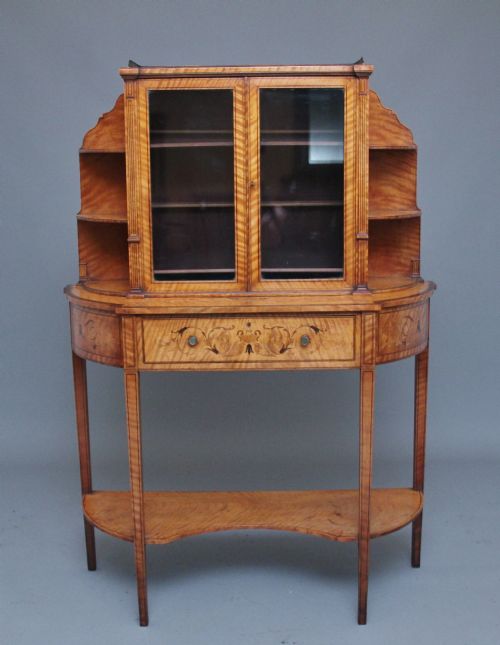
A victorian satinwood vitrine brings pale, figured timber and fine glass display into a room, made to showcase precious objects.
Victorian Satinwood Vitrine
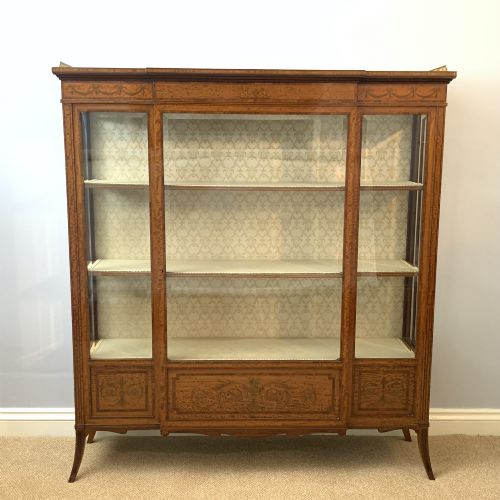
A victorian satinwood vitrine is a glazed display cabinet shaped to house small treasures, collections, and porcelain behind clear glass panes. These pieces emerge chiefly from the nineteenth century, spanning decades such as 1850, 1860, 1880, 1890, and 1900, alongside Edwardian examples.
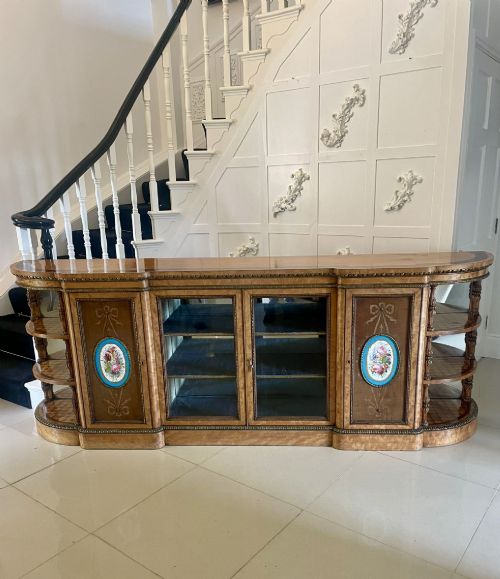
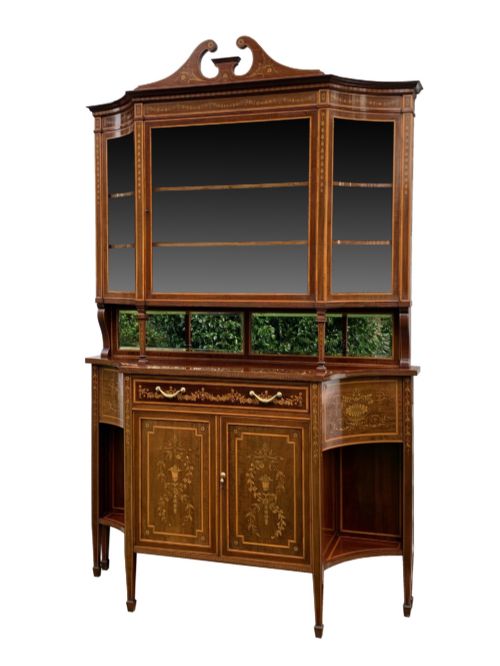
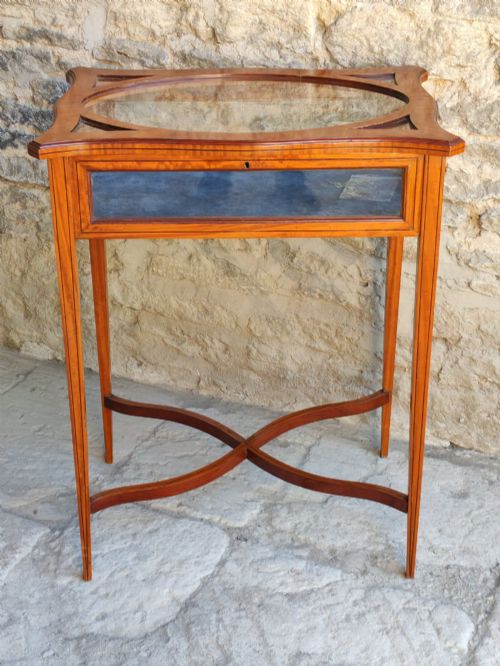
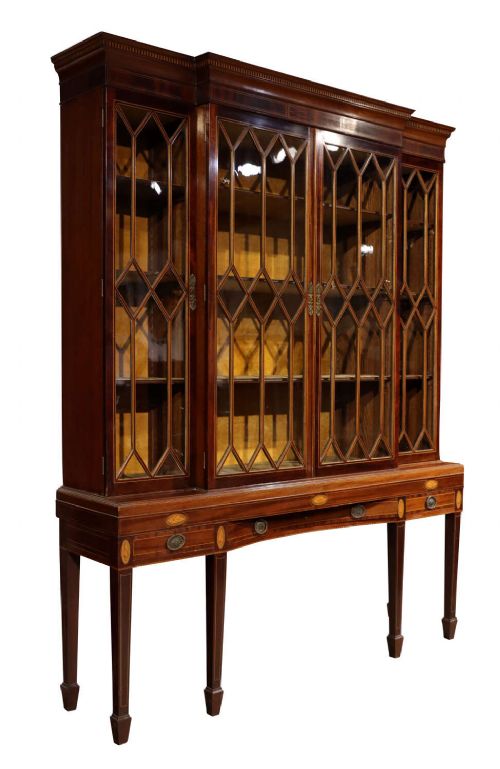
The forms on this page include display cabinets, pier cabinets, corner cabinets, bijouterie tables, and expansive breakfront bookcases. Many follow revival aesthetics, drawing on Sheraton revival, Louis XVI revival, French Napoleon III, and neoclassical vocabularies.
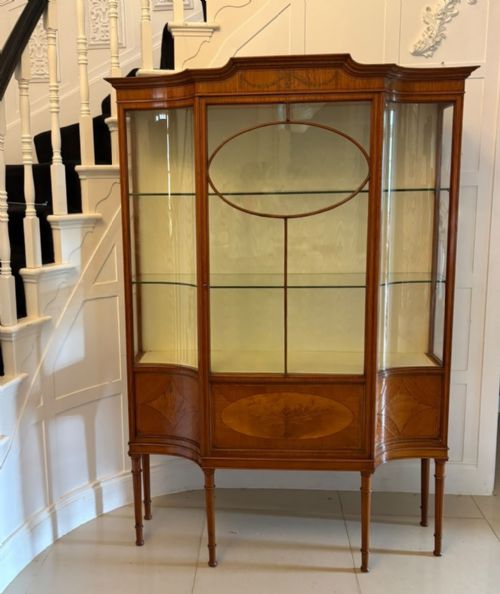
Buyers most commonly meet upright single or double door display cabinets, bowed front cases, and glass-topped bijouterie tables designed for tabletop viewing. These items bring polished timber and reflective glass surfaces into domestic interiors.
How they were made
Cabinet makers utilised pale satinwood veneers laid over sturdy carcass timbers, enriched with intricate fruitwood inlay and contrasting marquetry. Brass mounts, gilt bronze, and ormolu provide metallic accents along edges, mounts, and lock escutcheons.
Glass panels are fitted into glazed doors and sides to illuminate the interior, frequently backed by mirror glass or lined with fabric to set off objects placed inside.
Cabinet makers occasionally hid secret compartments behind delicate marquetry panels, leaving modern owners hunting for hidden drawers.
What varies in quality
Quality rests in the choice of cabinet timber and the precision of the marquetry work, where tightly figured satinwood and crisp fruitwood details set finer pieces apart. The integration of cast ormolu mounts and heavy brass hardware adds architectural weight to the lighter wood.
Construction standards show in the balance of breakfront proportions, the clarity of the glazed panes, and the integration of mirror glass and fabric linings within the display space.
Edwards and Roberts
The Victorian Satinwood Vitrine Glossary
- Vitrine
- A glass-fronted cabinet or case designed for displaying fine objects and porcelain. These pieces protect collections while keeping them visible from all angles.
- Satinwood
- A durable tropical timber known for its pale colour and lustrous, light-reflecting grain. It serves as the primary veneered surface on high-status nineteenth-century case furniture.
- Marquetry
- Decorative patterns formed by fitting together contrasting veneers of wood and other materials. Artisans use this technique to create floral motifs and geometric designs across cabinet doors.
- Bijouterie table
- A glass-topped display table intended for holding small ornaments, jewellery, and curiosities. These low tables allow items to be viewed from above.
- Ormolu
- Gilded bronze mounts applied to furniture for decorative contrast. They frame glass panels and corners on neoclassical and revival pieces.
- Pier cabinet
- A narrow cabinet built to fit the wall space between windows. These upright pieces maximise display capacity in smaller vertical footprints.
Victorian Satinwood Vitrine: Frequently Asked Questions
What is a vitrine used for?
A vitrine serves to display and protect delicate ornaments, porcelain figures, and small collectibles behind glass. The enclosed space keeps dust away while maintaining full visibility.
Historically, these cabinets held precious items that owners wished to exhibit in drawing rooms and reception spaces. Today, they continue to function as display enclosures for curated collections.
How do I date a satinwood cabinet?
Dating relies on the combination of styles, construction methods, and materials recorded across nineteenth-century and Edwardian examples. Sheraton revival pieces often point towards the later decades of the era.
Details such as brass hardware, marquetry patterns, and revival influences help narrow the period of manufacture. Archival records and maker signatures provide further chronological markers.
Where should I place a corner cabinet?
A corner cabinet fits directly into room angles to utilise unoccupied wall junctions. These pieces make efficient use of difficult layouts while adding vertical display space.
Placing them away from direct sunlight helps protect the satinwood veneer and internal fabric linings from fading. Adequate clearance allows glazed doors to open smoothly.