




Victorian Satinwood Dresser
These victorian satinwood dresser pieces bring warmth and refined timber figuring into a bedroom, offering both deep storage and classic nineteenth-century presence.
Victorian Satinwood Dresser
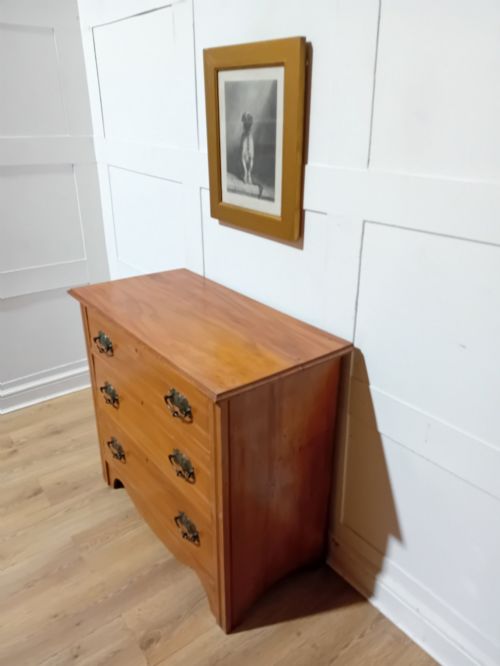
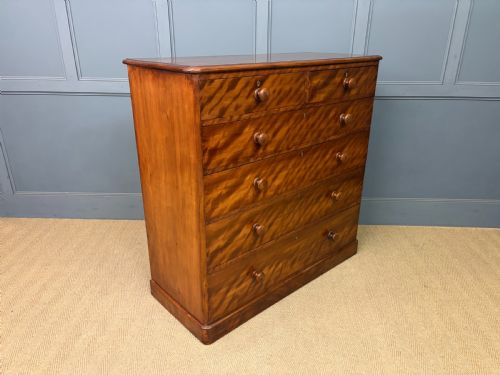
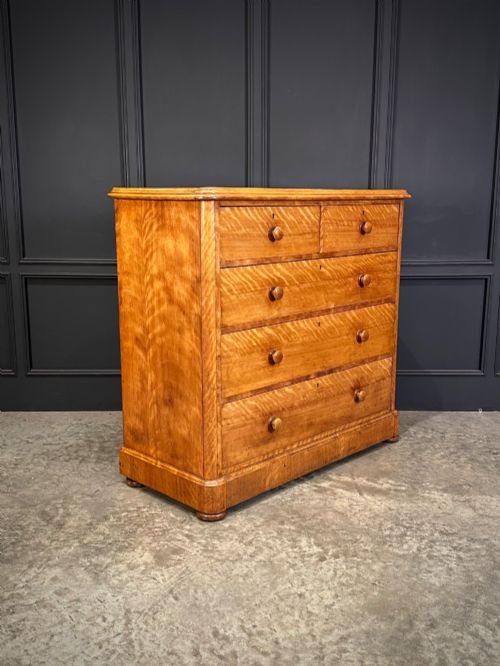
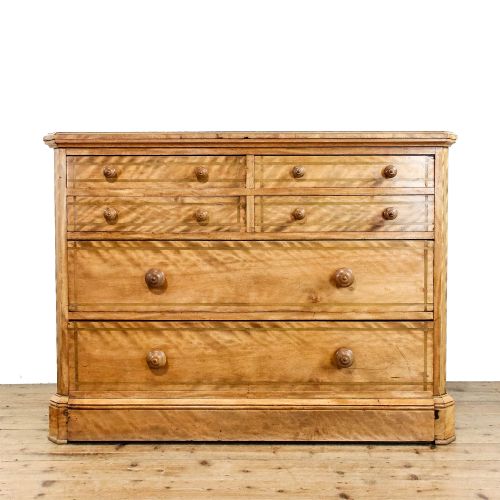
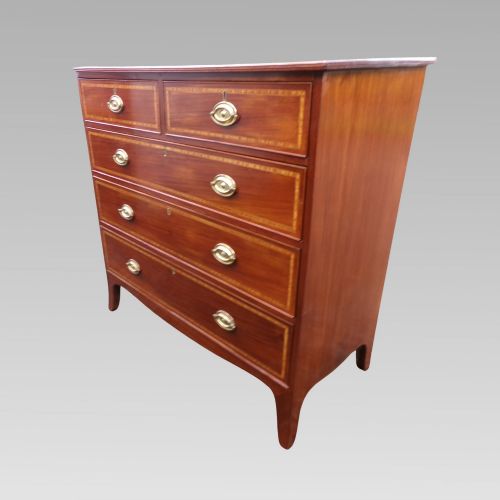
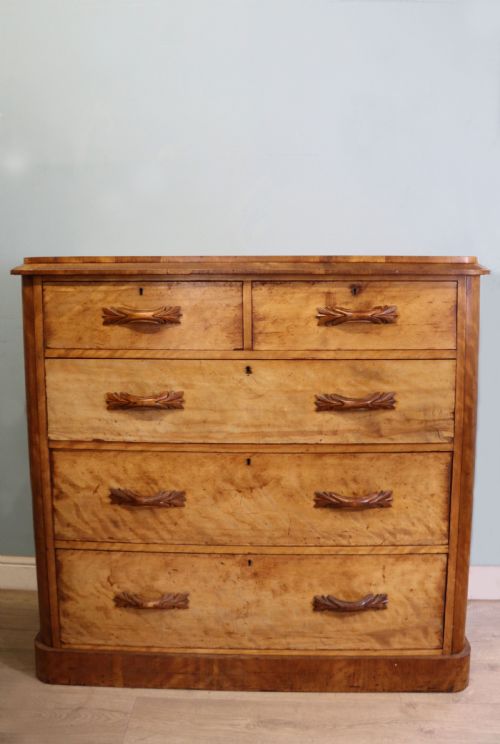
When you search for a victorian satinwood dresser, you are looking at substantial bedroom furniture built during the nineteenth century, most commonly taking the form of a robust chest of drawers or a large dressing table. These items showcase the pale, luminous grain characteristic of the timber, often elevated with crossbanding or fine embellishments.
The versions most frequently met on this page date from the middle to the late nineteenth century, spanning the Victorian era and the subsequent Sheraton Revival. They range from utilitarian Scottish vanity pieces to serpentine-fronted chests designed for formal drawing rooms and chambers.
How they were made
Cabinetmakers constructed these pieces primarily using solid timber frameworks lined with secondary woods like pine, applying fine satinwood veneers to the visible exterior surfaces. Selected sections frequently feature contrasting mahogany crossbanding to frame the drawer fronts and accentuate the pale grain.
Makers integrated brass hardware such as drop handles and escutcheons to complement the golden tones of the wood. Drawer interiors typically employ sturdy timber construction joined by hand-cut dovetails designed to withstand daily use.
Materials recorded across the inventory include satinwood, mahogany, satin birch, pine, brass, glass, and general timber.
What varies in quality
The standard of a victorian satinwood dresser depends heavily on the selection of the timber veneers and the precision of the cabinetwork. Pieces with highly figured grain patterns and carefully matched crossbanding stand clearly apart from plain examples.
Construction details also dictate the tier of the piece, particularly the finesse of the drawer linings and the integration of decorative embellishments. Items produced by established workshops demonstrate superior stability and joinery compared to standard commercial output.
Heal And Son
The Victorian Satinwood Dresser Glossary
- Satinwood
- A hard, durable timber with a natural golden sheen and smooth texture that takes a high polish. It was favoured by nineteenth-century cabinetmakers for high-status bedroom furniture.
- Sheraton Revival
- A late nineteenth-century design movement inspired by the neoclassical work of George Sheraton. It reinterprets eighteenth-century lightness and proportion using satinwood veneers.
- Crossbanding
- A decorative technique where a border of veneer is applied to the edges of a drawer front or top with the grain running perpendicular to the main panel. This frames the primary timber.
- Serpentine
- A gently undulating curved front shape popular on case furniture during the period. It requires advanced woodworking skill to execute cleanly across multiple drawers.
- Dovetail
- A traditional interlocking joint used to connect drawer sides to drawer fronts and backs. Hand-cut variations indicate skilled manual labour.
Victorian Satinwood Dresser: Frequently Asked Questions
What is a victorian satinwood dresser?
A victorian satinwood dresser is a nineteenth-century bedroom storage piece or dressing table surfaced with pale, figured satinwood timber.
These items were produced in various forms, from simple chests of drawers to grand vanity tables with glass mirrors.
How do I date a satinwood chest?
Dating relies on stylistic clues, construction methods, and period markers recorded in the titles, such as Sheraton Revival influences or specific nineteenth-century decades.
Examination of secondary woods like pine and the style of brass handles also helps narrow down the manufacturing period.
Where were these pieces used?
They were designed primarily for bedrooms and dressing rooms in nineteenth-century homes to store clothing and personal items.
Larger dressing tables served as dedicated spaces for grooming and personal care.
How do I care for satinwood?
Satinwood furniture requires gentle dusting with a dry, soft cloth and protection from direct sunlight to preserve the pale golden colour.
Applying occasional appropriate wax polish maintains the natural lustre of the timber surface without building up residue.