





Victorian Sailing Vessel Artwork
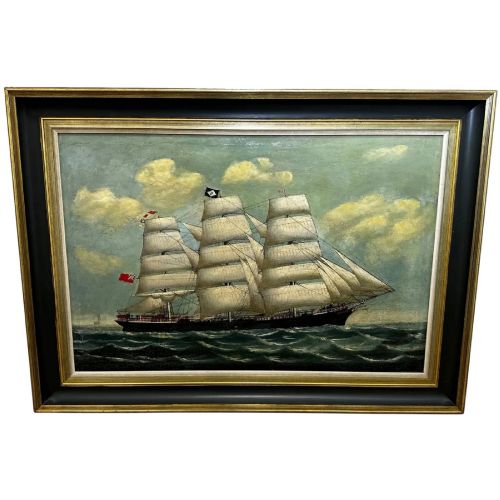
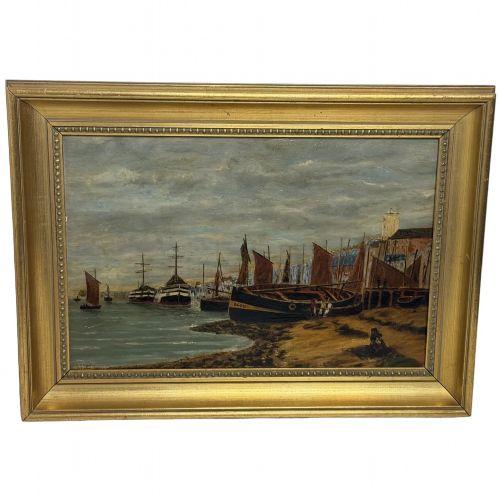
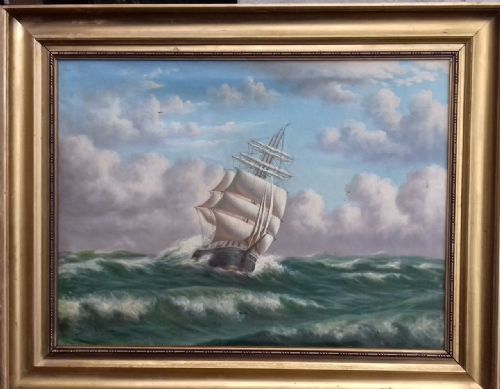
Victorian sailing vessel artwork records the era of merchant barques, heavy seas and coastal harbours on canvas and paper.
Victorian Sailing Vessel Artwork
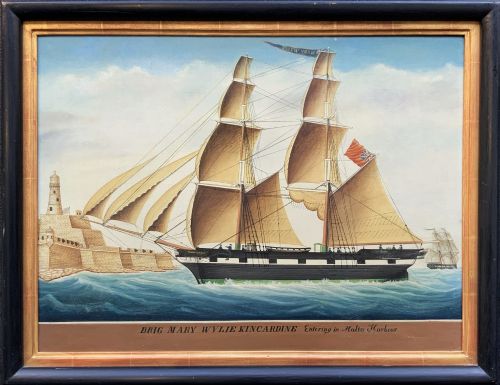
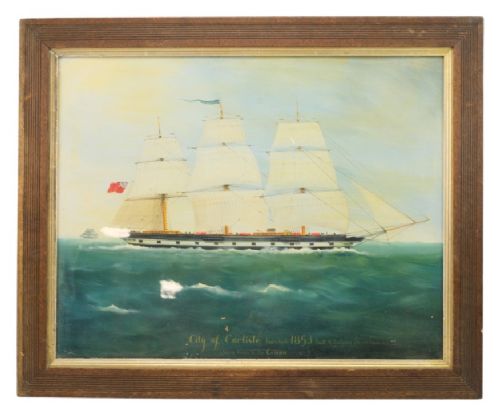
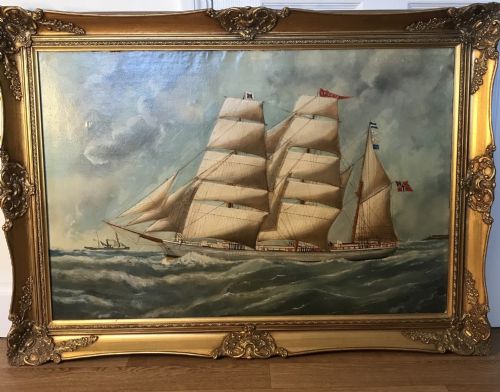
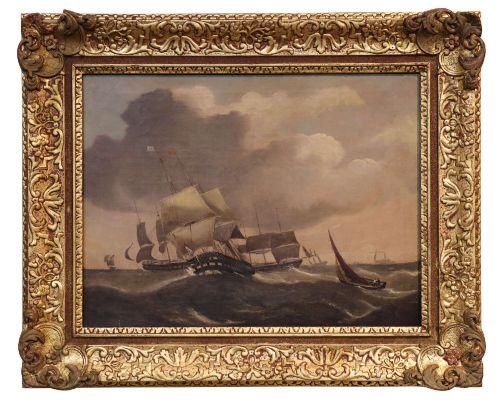
Victorian sailing vessel artwork comprises paintings, watercolours, and dioramas depicting ships at sea, coastal scenes, and maritime portraits from the nineteenth century. These pieces capture specific vessels like clippers, barques, and merchant ships, often rendered in choppy waters or at anchor.
The works on this page lean heavily towards oil paintings on canvas and watercolours on paper, framed in wood and giltwood. Buyers encounter named vessels, local harbours such as North Shields and the Isle of Wight, and scenes attributed to English, Scottish, and continental hands.
How they were made
Painters utilised oil on canvas or watercolour on paper, applying pigments to capture the atmospheric conditions of coastal storms and open sea passages. Canvases are stretched over wooden frames, while watercolours frequently sit beneath glass within timber mouldings.
Makers integrated gold leaf and giltwood for framing, enhancing the visual weight of marine scenes. Dioramas incorporate wood and modelled elements to construct three-dimensional representations of named ships like the Queen Anne.
Victorian Sailing Vessel Artwork Retail Price Guide 2026
Typical asking prices for victorian sailing vessel artwork among the pieces listed under this phrase on Sellingantiques today, from the lower quarter to the upper quarter. They describe what is for sale here now, not the wider market.
The listings combine oil on canvas, watercolour on paper, and wood-framed dioramas across the nineteenth and early twentieth centuries.
What varies in quality
The distinction between standard maritime records and superior works rests on the precision of rigging detail, the convincing movement of water in heavy seas, and the documentary accuracy of the vessel portrayed. Skilled hands render the specific architectural characteristics of three-masted schooners and clippers rather than generic hull shapes.
Compositional balance and atmospheric depth separate routine ship portraits from compelling works of marine art. The handling of light on canvas and the preservation of original framing materials significantly influence the standing of an individual piece.
John Rose Miles·Charles William Adderton·William Frederick Settle·Daniel Sherrin·George Gregory·Ebeneezer Colls·Gustave De Breanski·Joseph Heard·Samuel John Milton Brown·Richard Ball Spencer·George Stainton·Thomas Bush Hardy
The Victorian Sailing Vessel Artwork Glossary
- Barque
- A sailing vessel with three or more masts, having the fore-mast and main-mast square-rigged and the mizzen-mast fore-and-aft rigged. This rig appeared frequently in nineteenth-century commercial shipping.
- Diorama
- A three-dimensional scene depicting historical ships or coastal views, constructed using wood and modelled components. These objects combine painting techniques with sculptural elements.
- Giltwood
- Wood carved and covered with a thin layer of gold leaf or gold paint. It serves as the primary material for framing period marine paintings.
- Lithograph
- A print made from a design drawn on limestone or a metal plate. Sets of these appeared as affordable nautical imagery.
- Marinescape
- A work of fine art depicting the sea, coastal views, or ships in motion. The term encompasses both oil paintings and watercolours.
Victorian Sailing Vessel Artwork: Frequently Asked Questions
What subjects appear in these paintings?
Artists recorded named merchant ships, clipper ships, fishing boats, and coastal harbours in various weather conditions. Scenes range from vessels in heavy seas to ships at anchor near British and continental ports.
The works function as both historical documents of maritime trade and expressions of nineteenth-century marine art.
How do oils and watercolours differ?
Oil paintings utilise pigment suspended in drying oil on canvas, providing rich colour depth and textured brushwork suited to stormy seas. Watercolours employ water-soluble pigments on paper, creating lighter, more luminous coastal views.
Both mediums received contemporary framing in wood or giltwood to suit domestic interiors.
Where were these artists working?
Makers operated across Britain, with distinct regional groups working in English, Scottish, and Cornish coastal locations. Foreign vessels and European harbours also provided subjects for travelling painters.
Local maritime activity directly influenced the specific ports and ships recorded in the artwork.
How should these pieces be displayed?
Works on canvas and paper require placement away from direct sunlight and excessive humidity to protect pigments and paper fibres. Original timber frames benefit from gentle dusting without chemical polishes.
Proper wall placement ensures stable environmental conditions for both watercolours under glass and unglazed oil paintings.