



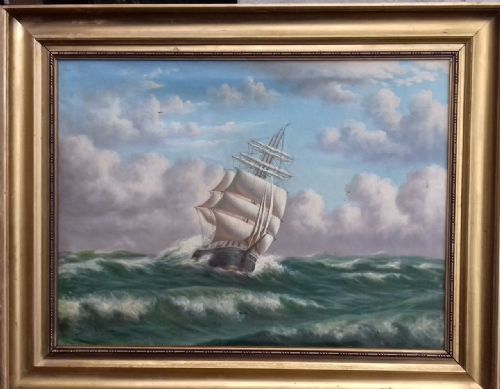


Victorian Sailing Vessel Art
Victorian sailing vessel art captures the maritime heritage of the nineteenth century through oil paintings, watercolours and cased dioramas.
Victorian Sailing Vessel Art
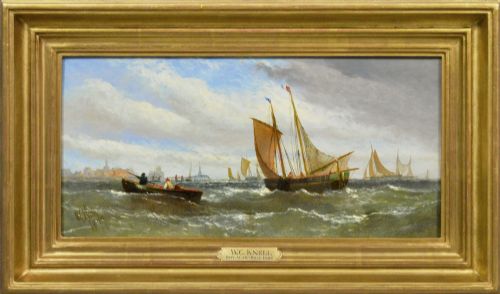
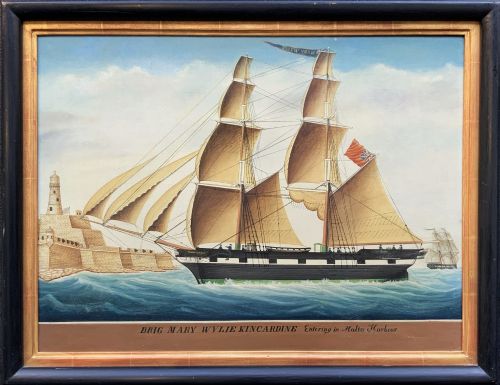
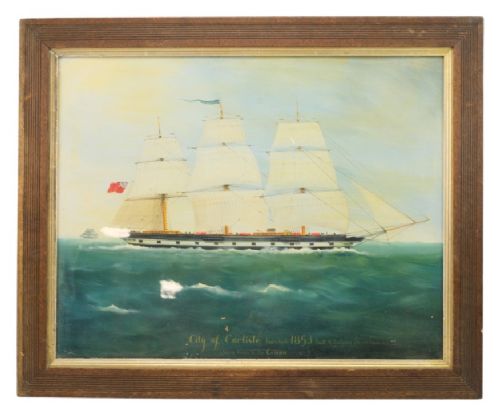
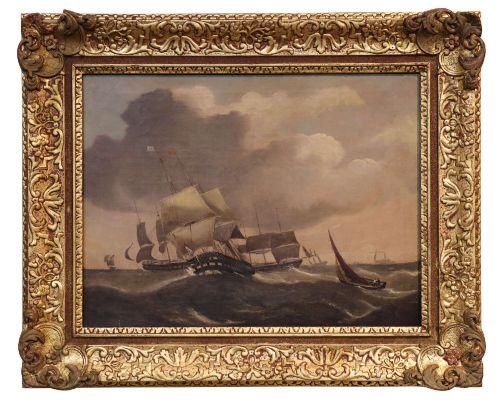
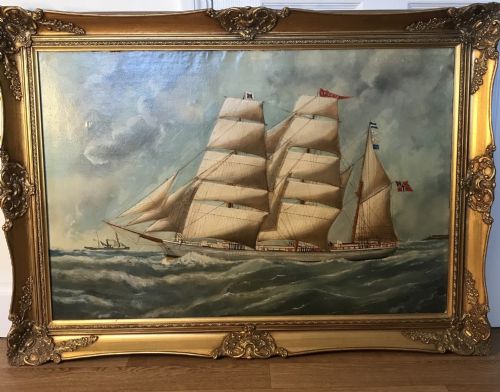
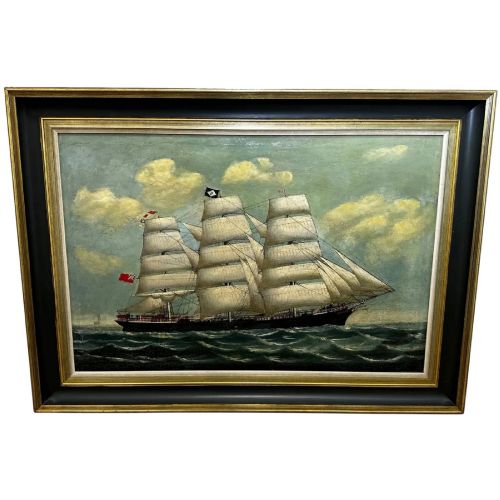
Victorian sailing vessel art encompasses oil paintings, watercolours and dimensional dioramas depicting merchant ships, barques and coastal scenes from the nineteenth century. These works record specific vessels, named ships and stormy seas through detailed maritime portraiture and folk art forms. Buyers typically encounter framed oil paintings on canvas and cased shadow boxes featuring carved wooden hulls.
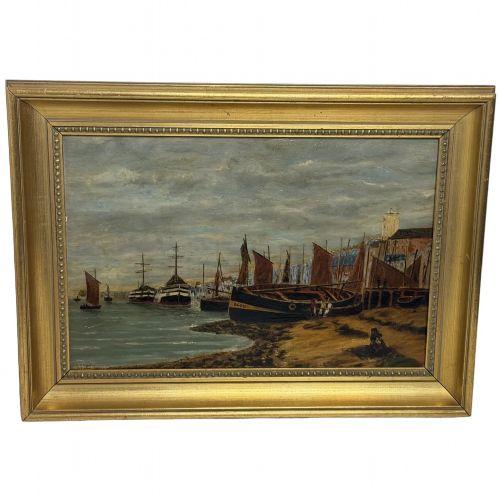
The objects span periods from the mid-nineteenth century through to the early twentieth century, including named artists and regional English, Scottish and Cornish pieces. Subject matter ranges from clipper ships and barques under full sail to vessels navigating rough coastal waters and harbour mouths. Wall art formats include both individual paintings and lithograph sets depicting historic maritime trade.
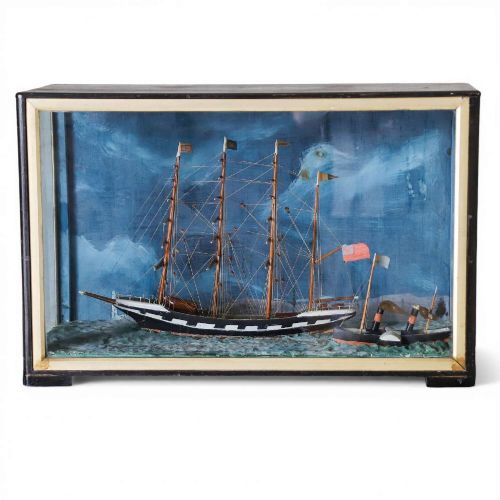
Representations take the form of flat wall art in oil and watercolour alongside sculptural dioramas encased in glass. Maritime dioramas often incorporate carved wooden models set against painted canvas backdrops, sometimes utilising straw work or layered textures to create depth. These pieces reflect the active shipbuilding and trading ports of the period.
Distinctions in execution
Quality rests upon the precision of rigging detail, the anatomical accuracy of the vessel depicted and the handling of light on water. Finer works demonstrate correct nautical proportions and convincing movement in choppy seas.
In dioramas, the level of craftsmanship in the carved wooden hull and the integration of the painted background determine the success of the piece. Superior examples maintain proportion and depth within the glass case.
Victorian Sailing Vessel Art Retail Price Guide 2026
Typical asking prices for victorian sailing vessel art among the pieces listed under this phrase on Sellingantiques today, from the lower quarter to the upper quarter. They describe what is for sale here now, not the wider market.
Straw work ships utilise split dried straw to catch the light, turning farmyard stalks into gleaming maritime rigging.
John Rose Miles·Lai Fong·Charles William Adderton·William Frederick Settle·Daniel Sherrin·Marie Edouard Adam·Ebeneezer Colls·Gustave de Breanski·Joseph Heard·Samuel John Milton Brown·Richard Ball Spencer·George Stainton·Thomas Bush Hardy
The Victorian Sailing Vessel Art Glossary
- Barque
- A sailing vessel with three or more masts, having the fore and mainmasts square-rigged and the mizzenmast fore-and-aft rigged. This rig was common for long-distance cargo transport in the nineteenth century.
- Diorama
- A three-dimensional scene enclosed in a glass case, incorporating a carved wooden ship model set against a painted canvas backdrop. These displays often show vessels in motion at sea or moored in harbour.
- Clipper
- A very fast nineteenth-century merchant sailing ship with three masts and a curved bow. Clippers were built for speed on trade routes.
- Marine painting
- Artwork depicting ships, coastal views, naval battles or the sea. This genre encompasses both formal ship portraits and atmospheric seascapes.
- Folk art
- Artistic work created by untrained or traditional craftspeople, utilising local materials. In maritime contexts, this includes naive wooden dioramas and straw work ship depictions.
Victorian Sailing Vessel Art: Frequently Asked Questions
What is a maritime diorama?
A maritime diorama is a three-dimensional model of a ship enclosed in a glass-fronted wooden case. The carved wooden vessel is set against a painted canvas background representing the sea and sky.
These pieces were often created by sailors or coastal folk artisans to record specific ships. The enclosed format protected the delicate rigging and carved details from dust and damage.
How do I identify the ship in a painting?
Many nineteenth-century marine paintings include the name of the vessel on the hull, the flag flying from the stern or within the title inscribed on the frame. Ship portraits often recorded specific merchant vessels, barques and clippers commissioned by owners or captains.
Examining the rig, number of masts and distinctive background landmarks such as lighthouses or specific harbours can also help identify the vessel. Shipping line records from the period provide further historical context.
Where were these maritime artworks made?
These pieces originated in coastal towns and major port cities across Britain, including North Shields, the Isle of Wight, and Scottish maritime centres. Artists and folk makers worked in areas with active shipbuilding and trading connections.
Works often reflect local coastal topography, capturing specific harbours, river mouths and familiar shipping routes travelled by British merchant fleets.
How should I display a cased diorama?
Cased dioramas require a stable environment away from direct sunlight and excessive temperature fluctuations to protect the wood, paper backdrops and glass housing. Placing them on a sturdy shelf or wall mount ensures the heavy wooden frame is securely supported.
Cleaning should be limited to gentle dusting of the exterior glass and frame. The sealed interior protects the delicate model and painted elements from physical contact.