

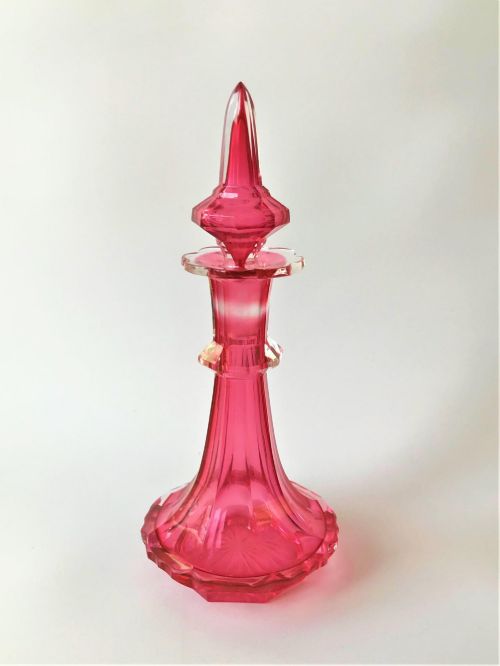
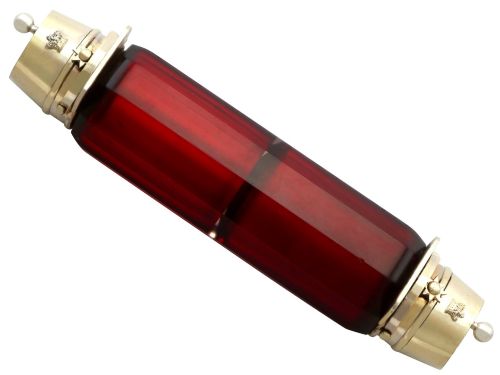
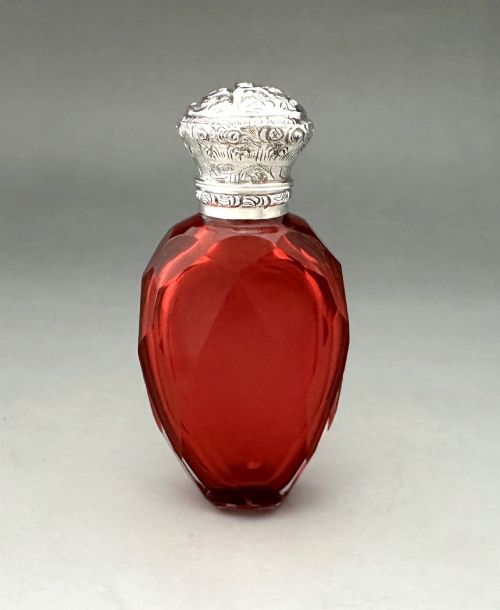
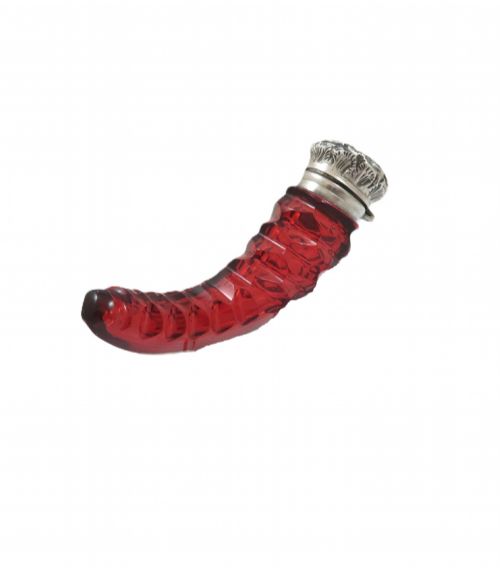





Victorian Ruby Glass Bottle
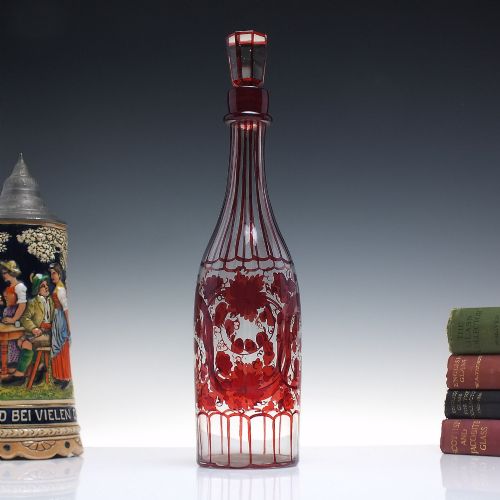
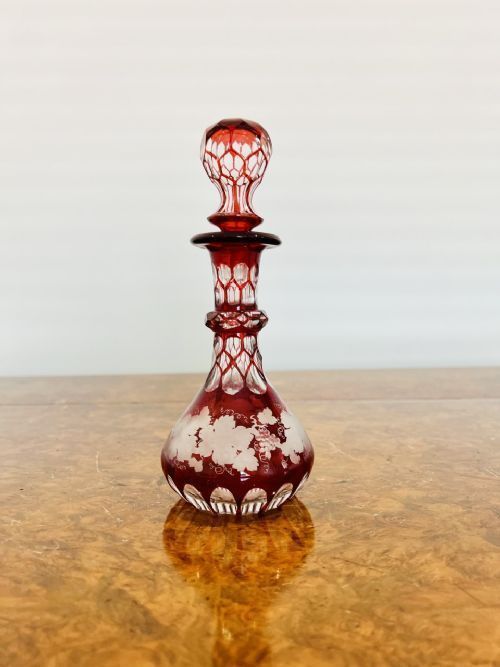
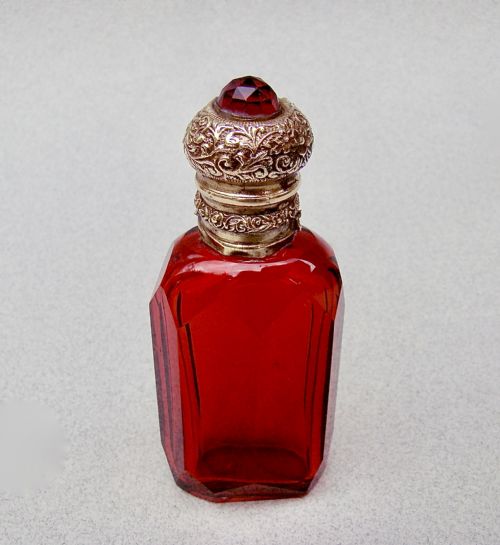
A victorian ruby glass bottle brings deep crimson colour and bright silver mounts to the dressing table or cabinet.
Victorian Ruby Glass Bottle
When you search for a victorian ruby glass bottle, you encounter small personal scent containers alongside larger serving vessels and decanters. The personal bottles often include silver screw caps, hinged lids, or double-ended designs fitted with stoppers for carrying perfume.
The objects span the nineteenth and early twentieth centuries, with origins in English, French, and Bohemian workshops. Many examples incorporate sterling silver, silver gilt, or ormolu mounts that secure the glass bodies.
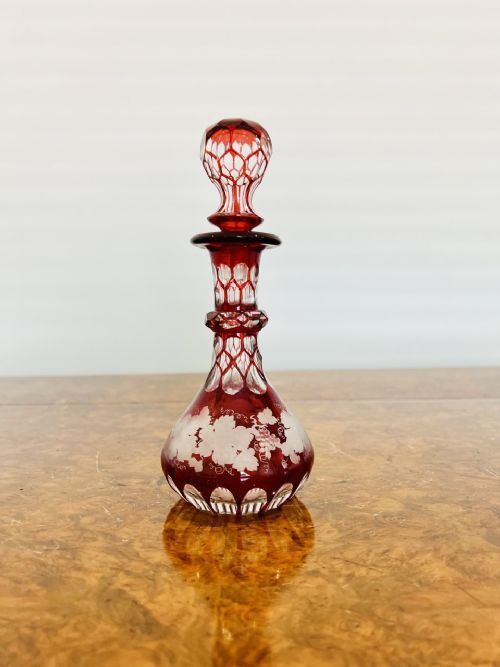
Decanters and carafes form a distinct grouping within these pieces, offering larger vessels for spirits and wine. These often utilise cut glass or overlay techniques to contrast deep red surfaces with clear glass underneath.
How they were made
Makers produced these objects by combining blown glass bodies with metalwork mounts of sterling silver, silver gilt, or ormolu. Overlay and flash techniques allowed craftsmen to fuse layers of ruby glass over clear or crystal glass before cutting facets or engraving the surface.
Silversmiths shaped hinged lids, screw caps, and cornucopia ends to fit the glass necks precisely. Hand painting, gilding, and enamel work frequently decorated the exterior surfaces of both scent bottles and decanters.
Victorian Ruby Glass Bottle Retail Price Guide 2026
Typical asking prices for victorian ruby glass bottle among the pieces listed under this phrase on Sellingantiques today, from the lower quarter to the upper quarter. They describe what is for sale here now, not the wider market.
Object forms range from small personal perfume flasks to large decanters and carafes.
What varies in quality
The distinction between standard production and the finest work lies in the depth of the glass cutting and the weight of the metal mounts. Heavy sterling silver lids bearing clear hallmarks and maker marks elevate a piece above those with simple plated caps.
Complexity of form also dictates the tier of the object, moving from simple cylindrical flasks to double-ended bottles, faceted triangular designs, and figural shapes such as owls or cornucopias. The clarity of the overlay and the precision of the hand gilding show the skill of the original workshop.
Sampson Mordan·George Brace·Charles May
The Victorian Ruby Glass Bottle Glossary
- Cranberry glass
- A transparent pinkish-red glass coloured with gold chloride during production. It appears frequently across nineteenth-century scent bottles and decanters.
- Ruby glass
- A deep red glass achieved through the addition of copper or gold particles to the molten batch. This rich tone defines the aesthetic of the period pieces.
- Double-ended
- A scent bottle design featuring compartments at both ends, allowing the owner to carry two different perfumes simultaneously.
- Overlay
- A technique where a layer of coloured glass is cased over a body of clear or contrasting glass. Subsequent cutting removes parts of the top layer to reveal the clear glass beneath.
- Ormolu
- Gilded bronze or brass used for decorative mounts and collars on nineteenth-century French glassware.
- Vinaigrette
- A small ornamental box or bottle with a pierced inner grill, used to hold a sponge soaked in aromatic vinegar.
Victorian Ruby Glass Bottle: Frequently Asked Questions
How do I identify ruby glass?
Ruby glass displays a deep, rich red coloration that results from metallic oxides added during the melting process. Holding the piece to the light reveals the transparency and tone of the material.
Many nineteenth-century examples utilise an overlay technique where a thin ruby layer sits over clear crystal, visible where the glass has been cut.
Where were these glass bottles made?
The pieces originate primarily from English, French, and Bohemian workshops active throughout the nineteenth century. Each region brought distinct decorative traditions, such as French ormolu mounts or Bohemian overlay cutting.
British makers frequently paired imported glass bodies with domestic sterling silver mounts stamped with assay office marks.
How do I clean an antique scent bottle?
Cleaning requires gentle care to protect delicate silver mounts and historic glass surfaces. Warm water and mild soap suffice for removing interior residue without damaging the material.
Harsh chemical dips and abrasive cloths will ruin the original polish of both the glass and the silver or gilt metalwork.