


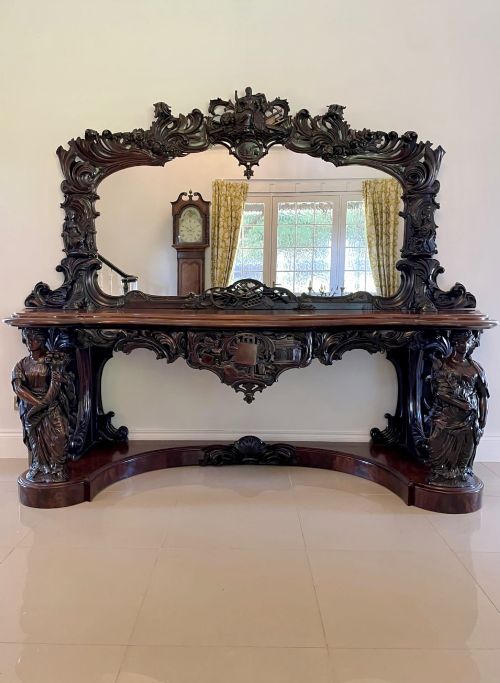
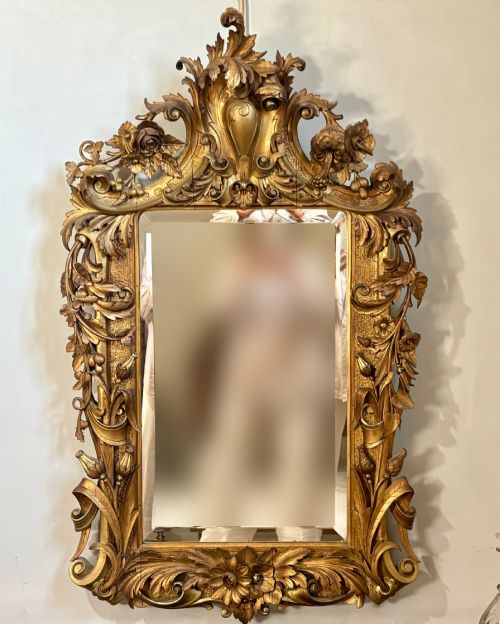
Victorian Rococo Wall Mirror
These pieces bring light and scale to a room, offering the swirling foliate flourishes of a victorian rococo wall mirror.
Victorian Rococo Wall Mirror
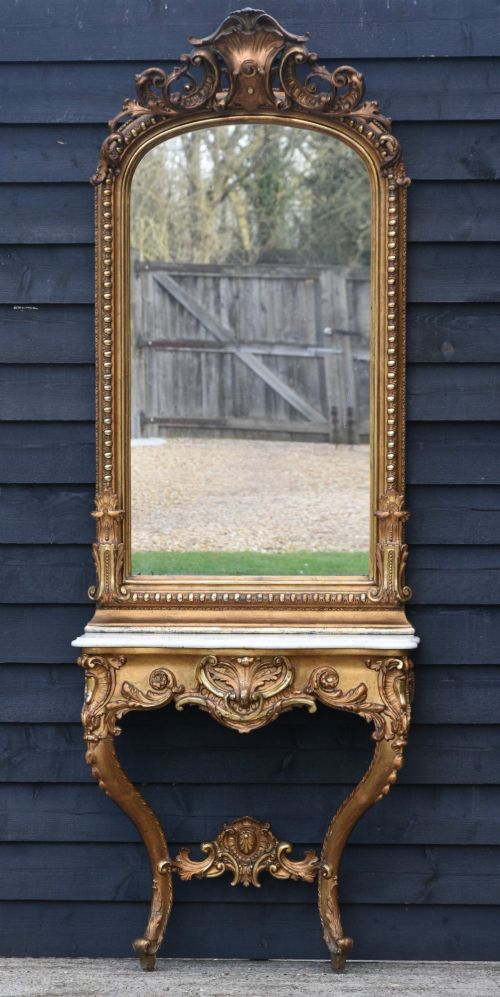
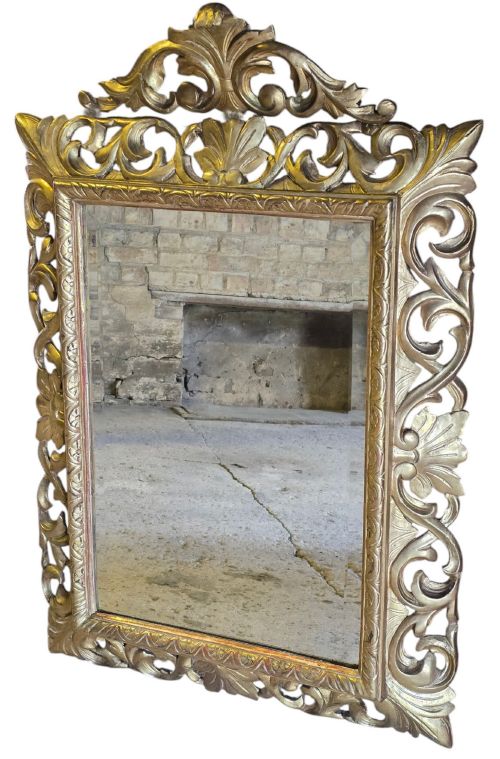
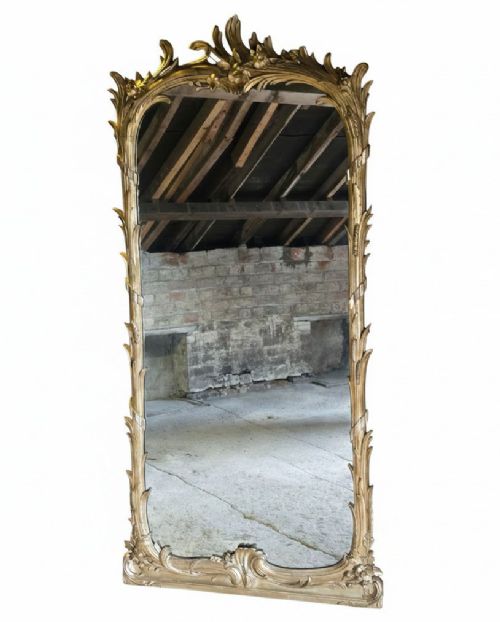
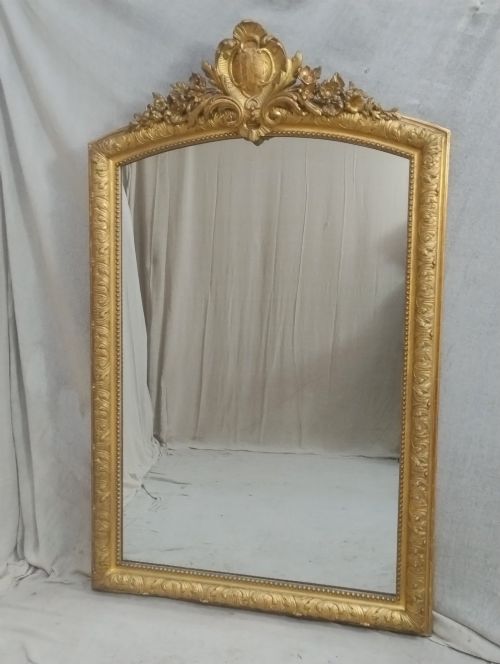
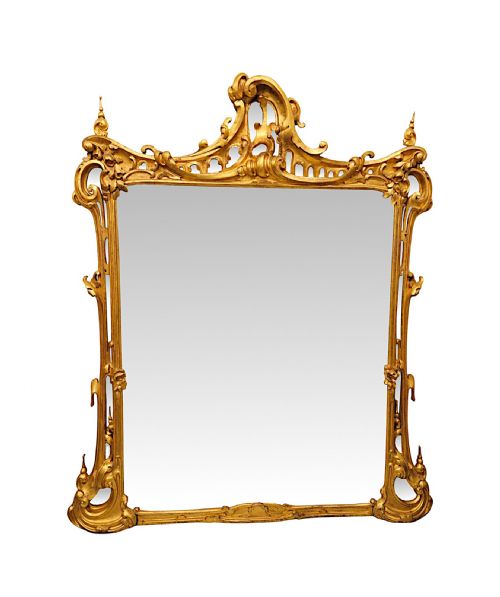
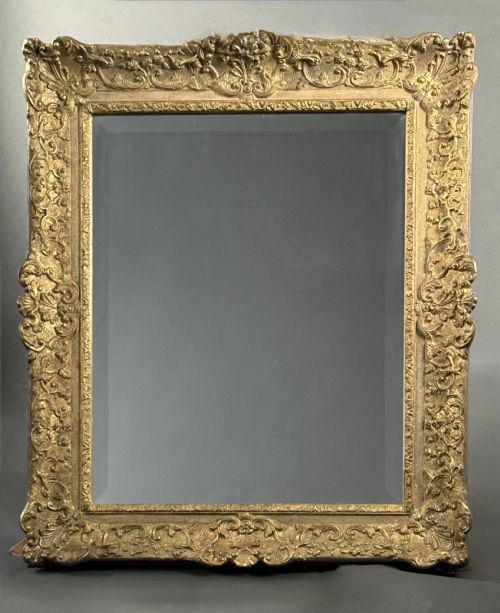
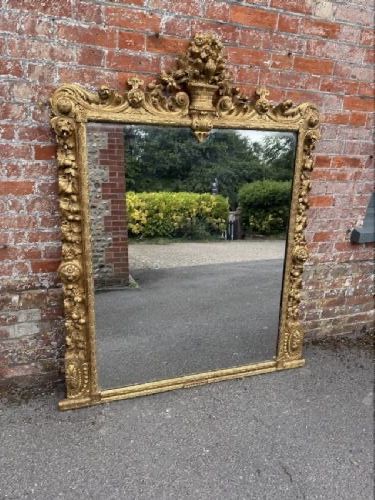
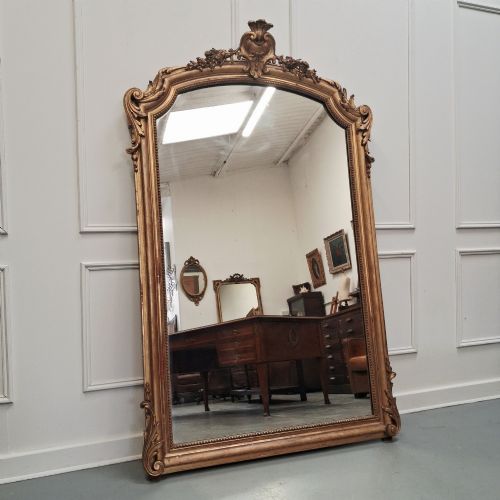
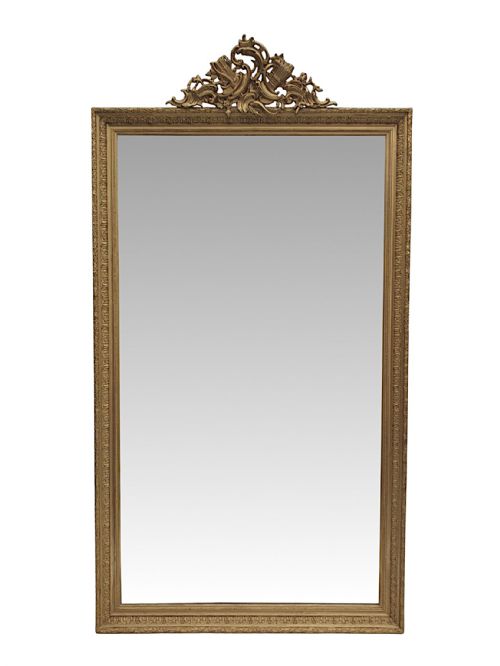
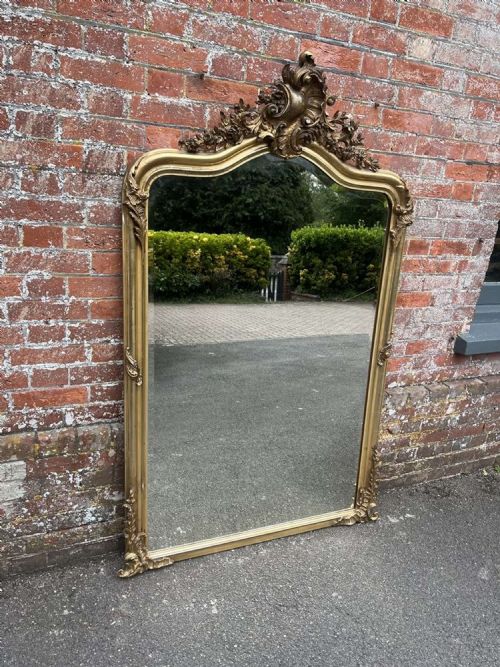
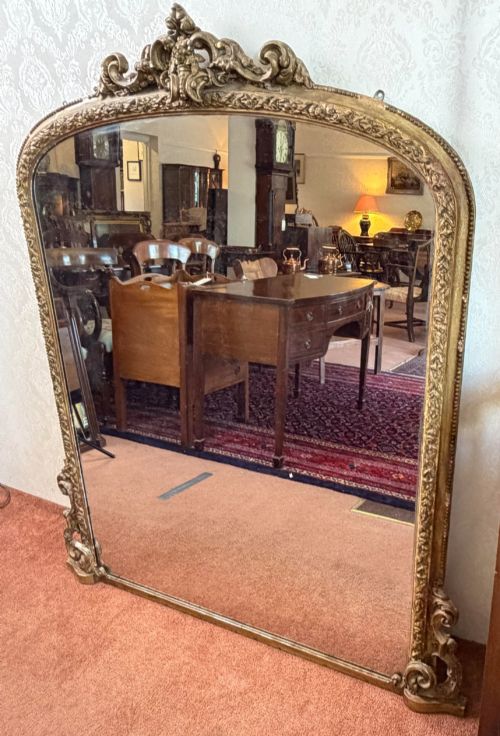
A victorian rococo wall mirror draws the eye through elaborate scrollwork, asymmetric cartouches and naturalistic leaf motifs carved into the frame. Buyers typically encounter these pieces as large overmantel mirrors or tall vertical plates intended to sit above a fireplace or console table.
The selection ranges across the nineteenth century, taking in English, French and Italian interpretations of the style. Many examples pair a heavy wooden armature with moulded composition ornament to achieve deep, sweeping relief.
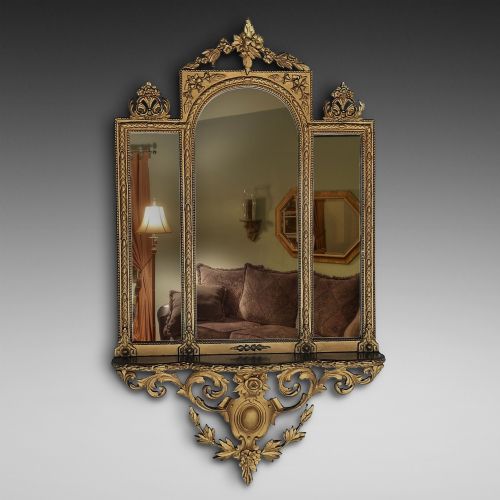
Alongside dedicated wall hangings, related formats appear in the inventory, including console tables with fitted mirror backs and girandole frames carrying candle sconces. These forms share the characteristic fluidity of line associated with the revival periods.
How they were made
Makers constructed the core framework from timber such as pine, oak or mahogany, joining sections to support the weight of heavy glass plates. Carvers then worked directly into the wood or applied layers of gesso to build up high-relief ornamentation.
Gilding technique involved laying thin sheets of gold leaf over a prepared bole ground, sometimes burnished to a high gloss or left matte to catch ambient light. Composition paste, moulded from resin and whiting, was frequently pressed into shape for repetitive scrollwork and floral details.
Listings span the nineteenth century, capturing Victorian, Edwardian, and French Rococo Revival styles executed in giltwood, gesso, and mahogany.
What varies in quality
The distinction between ordinary production and finer examples rests upon the crispness of the carving and the depth of the relief work. Hand-carved wooden details show subtle variations and undercut leaves, whereas massed composition mouldings tend towards softer, more uniform edges.
The quality of the mirror plate itself influences the character of the piece, with heavier bevelled glass and original silvering displaying the gentle ageing typical of nineteenth-century manufacture. The integration of the frame corners and the preservation of the original gilding further separate standard decorative items from exhibition pieces.
The Victorian Rococo Wall Mirror Glossary
- Giltwood
- Wood that has been coated with thin leaves of gold or metal alloy. This finish defines the reflective warmth of nineteenth-century frames.
- Gesso
- A plaster-like mixture applied to wood frames to provide a smooth surface for gilding or to be moulded into decorative reliefs. It allows for intricate, rounded ornamentation.
- Overmantel mirror
- A large mirror designed specifically to hang above a fireplace mantelpiece. These pieces often feature wide proportions to match the span of the hearth.
- Composition
- A mouldable mixture of whiting, linseed oil, resin and glue used to create decorative scrollwork and motifs quickly. It hardens into a durable material that takes gilding well.
- Girandole
- A wall mirror featuring attached candle sconces designed to multiply the flickering light of candles within a room. They frequently display elaborate rococo framing.
Victorian Rococo Wall Mirror: Frequently Asked Questions
Where should I hang a large overmantel mirror?
These mirrors traditionally anchor the space above a fireplace, reflecting light and drawing the ceiling height upward. They also function effectively above low sideboards or console tables in entrance halls.
Ensure the wall construction and fixings can support the substantial weight of a timber and gesso frame before hanging.
How do I identify a rococo revival frame?
Look for C-scrolls, S-scrolls, acanthus leaves and asymmetrical cartouches that mimic eighteenth-century French design. The frames often feature shaped tops and flowing, organic outlines rather than strict geometric symmetry.
Nineteenth-century interpretations combine these classical motifs with heavier proportions and machine-assisted composition mouldings.
Can these mirrors be leaned against a wall?
Larger formats, particularly leaner mirrors, are designed to stand stably against a vertical surface without wall fixings. This placement creates a relaxed, architectural presence in a room.
Floor-standing placement requires a secure base and protection for the lower edge against foot traffic or cleaning.
What maintenance do antique gilt surfaces require?
Keep giltwood and gesso surfaces away from direct sunlight and damp environments to protect the fragile gold leaf and underlying composition. Dust gently with a dry, soft brush.
Avoid liquid cleaners, polishes and cloths that might catch on raised carved elements or strip the thin metallic leaf.