




Victorian Rococo Revival Stool
A victorian rococo revival stool brings exuberant mid-nineteenth-century curves and rich timber frames to a room, offering both practical seating and decorative flair.
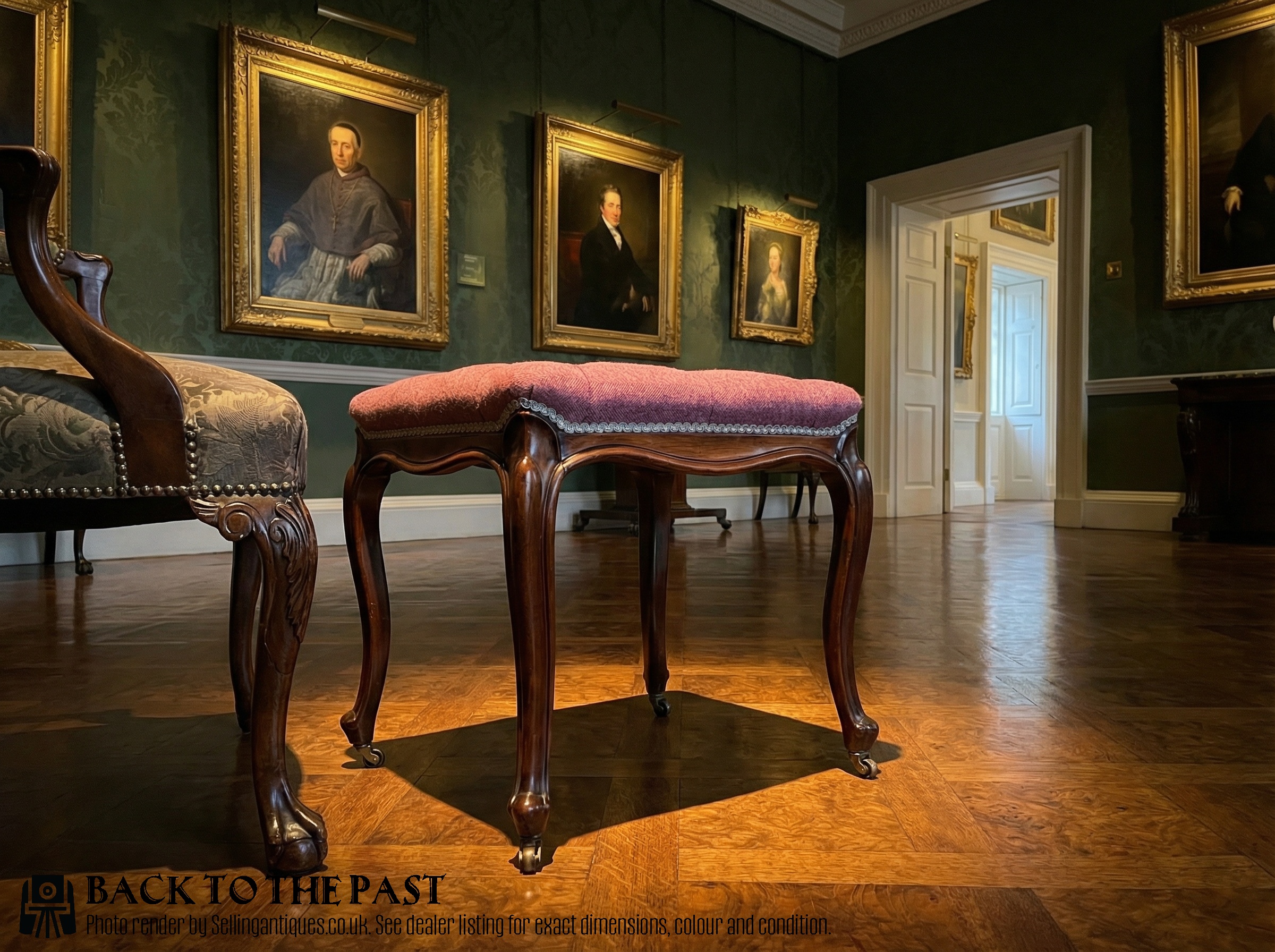
Victorian Rococo Revival Stool
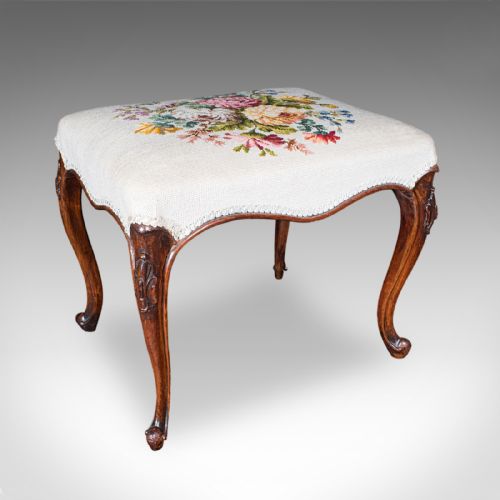
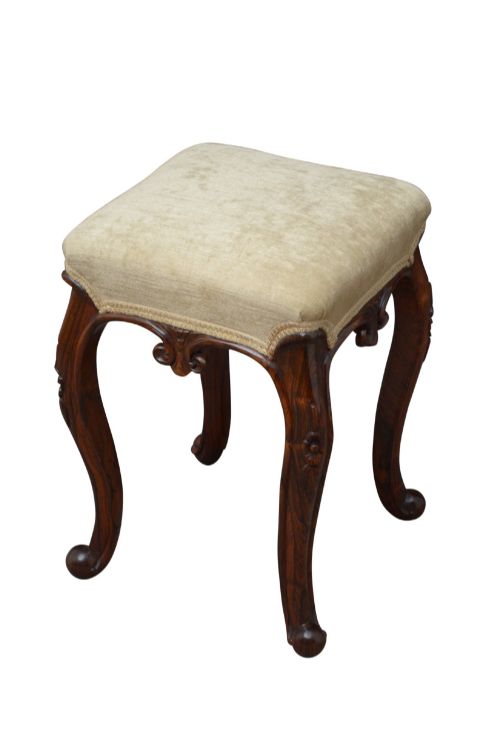
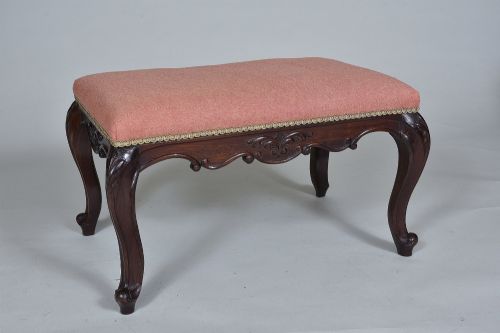
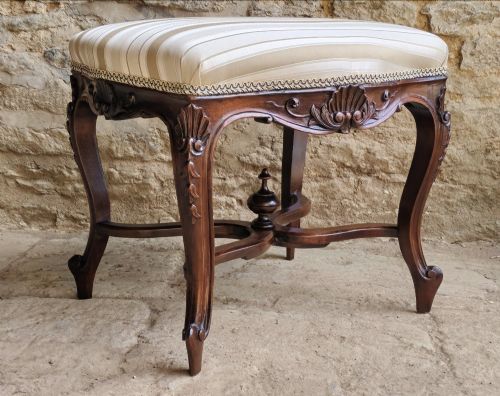
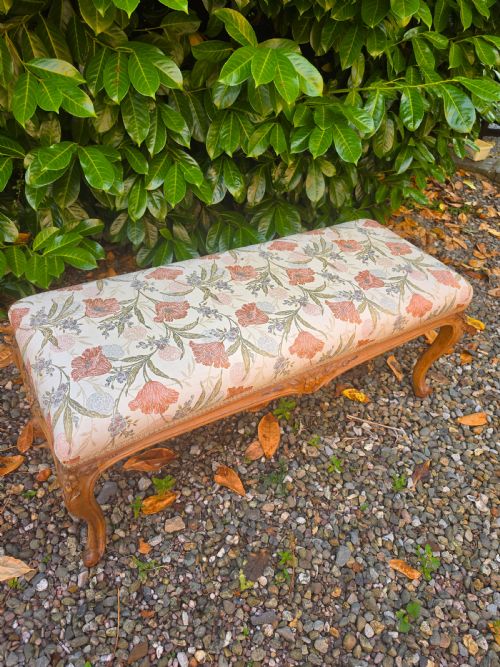
A victorian rococo revival stool embodies the decorative excess and fluid lines typical of the mid-nineteenth century. Buyers searching this phrase encounter various timber frames, most frequently walnut, mahogany, and rosewood, often paired with upholstered seats.
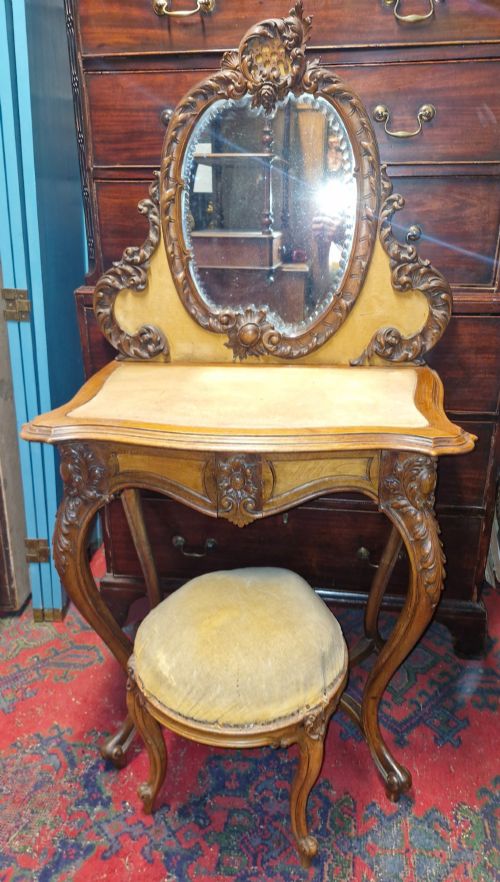
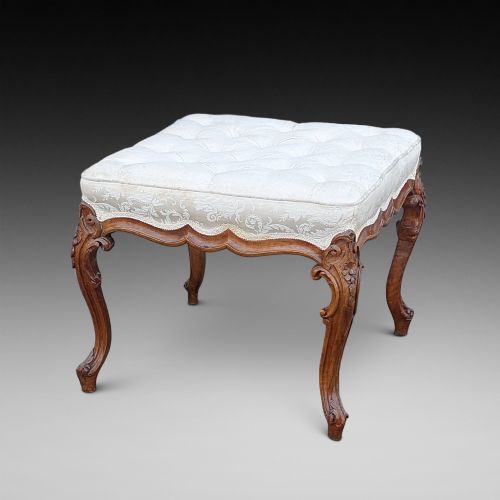
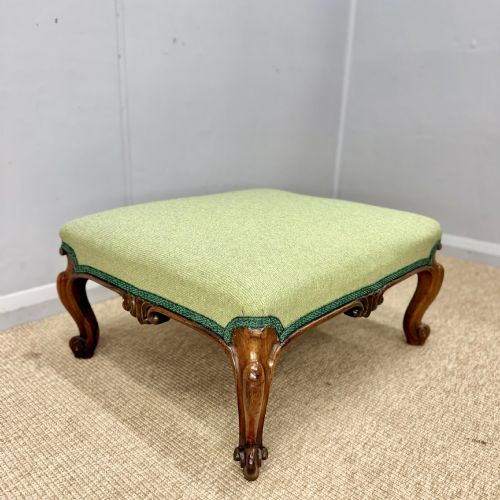
The pieces on this page span several specific forms, including fireside footstools, dressing table seats, salon stools, and music chairs. Many examples rely on carved cabriole legs to anchor their ornate frames.
Origins largely trace to English workshops producing pieces influenced by French Louis XV revival tastes and the broader Victorian aesthetic. The resulting furniture ranges from compact footrests to larger freestanding centre stools.
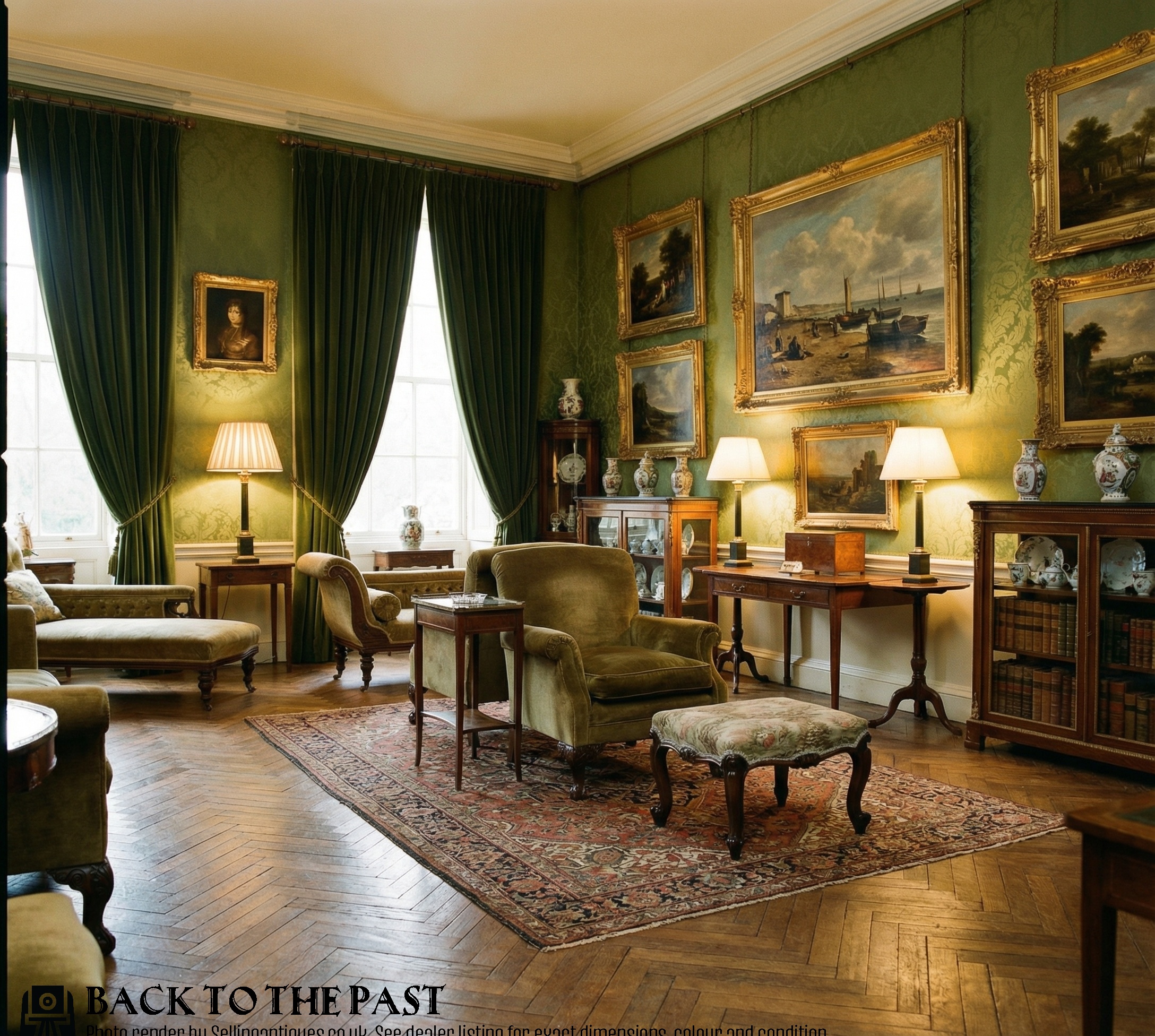
Materials and construction
Craftsmen shaped these frames from dense hardwoods like walnut, mahogany, and rosewood, which accepted deep carving and sculptural curves without splintering. Gilt surfaces and exotic timbers such as goncalo alves also appear across the selection.
Upholstery techniques involved traditional stuffing materials finished with textiles, velvet, wool, and needlepoint. Brass elements occasionally reinforced structural joints or decorated foot hardware.
Several rocking gout stools make an appearance, offering nineteenth-century sufferers of foot ailments a gentle way to sway.
Distinctions in craftsmanship
Quality rests heavily on the depth and crispness of the timber carving, where fluid floral motifs and organic scrolls separate ambitious salon pieces from simpler utility items. The choice of timber also dictates grade, with finely figured walnut and rosewood commanding greater visual weight than standard mahogany.
Proportion and structural harmony define the superior examples, particularly in how the cabriole legs flow into the seat rail. Retaining original upholstery details or authentic needlepoint adds another layer of historical integrity to the piece.
The Victorian Rococo Revival Stool Glossary
- Cabriole leg
- A furniture leg featuring a double curve, typically arching outward and then tapering down to a pad or scroll foot. This shape mimics animal legs and defines much of the revival aesthetic.
- Rococo revival
- A nineteenth-century design movement inspired by the French eighteenth-century rococo style, characterised by asymmetrical scrolls, shell motifs, and naturalistic curves. It dominated fashionable domestic interiors during the Victorian era.
- Centre stool
- A larger freestanding seating piece designed to sit in the middle of a room rather than against a wall. These substantial forms allowed for detailed carving visible from all sides.
- Goncalo alves
- A dense exotic hardwood sometimes utilised for distinctive cabinetwork and seating frames during the nineteenth century. Its striking grain patterns provided a decorative alternative to native timbers.
- Needlepoint
- A form of counted thread embroidery traditionally worked on canvas to create durable upholstery covers for stools and chairs. Period examples often display intricate floral or geometric patterns.
Victorian Rococo Revival Stool: Frequently Asked Questions
What is a rococo revival stool?
A rococo revival stool is a nineteenth-century seating piece inspired by earlier French design, featuring curved frames and naturalistic floral carvings.
These pieces were built as dressing table seats, salon footstools, or freestanding centre items for formal rooms.
How do I identify a Victorian stool?
Victorian stools are identified through period timber choices like walnut, mahogany, and rosewood, combined with characteristic revival styles.
Look for typical nineteenth-century construction methods, cabriole legs, and traditional upholstery textiles such as velvet or needlepoint.
Where were these stools placed?
Original placement depended on the specific form, with dressing stools sitting beneath vanity tables and fireside footstools placed near hearths.
Larger salon and centre stools stood unattached in the middle of Victorian reception rooms to display their carved frames.
Are these stools comfortable?
Comfort varies based on the original upholstery design, ranging from firm padded footrests to sprung salon seating.
Many surviving pieces feature traditional stuffing that provides a firm, supportive seat rather than modern plush cushioning.