



Antique Hearth Footstool
An antique hearth footstool brings low timber framing and traditional textiles together by the fireside.
Antique Hearth Footstool
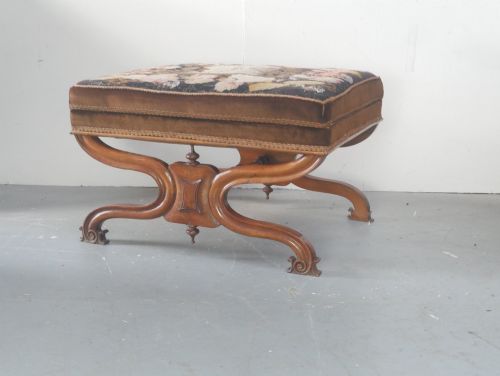
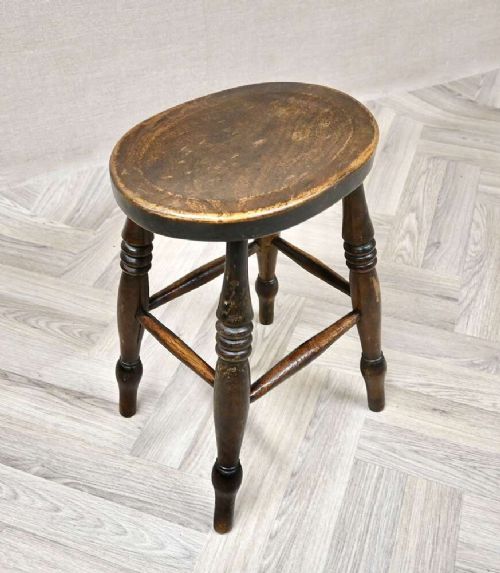
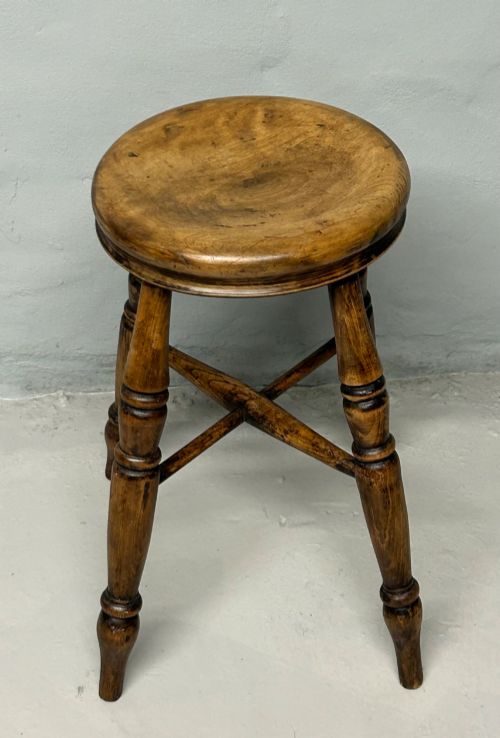
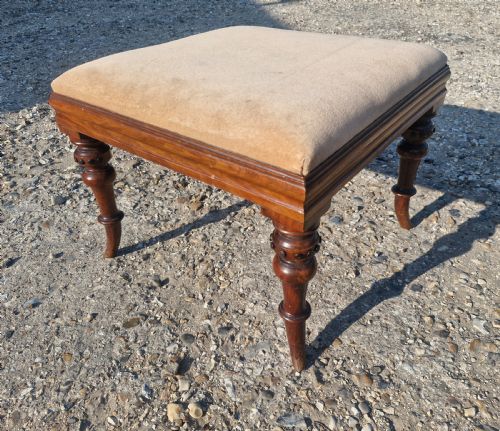
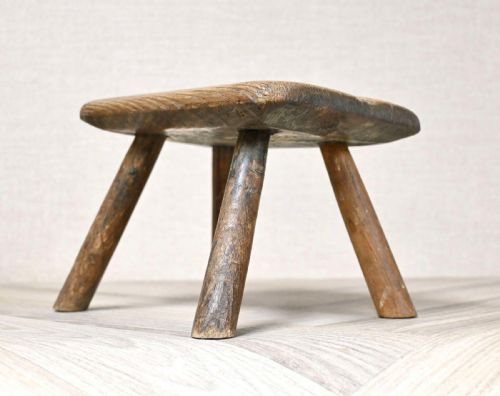
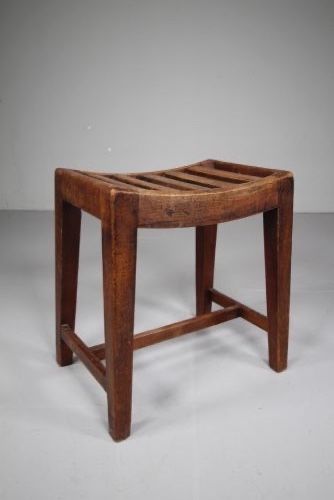
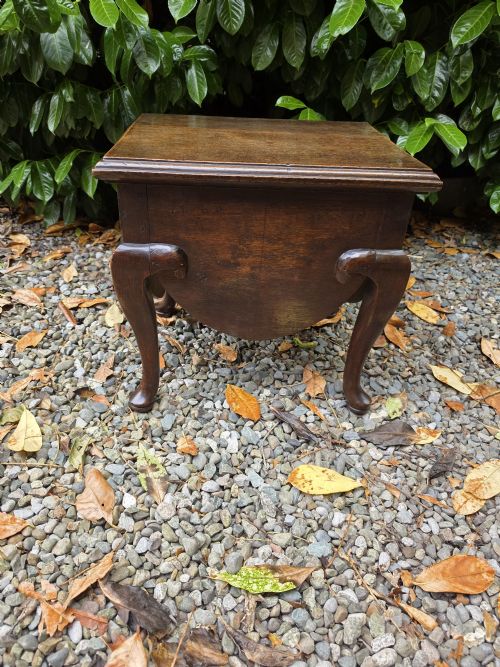
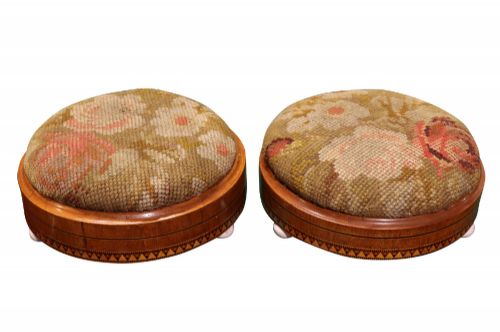
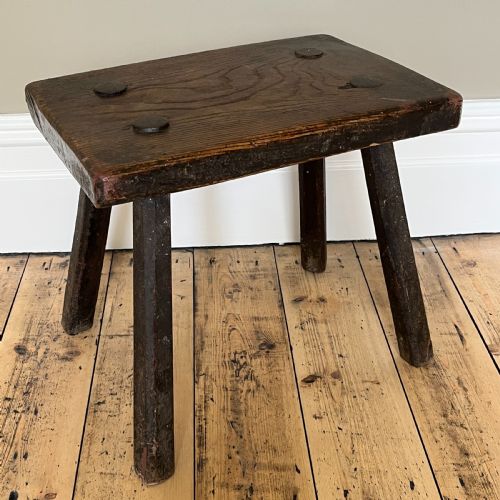
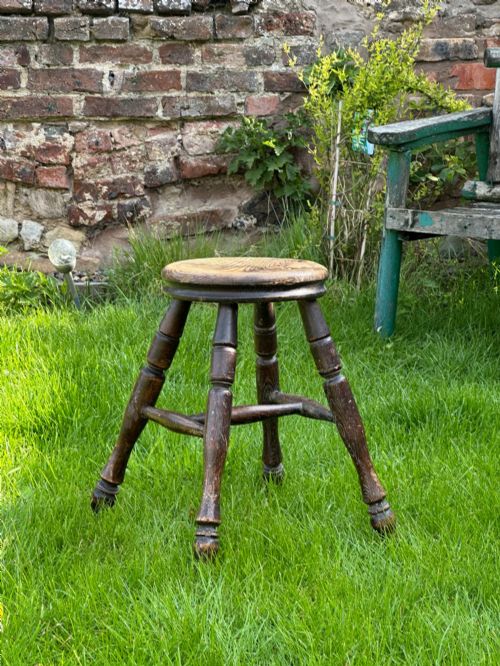
An antique hearth footstool serves as a low seat or rest positioned near the fireplace. The pieces seen here span centuries of domestic seating, from modest rustic country items to more formal parlour versions.
Most examples originate in the nineteenth century and the Victorian period, frequently taking the form of long fender stools designed to sit along the fireplace surround. Oak, walnut and mahogany form the structural timber frames, while woollen tapestry, needlepoint, leather and fabric provide the padded upper surface.
Materials and Construction
Timbers such as oak, walnut, mahogany and elm provide the sturdy framework for these low seats, often shaped with turned legs or cabriole supports. Joinery relies on traditional methods to bear the weight of feet resting by the hearth.
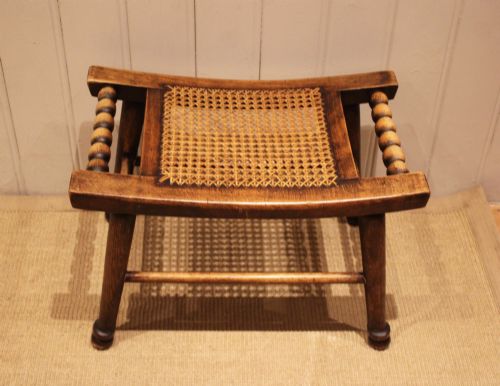
Upholstery completes the piece using textiles like wool tapestry, needlepoint, tweed, cane or leather stretched over padding. These materials connect the woodwork to the domestic interior of the period.
Listings feature oak, walnut, mahogany and elm frames upholstered in tapestry, leather, cane and needlepoint.
Distinctions in Execution
Finely carved walnut frames with shaped cabriole legs and original needlepoint or tapestry upholstery sit at the higher end of the range. These demonstrate careful attention to proportion and decorative detail.
Simpler country items built from elm, beech or oak with rush or cane seats represent the utilitarian side of domestic seating. Solid timber construction and well-turned supports distinguish the better examples regardless of scale.
The Antique Hearth Footstool Glossary
- Fender stool
- A long, low footstool designed to fit snugly along the metal fender surrounding a fireplace hearth.
- Cabriole leg
- A furniture leg that curves outward and then tapers inward, frequently found on eighteenth and nineteenth century stools.
- Needlepoint
- A type of counted thread embroidery traditionally worked in wool to cover the upholstered top of a stool.
- Rush seat
- A seating surface woven from dried marsh rushes, commonly seen on country and tavern stools.
Antique Hearth Footstool: Frequently Asked Questions
How were antique hearth footstools used?
These low seats were placed directly by the hearth to rest tired feet or provide extra seating close to the fire.
Their compact height made them ideal for keeping warm near the flames in nineteenth-century living spaces.
What woods are commonly found?
Cabinet timbers like walnut, mahogany and oak appear frequently in formal Victorian and Georgian versions.
Simpler country pieces often utilise elm, beech and local fruitwoods for their turned legs and frames.
How do I date a stool?
Stylistic clues such as cabriole legs point toward eighteenth-century or revival periods, while carved walnut frames often indicate Victorian manufacture.
Construction methods and timber selection also help distinguish earlier Georgian forms from later nineteenth-century pieces.
Are the upholstery fabrics original?
Some pieces retain early needlepoint, tapestry or leather coverings that show age-appropriate wear and character.
Others have been re-covered over time in complementary fabrics to suit modern domestic settings.