



Victorian Rococo Revival Credenza
A victorian rococo revival credenza brings exuberant nineteenth-century curves, figured timber and heavy mirror glass to a grand reception room.
Victorian Rococo Revival Credenza
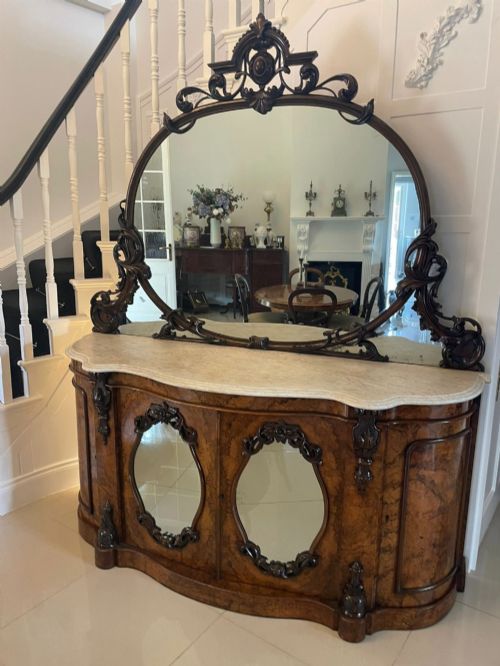
When searching for a victorian rococo revival credenza, collectors encounter low timber cabinets designed to anchor a principal reception room or parlour. These pieces date principally from the mid-nineteenth century, spanning the eighteen-fifties and eighteen-sixties under the influence of nineteenth-century revival styles. They often incorporate mirrored backs and serpentine fronts that echo earlier continental motifs.
The domestic role of these cabinets was both display and storage, often housing porcelain or silver behind glazed or panelled doors. Side cabinets, console tables and larger sideboard combinations appear frequently across the listings. Burr walnut, mahogany and rosewood dominate the structural timberwork, frequently topped with white or grey marble.
How they were made
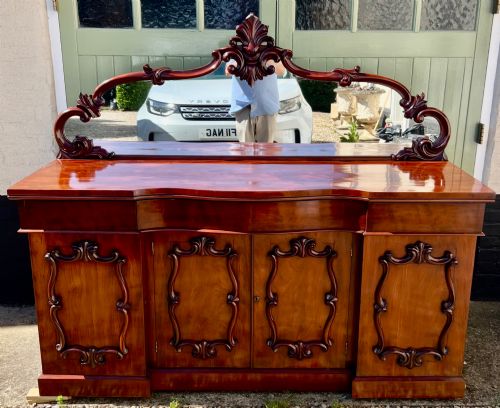
Cabinet makers built these pieces using dense hardwoods such as mahogany and walnut, frequently applying burr walnut veneers to achieve complex, figured grain patterns. Frames relied on traditional joinery techniques, paired with heavy carved mouldings and applied scrolls typical of the revival aesthetic.
Surfaces were frequently finished with hand-polished French polish to accentuate the natural figure of the wood. Marble tops were cut, shaped to serpentine or breakfront outlines, and polished smooth, while interior shelving often utilised softer timbers lined with fabric.
Victorian Rococo Revival Credenza Retail Price Guide 2026
Typical asking prices for victorian rococo revival credenza among the pieces listed under this phrase on Sellingantiques today, from the lower quarter to the upper quarter. They describe what is for sale here now, not the wider market.
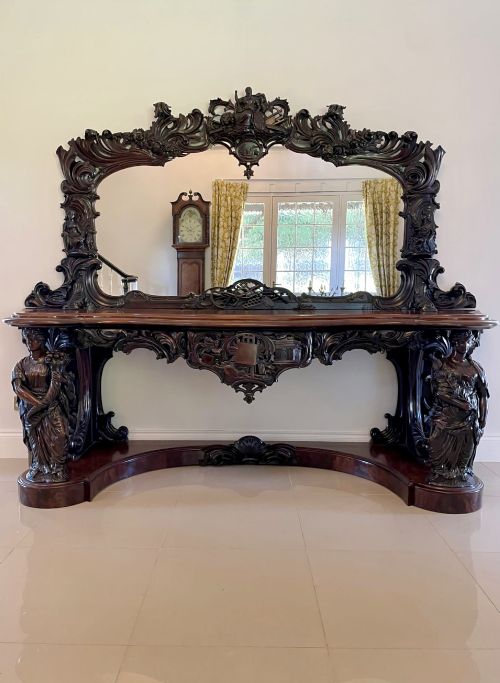
Forms on this page range from compact two-door side cabinets and serpentine credenzas to monumental mirror-backed console tables.
What varies in quality
The distinction between ordinary and exceptional examples rests upon the selection of timber veneers and the depth of the carved ornamentation. Finer cabinets display book-matched burr walnut across wide door panels and continuous grain alignment, whereas simpler pieces rely on plain mahogany or walnut without figured patterns.
Structural heft and the quality of the glass also separate the grades. Exhibition pieces incorporate heavy, thick marble slabs, substantial brass mounts and deeply undercut carvings, while standard production pieces feature simpler flat mouldings and lighter timber scantlings.
Gillows
The Victorian Rococo Revival Credenza Glossary
- Credenza
- A low dining or drawing-room cabinet used for serving or display, typically enclosed by doors and lacking the high superstructure of a traditional sideboard. Nineteenth-century examples often feature central glass-fronted compartments flanked by curved side cabinets.
- Burr walnut
- A highly figured timber veneer harvested from the knot growths of walnut trees. It yields swirling, concentric grain patterns prized for decorative cabinet fronts.
- Serpentine
- A furniture front or marble top that curves outward in the centre and inward at the sides in an elongated 'S' shape. This profile requires precise woodworking and stone-cutting skills.
- Mirror back
- An upright wooden frame fitted with heavy mirror glass, attached to the rear of a console table or sideboard. It reflects room light and decorative objects placed on the surface below.
Victorian Rococo Revival Credenza: Frequently Asked Questions
What is a credenza?
A credenza is a low nineteenth-century cabinet designed for principal reception rooms to display decorative objects and store household items. They often feature panelled or glazed doors and serpentine timber fronts.
Unlike traditional sideboards, they sit lower to the ground and frequently incorporate matching mirror backs or marble tops.
Where should I place a credenza?
These large cabinets suit spacious dining rooms, grand hallways or high-ceilinged drawing rooms where their length and mirrored backs can command the space. They work best against a substantial wall opposite windows to catch the light.
Keep them away from direct sunlight and heat sources to protect the polished wood veneers and antique marble.
How do I clean marble tops?
Wipe marble surfaces gently with a soft cloth dampened in warm water and a mild, neutral soap. Avoid acidic cleaners, vinegar or lemon juice, which will etch and dull the polished stone surface.
Dry the marble thoroughly with a clean cloth to prevent water spots and maintain the natural lustre of the stone.
How do I date a nineteenth-century credenza?
Dating relies on examining the construction methods, timber choices and decorative vocabulary present in the piece. Mid-nineteenth-century examples frequently showcase burr walnut veneers, serpentine shapes and heavy carved mirror frames.
Earlier pieces lean towards simpler mahogany structures, while later nineteenth-century variations introduce diverse maples and eclectic revival details.