

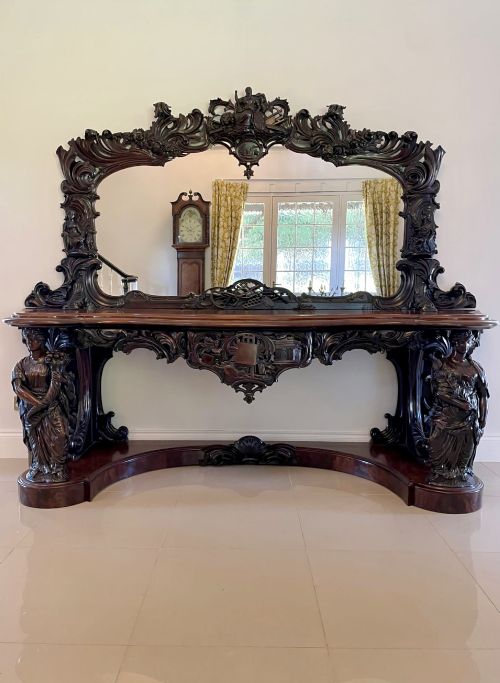
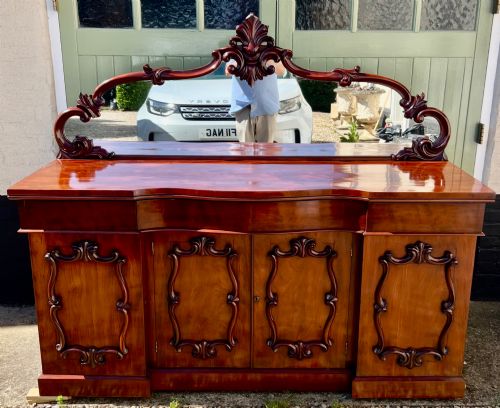


Large Mahogany Sideboard Mirror
These large mahogany sideboard mirrors are substantial Victorian display pieces that bring depth and rich timber grain to a dining room.
Large Mahogany Sideboard Mirror
A large mahogany sideboard mirror is a commanding Victorian furnishing designed to sit upon a pedestal base, breakfront chiffonier, or console table. These grand items combine deep timber tones with expansive glass to reflect light and anchor a formal room.
Most examples found here date from the nineteenth century, including specific decades such as the eighteen-fifties, sixties, seventies, and eighties, alongside a few Edwardian pieces. They appear in styles ranging from plain figured wood to ornate Victorian Rococo Revival and Gothic influences.
How they were made
Cabinet makers utilised solid timber alongside flame mahogany veneer to cover structural frames with striking, rippling grain patterns. Brass fittings and detailed hand-carvings frequently accent the heavy wood structures.
The mirror glass is set securely within carved wooden frames, often topped with elaborate crestings or pediments designed to match the sideboard base below.
Large Mahogany Sideboard Mirror Retail Price Guide 2026
Typical asking prices for large mahogany sideboard mirror among the pieces listed under this phrase on Sellingantiques today, from the lower quarter to the upper quarter. They describe what is for sale here now, not the wider market.
Listings feature Victorian and Edwardian periods, utilising mahogany, flame mahogany veneer, glass, and brass.
What varies in quality
Quality rests primarily in the choice of timber and the ambition of the carving. Plain mahogany boards sit at one end, while vibrant flame mahogany veneer and deeply carved Rococo or Gothic motifs represent the highest standard of execution.
The scale and proportion of the mirror frame relative to the glass also define the piece, with exhibition quality examples showing superior joinery, substantial brass elements, and crisp detailing throughout.
Maple and Co
The Large Mahogany Sideboard Mirror Glossary
- Flame mahogany
- A veneer cut from the fork of the mahogany tree to create a dramatic, fire-like pattern. This prized figure adds movement and visual texture to the timber surface.
- Breakfront
- A cabinet or sideboard design where the central section projects forward from the sides. This architectural arrangement creates depth and shadow across the furniture face.
- Chiffonier
- A low sideboard or cabinet, often fitted with a mirror back. It serves as a serving surface and display area in Victorian dining rooms.
- Pedestal sideboard
- A heavy sideboard featuring large cupboards or pedestals flanking a central recess. These units often support massive carved mirrors on their upper tiers.
- Rococo Revival
- A nineteenth century design movement reviving the ornate, asymmetrical curves of the French eighteenth century. It employs lavish scrolls, shell motifs, and naturalistic carving.
Large Mahogany Sideboard Mirror: Frequently Asked Questions
Are these mirrors fixed to the sideboard?
Many large mahogany sideboard mirrors are designed to be separate upright components that bolt securely to the back of the matching pedestal base or console table.
Some iterations integrate the glass frame directly into the cabinetry, forming a single unified structure from the floor to the top of the pediment.
How do I clean the flame mahogany?
Maintain the timber by dusting regularly with a soft, dry cloth and occasionally applying a quality beeswax to nourish the grain.
Avoid commercial liquid polishes containing silicone, which can build up on the veneer and dull the warm lustre of the nineteenth century wood.
What rooms suit a large sideboard mirror?
These tall, expansive pieces demand rooms with high ceilings and generous proportions, traditionally anchoring a formal dining room or a spacious entrance hall.
Positioning the glass opposite a window allows the reflective surface to bounce natural light deep into the interior space.
How can I date a Victorian mirror?
Dating relies on examining the timber preparation, the style of the hand-carving, and whether the frame displays Gothic or Rococo Revival tendencies.
Nineteenth century pieces often exhibit distinct tool marks on the reverse and use heavy plate glass set within substantial tenoned frames.