

Victorian River Landscape Art
Victorian river landscape art captures nineteenth-century waterways through detailed oil and watercolour mediums, offering buyers a serene historic window into pastoral and urban river scenes.
Victorian River Landscape Art
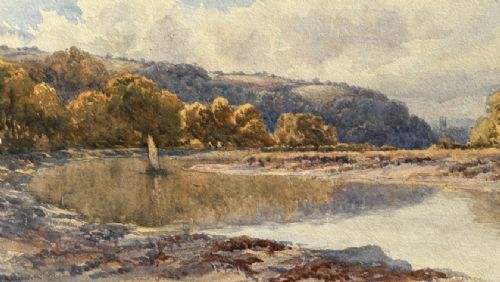
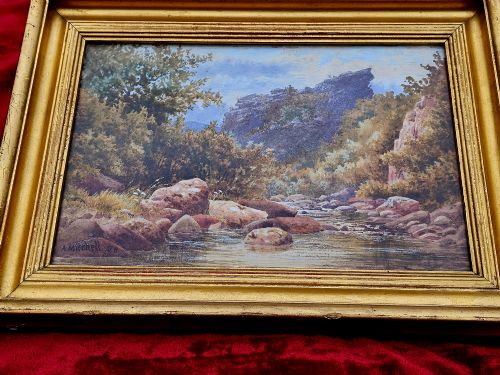
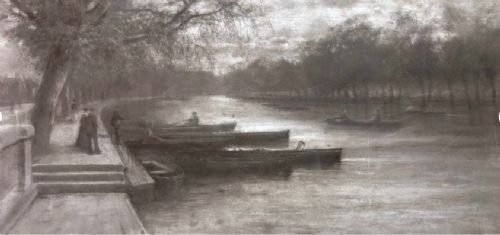
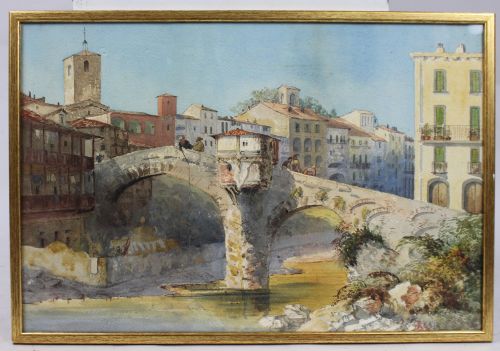
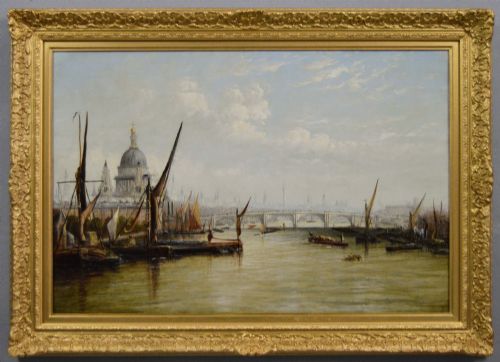
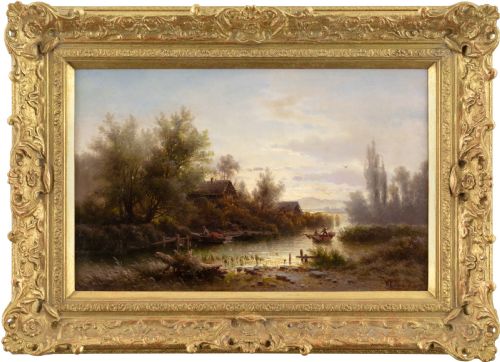
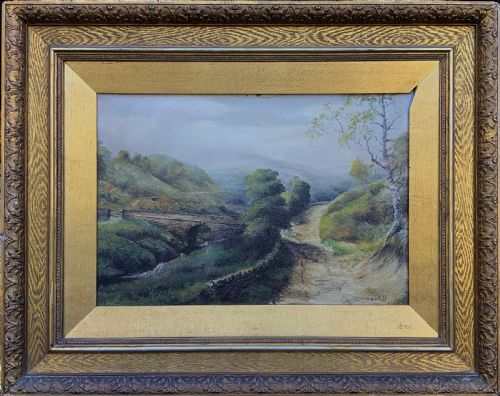
Victorian river landscape art comprises nineteenth-century paintings and works on paper depicting waterways, ranging from tranquil rural streams to bustling industrial rivers. These pieces frequently capture British and European riverbanks, utilising styles from Victorian naturalism to 19th century realism.
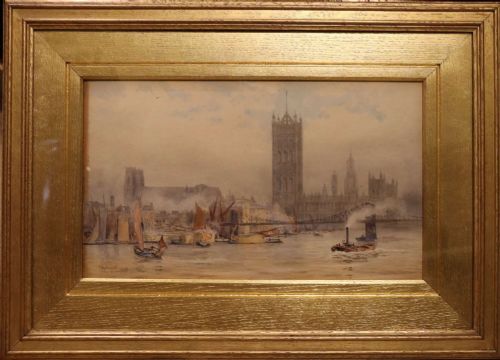
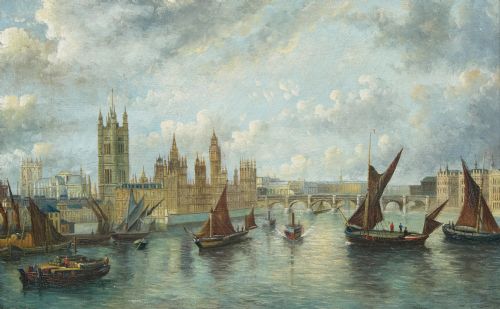
Buyers browsing this selection will encounter varied formats including framed oil paintings on canvas, delicate watercolours on paper, and charcoal drawings. The subjects span named locations like the Thames, the Tyne, and Welsh estuaries, alongside imagined pastoral idylls.
Most examples originate from the Victorian and Edwardian periods, reflecting a nineteenth-century fascination with domestic scenery, rural labour, and topographical accuracy. Artists often recorded specific atmospheric conditions, from morning moods to twilight sunsets over water.
Materials and Technique
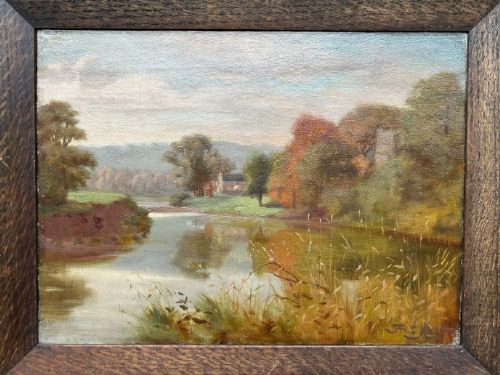
Painters utilised oil paint on canvas or board, allowing for rich colour layering and textured depiction of water surfaces, reflections, and skies. Canvas supports were frequently housed within ornate giltwood and gesso frames.
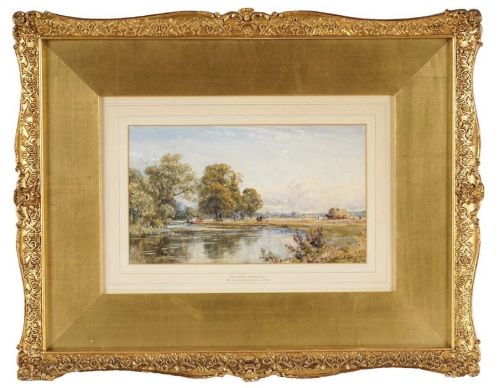
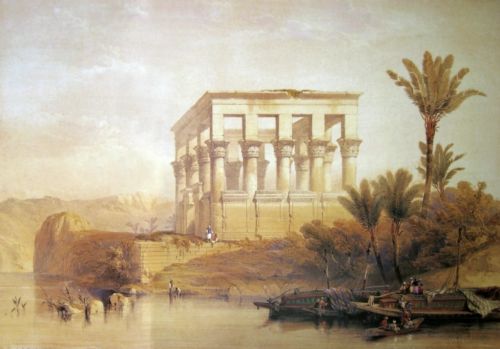
Works on paper relied on watercolour and charcoal techniques, capturing translucent water effects and fine topographical detail. Artists manipulated pigment washes on paper to suggest atmospheric haze and moving currents.
Several Victorian artists clearly enjoyed painting cows standing lazily in shallow river water to test their skill at rendering wet hooves.
Judging Quality and Execution
Quality rests upon the artist's ability to render light, water movement, and spatial depth convincingly rather than mere scale or subject matter. Superior works display confident brushwork and precise tonal balance.
The integration of original framing materials, such as period giltwood and gesso mouldings, enhances the integrity of the piece. Provenance, exhibition history, and identifiable signatures further elevate individual works.
Alfred Young Nutt·Frederick Marriott·Robert W Macbeth·Francis Moltino·David Roberts·Albert Rieger·Henry H Parker·Sydney Yates Johnson·John Ferneley Senior·Charles William Wyllie·Cornelius Pearson·Alexandre Le Bihan·Edwin Lord Weeks·Thomas Baker of Leamington·James Edward Grace·Julius Hare
The Victorian River Landscape Art Glossary
- Gesso
- A plaster-like mixture applied to wooden frames before gilding, providing a smooth base for ornamental details. It is often moulded into relief patterns on nineteenth-century frames.
- Giltwood
- Timber coated with gold leaf or metallic paint, commonly used for framing fine art during the nineteenth century. These frames reflect the aesthetic standards of the period.
- Watercolour
- A painting method where water-soluble pigments are suspended in a water-based solution, typically applied to paper. This technique yields transparent washes of colour.
- Tonalism
- An artistic style focusing on mood and shadow, using a restrained palette of dark neutral hues. Edwardian and late nineteenth-century artists frequently employed this approach.
- Realism
- The accurate, unidealised depiction of subject matter, showing scenes as they appeared in daily life. Nineteenth-century practitioners applied this to landscape and rural views.
Victorian River Landscape Art: Frequently Asked Questions
What subjects appear in these paintings?
Artists painted diverse aquatic environments, including locks, bridges, rural riverbanks, and shipping harbours. Common motifs feature figures fishing, harvesting near water, or navigating boats.
Scenes frequently document specific named waterways across Britain, Europe, and occasionally international rivers such as the Nile.
How do I care for antique watercolours?
Works on paper require protection from direct sunlight to prevent fading of pigments and discolouration of the paper support. Framing under UV-filtering glass helps preserve the integrity of nineteenth-century watercolours.
Maintain stable humidity levels in the display room to protect both the paper and any historic backing boards from moisture damage.
What is the difference between oil and watercolour river art?
Oil paintings utilise pigment bound in drying oil applied to canvas or wood panels, offering rich textures and deep colour saturation. Watercolours employ water-soluble pigments on paper, producing lighter, translucent effects.
Oils were typically displayed in heavy gilt frames, whereas watercolours required glass protection against atmospheric dust.
How can I identify an Edwardian piece?
Edwardian artworks date from the early twentieth century, carrying stylistic traits influenced by contemporary tonalism and late Victorian naturalism. Brushwork in these pieces can show looser, more atmospheric handling.
Signatures, dates, and framing styles often provide firm chronological indicators for pieces created around nineteen hundred.