




Victorian Repousse Planter
These victorian repousse planter pieces are heavy metal vessels bearing raised relief decoration, sought after for bringing rich texture and period character to interior planting.

Victorian Repousse Planter
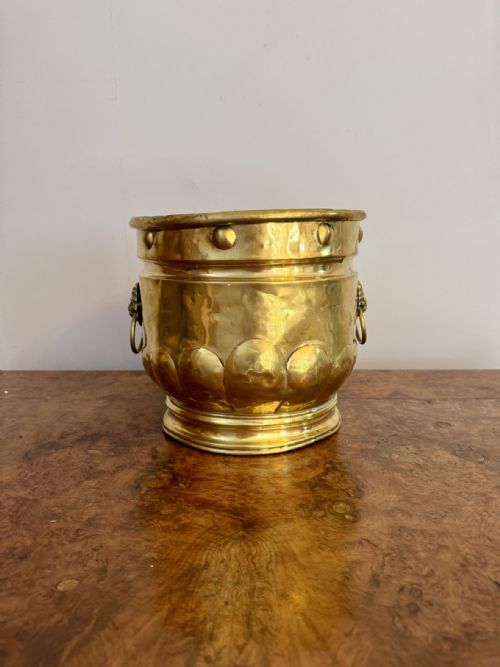
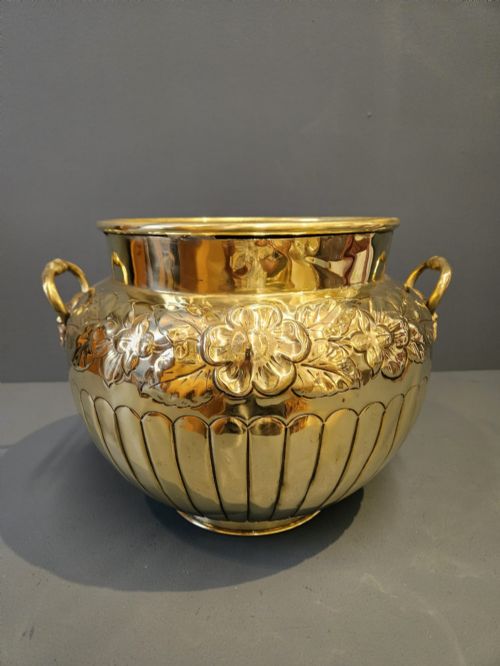
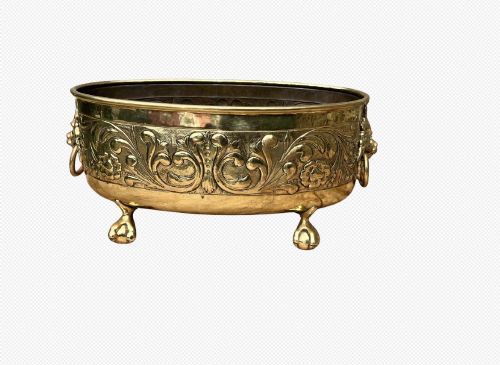
A victorian repousse planter takes the form of a heavy metal vessel designed to hold potted plants, large blooms, or fireside fuel like logs and coal. These pieces appear primarily as brass or copper jardiniere forms, log bins, and plant stands shaped during the nineteenth century.
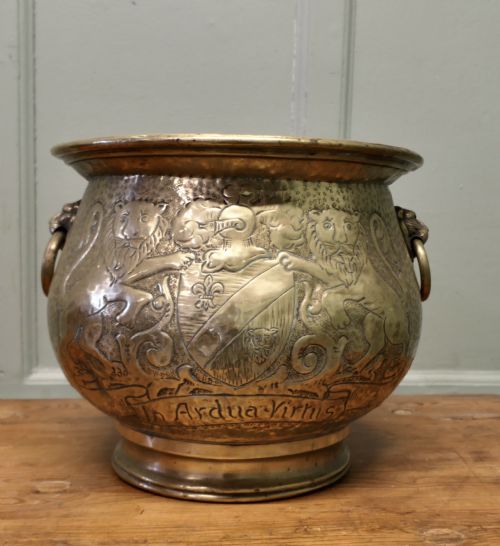
The objects on this page span the Victorian era, Arts and Crafts movement, and revival styles including Gothic, French Rococo, and Dutch designs. Most examples encountered here are brass or copper vessels fashioned with hand-hammered relief work and applied handles such as animal masks and lions' heads.
Distinguishing quality
Quality rests in the crispness of the hand-hammered relief work and the thickness of the original metal sheet. Thicker gauge copper and brass retain their structural integrity better and resist denting under everyday use as planters or log buckets.
Finer examples show considered detail in cast additions, such as cleanly cast lion mask handles or intricate animal heads, rather than generic stamped ornaments. The integrity of internal seams and the balance of applied wrought iron or brass stands further separate standard production from superior workshop pieces.
Victorian Repousse Planter Retail Price Guide 2026
Typical asking prices for victorian repousse planter among the pieces listed under this phrase on Sellingantiques today, from the lower quarter to the upper quarter. They describe what is for sale here now, not the wider market.
Several heavy copper and brass vessels arrive equipped with fierce animal heads and roaring lions to supervise your ferns.
Henry Loveridge·Petrus Ramus
The Victorian Repousse Planter Glossary
- Repoussé
- A metalworking technique where the artisan hammers metal from the reverse side to form a raised design on the front. This method creates tactile, three-dimensional surface patterns.
- Jardiniere
- An ornamental pot or stand designed to hold growing plants or flowers. These vessels often sit on low feet or metal bases.
- Dinanderie
- The medieval and later Belgian art of working brass and copper into utilitarian and decorative objects. The term frequently applies to heavy antique brass vessels originating from the region.
- Arts and Crafts
- A design movement valuing hand craftsmanship, simple forms, and visible material textures over mass-produced ornamentation. Pieces from this tradition often feature plain hammered copper surfaces with minimal, honest construction.
Victorian Repousse Planter: Frequently Asked Questions
What were these planters originally used for?
These vessels served primarily as decorative cachepots to hold potted palms and large indoor plants within Victorian drawing rooms and conservatories. Many examples also functioned near hearths as heavy bins for holding coal, wood, or peat fuel.
Their robust metal construction protected interior surfaces from damp soil and falling embers while adding a decorative metallic accent to the room.
How do I care for antique brass and copper?
Maintenance involves gentle dusting with a dry or slightly damp cloth to preserve the accumulated patina that develops over decades of handling. Aggressive metal polishes strip away this historical surface character and reduce the visual depth of the hammered details.
When using these vessels for live plants, placing a separate waterproof liner inside prevents moisture from sitting against the antique metal and causing corrosion.
How do I distinguish Arts and Crafts examples from Victorian ones?
Arts and Crafts pieces tend to feature plain, unembossed surfaces that highlight the honest texture of hand-beaten copper alongside exposed riveted construction. Victorian mainstream production frequently incorporates revival ornament, such as Gothic shields, Rococo scrolls, or cast animal masks.
Stricter adherence to material honesty and simpler geometric forms usually points toward the later nineteenth-century movement rather than earlier revival styles.
Are these vessels waterproof?
Many older metal vessels have joints and seams that can develop small leaks over time as the solder or metal ages. Using an internal plastic or ceramic insert ensures the piece holds water safely without dampening the floor or table beneath.
Checking the internal base for old repairs or soldered patches helps determine how the vessel held moisture in the past.