


Victorian Relief Pitcher
These pieces are a victorian relief pitcher, prized for their sculptural moulded ornament and historical drinking scenes.
Victorian Relief Pitcher
A victorian relief pitcher brings together functional domestic vessels and heavily ornamented Victorian design. When you search this phrase, you find jugs and pitchers decorated with raised mythological, classical, and harvest scenes.
Stoneware and earthenware bodies dominate the selection, shaped in moulds rather than thrown smooth on a wheel. Most examples date from the mid to late nineteenth century, reflecting the output of major British potteries and German salt-glazed workshops.
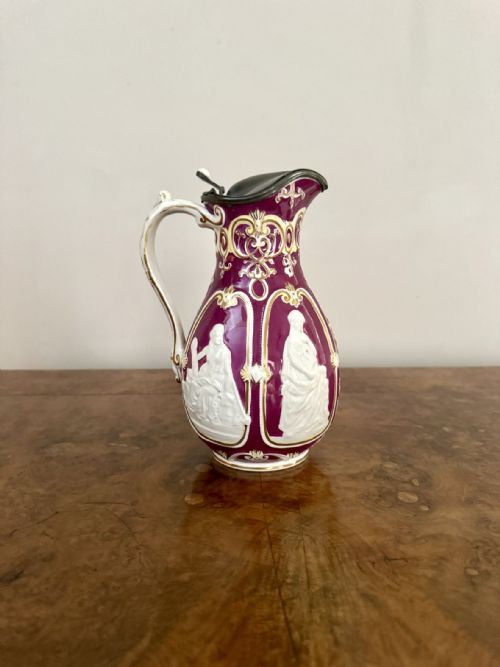
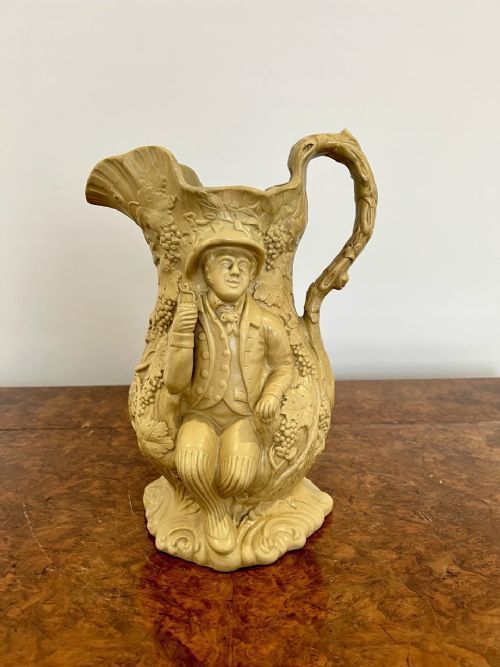
The version you meet most often on this page is the mid-nineteenth-century relief moulded jug in buff stoneware or salt glaze. These pieces range from simple tavern vessels to elaborate exhibition jugs depicting classical dances and royal jubilees.
Materials and methods
Potters built these vessels using stoneware, earthenware, and Parian porcelain, often finished with salt glaze or rich coloured glazes. The relief decoration relied on metal moulds into which clay was pressed before being applied to the body of the jug.
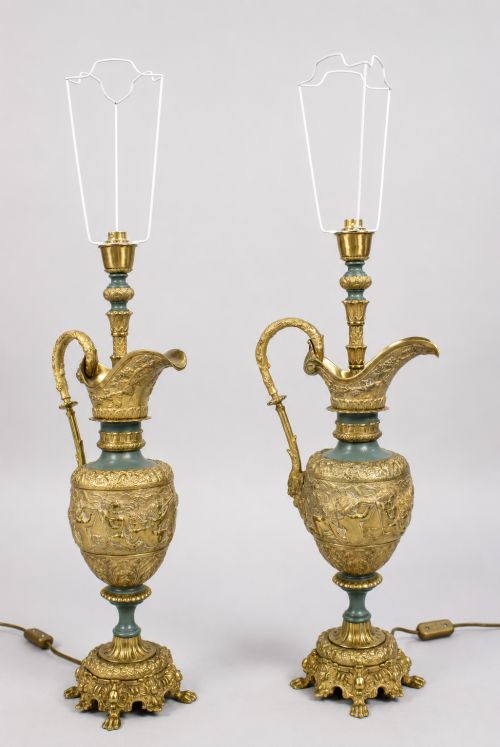
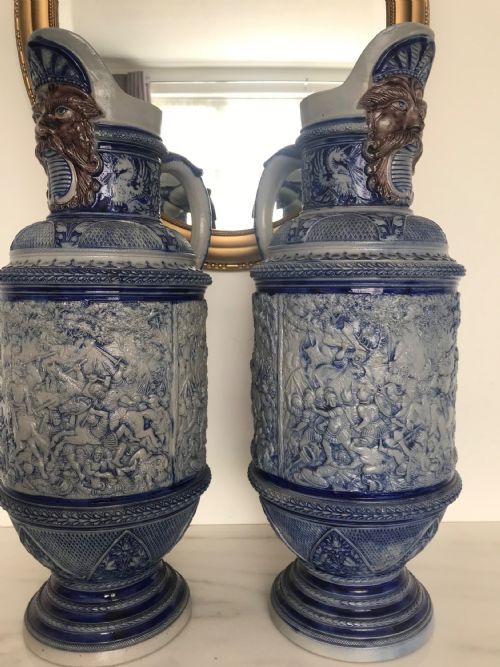
Salt glazing involved throwing common salt into the kiln during the high-temperature firing, creating a distinctive pitted texture on the stoneware surface. Other pieces utilised metal electrotyping or bronze casting to achieve sharp sculptural detail on decorative ewers and wine jugs.
Factors of distinction
Quality rests in the crispness of the moulded relief and the depth of the narrative scenes. Sharp definition in the figures of a bacchanalian dance or a battle scene separates a master potter's work from a commercial factory copy.
The balance of the glaze and the clean attachment of handles and pewter mounts determine the overall success of the piece. Superior examples maintain a harmonious relationship between the sculptural ornament and the functional form of the jug.
Simon Peter Gerz·Doulton Lambeth·Henry Bourne·Charles Meigh·Ridgway and Sons·Emma Shute·Jones and Walley·Minton·George Jones
The Victorian Relief Pitcher Glossary
- Relief moulded
- A technique where clay is pressed into a carved mould to produce raised ornamental designs on the vessel wall. This method allowed potteries to replicate complex classical and botanical scenes consistently.
- Salt-glazed stoneware
- A hard, impermeable ceramic fired at high temperatures with salt introduced to the kiln. The process produces an orange-peel texture that resists liquids and acids.
- Parian ware
- A fine white bisque porcelain named for its resemblance to Parian marble from Greece. Makers utilised it for unglazed figures and jugs that emphasised smooth sculptural forms.
- Electrotype
- A metal object produced by electroplating copper or other metals onto a mould. This process captured intricate details for decorative wine jugs and metal ewers.
- Majolica
- A type of earthenware coated with an opaque tin glaze and painted with brightly coloured metallic oxides. It provided Victorian tablewares with rich, glossy hues.
Victorian Relief Pitcher: Frequently Asked Questions
What is a relief pitcher?
A relief pitcher is a ceramic or metal vessel featuring raised decorative scenes moulded onto the exterior surface. These designs often illustrate historical battles, mythology, or agricultural harvests.
Potters used metal or plaster moulds to press the clay into high relief before attaching it to the body of the jug.
How were these jugs used?
Victorian households utilised these pitchers for serving water, wine, milk, and ale at the dining table. Many heavier stoneware versions also served functional roles in taverns and country houses.
Some decorative examples remained on display as part of a garniture or tea set rather than seeing daily service.
How do I clean a salt glaze jug?
Cleaning requires warm water and a mild soap applied gently with a soft cloth. Avoid harsh scourers that can scratch the glazed surface or damage historical salt-glaze textures.
Dry the vessel thoroughly with a lint-free cloth to prevent moisture settling in any intricate moulded crevices.
Can I use these jugs daily?
Most ceramic and stoneware pitchers remain structurally sound for holding liquids, provided they lack interior cracks. However, antique pieces with delicate pewter mounts or fine earthenware bodies benefit from careful handling.
Hand washing is essential, as modern dishwashers subject nineteenth-century glazes to excessive thermal shock and harsh detergents.
How do I date a Victorian pitcher?
Dating relies on maker marks, ceramic bodies, and stylistic clues such as Gothic revival or Art Nouveau motifs. Registration marks stamped on the base often provide the exact year or month of production.
Comparing the crispness of the relief work and the type of glaze helps narrow the period between the early and late nineteenth century.