

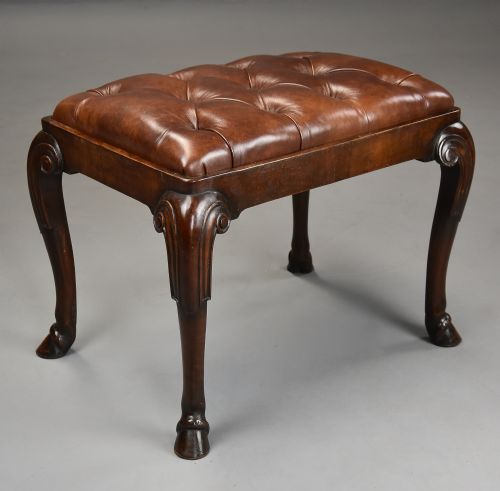


Victorian Queen Anne Stool
These walnut and mahogany victorian queen anne stool examples bring reliable period charm to a room, offering sturdy seating or footrests with classic Revival lines.
Victorian Queen Anne Stool
A victorian queen anne stool is a low seating or resting piece produced during the nineteenth century, drawing heavily on earlier eighteenth-century Revival designs. These pieces typically take the form of footstools, dressing table stools, or general low stools designed for domestic comfort.
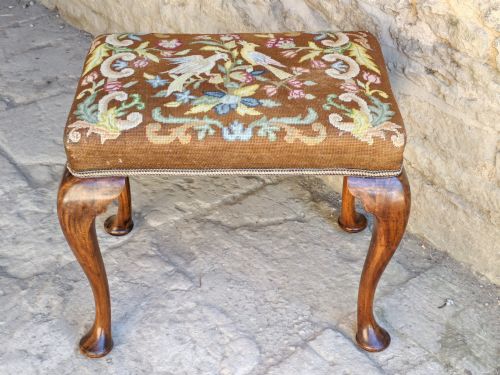
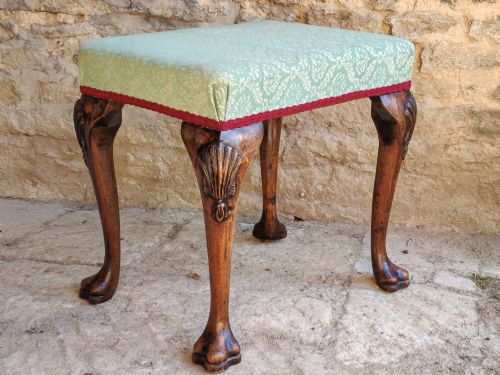
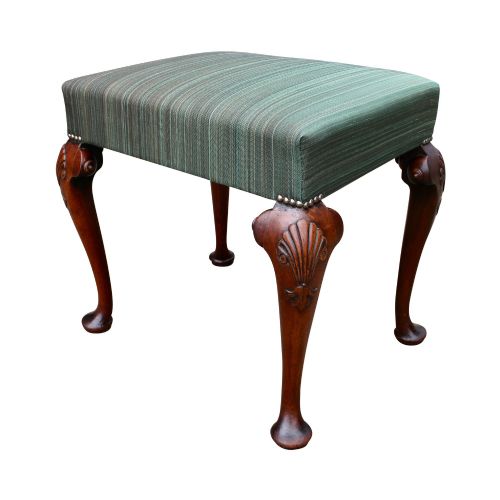
The versions most frequently met on this page are constructed from walnut or mahogany, often exhibiting the distinctive cabriole leg associated with the style. They range from plain wooden frames to carved examples upholstered in textile, wool tapestry, or needlepoint.
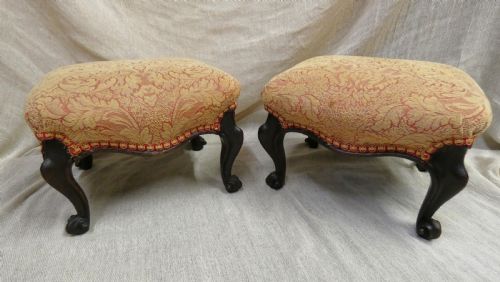
Makers of the period adapted classic forms into smaller domestic items, resulting in oval shapes and rectangular frames that served dressing rooms and parlours alike. The pieces span from the mid nineteenth century into the early twentieth century, maintaining traditional Revival aesthetics throughout.
How they were made
Frames were built primarily from solid walnut and mahogany, chosen for their strength and suitability for carving intricate details. Craftsmen shaped these timbers to form smooth curves, notably on cabriole legs that often terminate in pad or scroll feet.
Upholstery techniques involved durable textiles, wool tapestry, and leather secured with brass tacks along the seat edges. Carved ornamentation on the wooden frames added decorative texture without compromising the structural integrity of the stool.
Victorian Queen Anne Stool Retail Price Guide 2026
Typical asking prices for victorian queen anne stool among the pieces listed under this phrase on Sellingantiques today, from the lower quarter to the upper quarter. They describe what is for sale here now, not the wider market.
Brass tacks hold down centuries of quiet conversations while the walnut legs stand ready for tired feet.
What varies in quality
The standard of carving across the wooden frame distinguishes finer examples from simpler production. Crisp execution on cabriole legs and refined shaping of the timber indicate greater workshop skill.
The choice and execution of upholstery materials also set pieces apart, ranging from basic fabric coverings to intricate wool tapestries and needlepoint worked by hand. Solid timber frames generally command more appreciation than simpler constructions.
The Victorian Queen Anne Stool Glossary
- Cabriole leg
- A furniture leg that curves out and then in, resembling the leg of an animal. This form is a defining characteristic of the Queen Anne style.
- Needlepoint
- A type of canvas work embroidery used for upholstery. It provides a durable and decorative surface for stool seats.
- Brass tacks
- Small metal fasteners with rounded heads used to secure fabric edges to wooden frames. They often serve a decorative as well as functional purpose.
- Revival
- A style of architecture and decorative arts that revives the forms of a previous era. The Queen Anne Revival looked back to early eighteenth-century design.
- Tapestry
- A heavy textile woven with decorative designs. Wool tapestry appears frequently on nineteenth-century seating.
Victorian Queen Anne Stool: Frequently Asked Questions
What is a victorian queen anne stool?
It is a nineteenth-century low seat or footstool influenced by earlier eighteenth-century design revivals. These pieces combine traditional woodwork with period upholstery.
They function as dressing table seats or decorative footrests within a room. Their compact size makes them versatile additions to various interior spaces.
How are walnut and mahogany used?
Walnut and mahogany provide the structural framework for the stool bodies and legs. These dense hardwoods allow for sturdy construction and detailed shaping.
Craftsmen utilised these timbers to support carved ornaments and curved cabriole legs. The natural grain of the wood remains a primary visual feature of the un-upholstered portions.
What upholstery fabrics appear on these stools?
Common upholstery materials include textile, wool tapestry, leather, and needlepoint. These coverings are often secured to the wooden frame using brass tacks.
The choice of textile contributes significantly to the visual character of the piece. Needlepoint and tapestry elements reflect the domestic handwork of the period.
How do I date a nineteenth-century stool?
Dating relies on observing wood types, construction methods, and stylistic details recorded across the period. Pieces often feature characteristics specific to late nineteenth-century Revival tastes.
Comparing leg profiles and framing techniques helps establish the era of manufacture. Surviving examples span from the mid-Victorian decades into the early twentieth century.