




Victorian Psyche Mirror
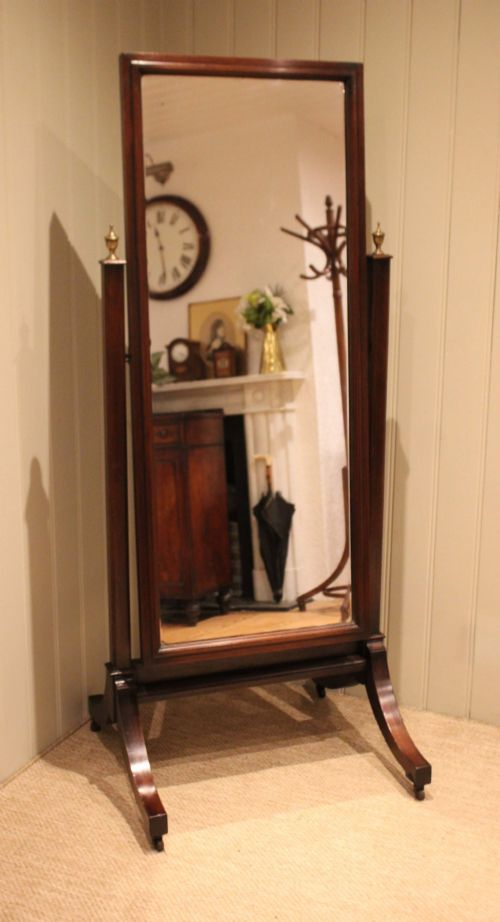
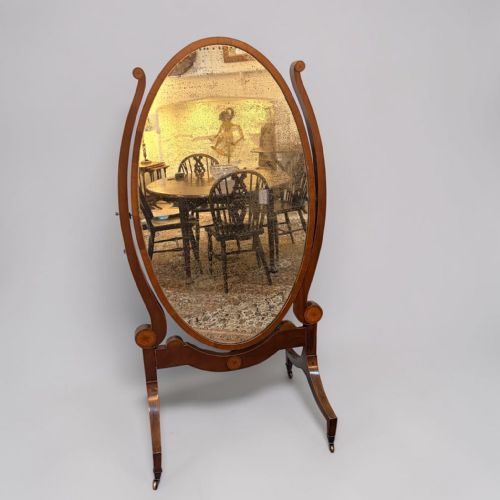
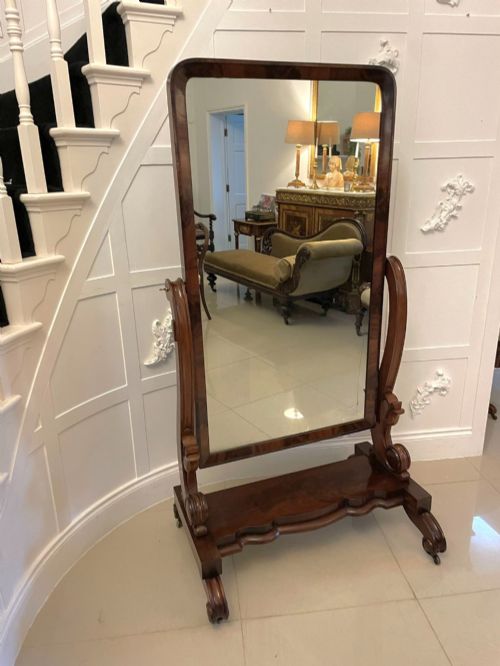
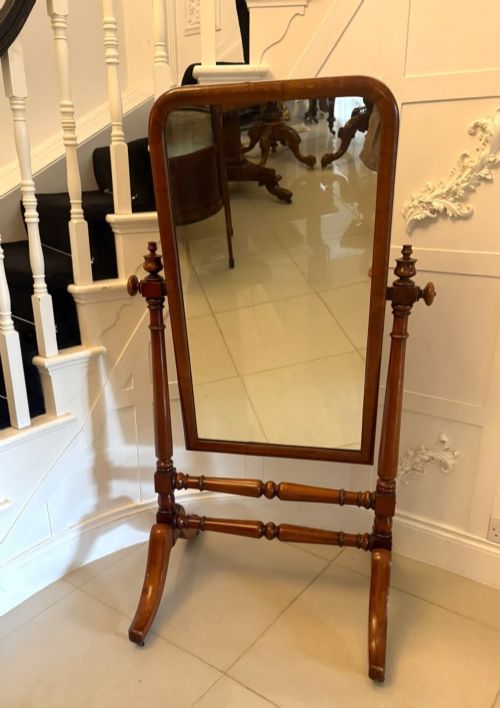
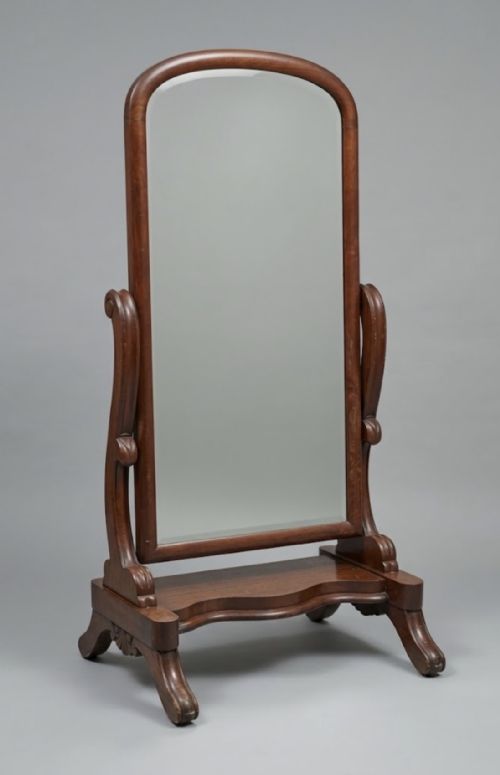
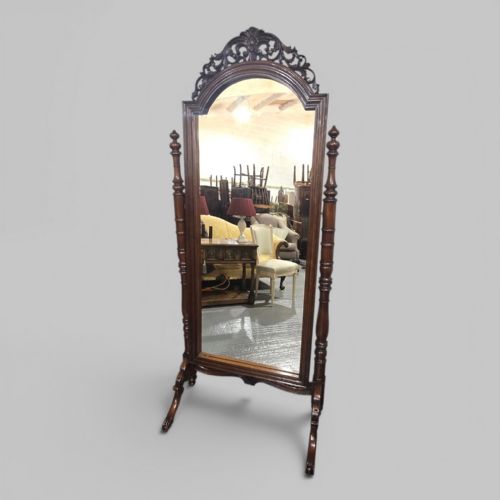
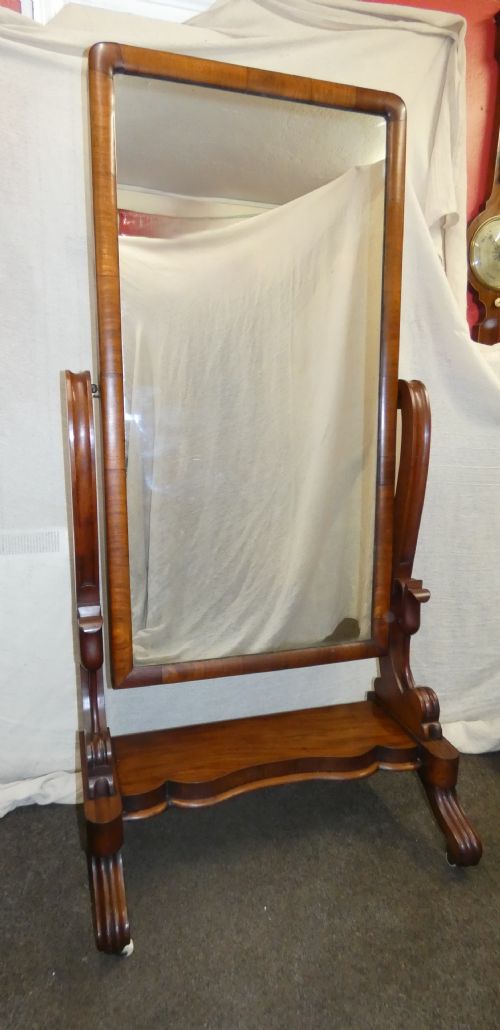
A victorian psyche mirror is a pivoting full-length dressing glass designed to reflect the entire figure, offering a commanding presence in a bedroom.
Victorian Psyche Mirror
When you search for a victorian psyche mirror, you encounter tall, freestanding swing glasses that allow a full-length view of attire. These pivoting plates are mounted within sturdy floor-standing frames.
The pieces on this page span the nineteenth century, including styles such as Victorian, French Chateau, French Provincial, William IV, and Victorian Gothic. Alongside cheval mirrors, the selection encompasses dressing table mirrors and miniature chests of drawers.
Mahogany predominates among the surviving pieces, accompanied by examples in oak, pitch pine, and painted wood. Brass mounts, sabots, and castors frequently complete the lower framework of these dressing glasses.
Construction and materials
Cabinet makers utilised dense timbers like mahogany and oak to support the heavy weight of the pivoting glass plate. Flame mahogany veneers frequently provided a decorative surface grain on the upright supports and base.
The mirror glass swings between two vertical posts using adjustable brass screw pins or pivots. Brass sabots and castors often protect and mobilise the feet, particularly on sabre leg designs.
Victorian Psyche Mirror Retail Price Guide 2026
Typical asking prices for victorian psyche mirror among the pieces listed under this phrase on Sellingantiques today, from the lower quarter to the upper quarter. They describe what is for sale here now, not the wider market.
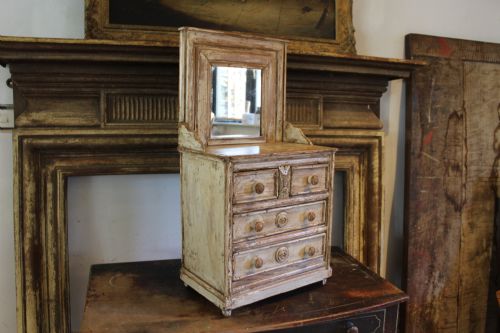
One tiny miniature chest of drawers stands among the full-sized floor mirrors, offering dressing table utility on a diminutive scale.
Assessing the craftsmanship
Quality rests in the substantial weight of the timber frame and the depth of the mahogany grain. Superior examples display refined turning on the uprights and stable, heavy floor supports that prevent wobbling when the glass tilts.
The sophistication of the brass hardware and the crispness of any carved wood details distinguish finer workshop output from standard production. Original mirror glass and well-preserved swing mechanisms contribute further to the integrity of the piece.
The Victorian Psyche Mirror Glossary
- Cheval mirror
- A tall floor-standing swing mirror designed for full-length viewing. The plate hangs in a frame supported by four legs.
- Sabre leg
- A curved, outwardly splaying leg tapering toward the floor. This support style appears frequently on William IV and Victorian furniture frames.
- Brass sabot
- A protective metal sleeve fitted to the foot of a furniture leg. These fittings often incorporate rolling castors for ease of movement.
- Flame mahogany
- A veneer displaying a fiery, undulating grain pattern. Cabinet makers selected these figured cuts for prominent surfaces on high-status mirrors.
- Swing mirror
- A glass plate mounted on horizontal pivots between two upright posts. This mechanism allows the user to tilt the reflection angle.
Victorian Psyche Mirror: Frequently Asked Questions
Where should I place a psyche mirror?
These tall pivoting glasses require a stable floor space with sufficient clearance for the frame to tilt forward and backward without obstruction.
Positioning the glass opposite a window maximises natural light reflection, enhancing both the room illumination and the practicality of the dressing glass.
How do I adjust the swing glass?
Most frames utilise threaded brass pivot pins set into the upright posts. Tightening or loosening these side screws alters the tension on the hanging mirror.
Support the glass with one hand while adjusting the hardware to prevent sudden movement or strain on the wooden frame.
Are these mirrors heavy to move?
The combination of dense timber frames and thick glass plates makes these pieces substantial in weight. Many examples feature original castors to assist with repositioning across floor surfaces.
Lift the piece carefully rather than dragging it by the upper frame to protect the joints and any attached brass sabots.
What is the difference between a cheval and dressing mirror?
A cheval mirror stands directly on the floor to provide a full-length reflection of the entire figure. These tall formats require sturdy, weighted base structures for stability.
By contrast, a dressing table mirror sits on top of a chest of drawers or vanity unit, focusing primarily on upper-body reflection.