



Victorian Prism Drop Vases
Victorian prism drop vases are decorative mantel lustres that catch the candlelight with hanging crystal pendants, bringing nineteenth-century brilliance to a room.
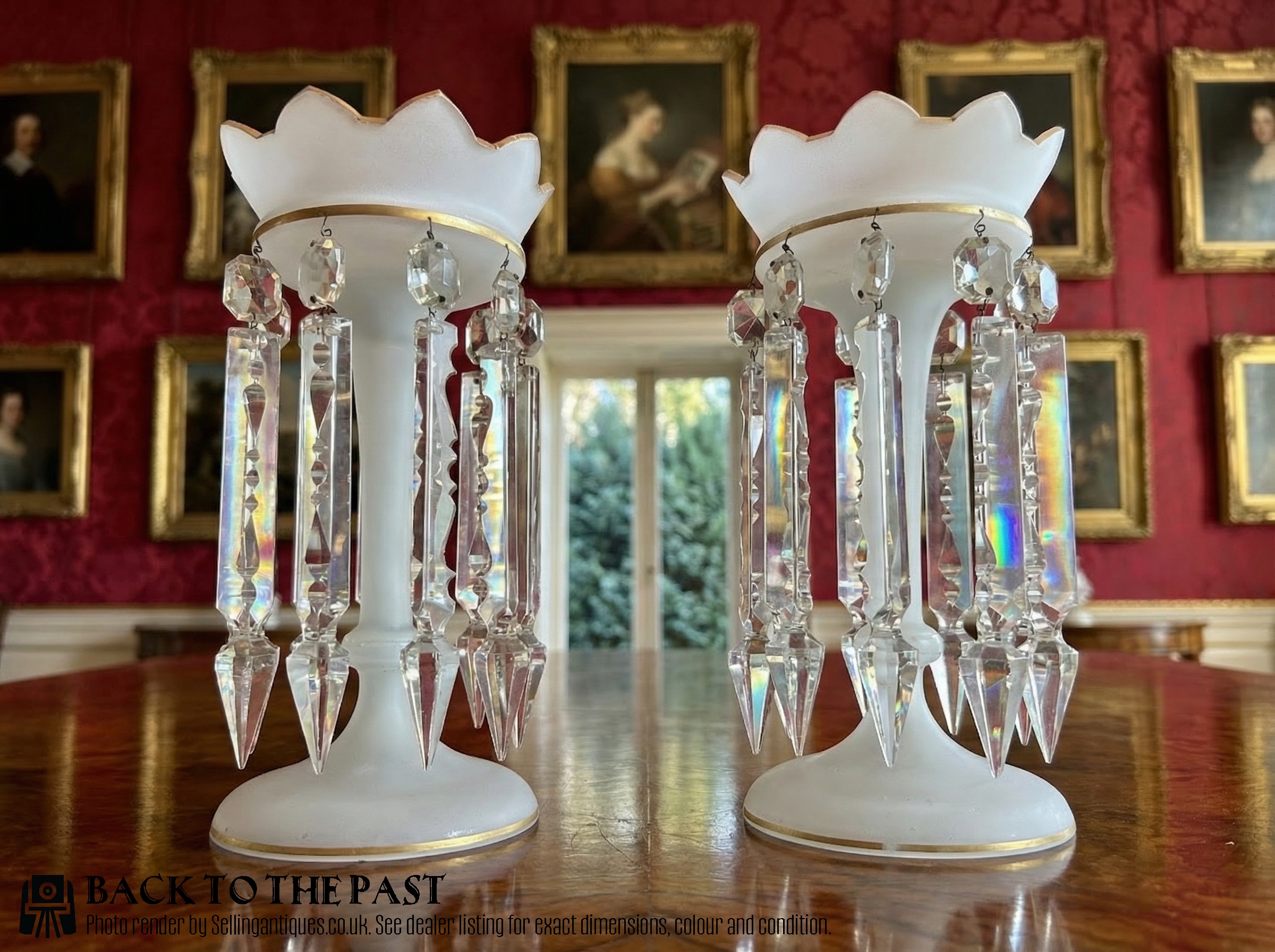
Victorian Prism Drop Vases
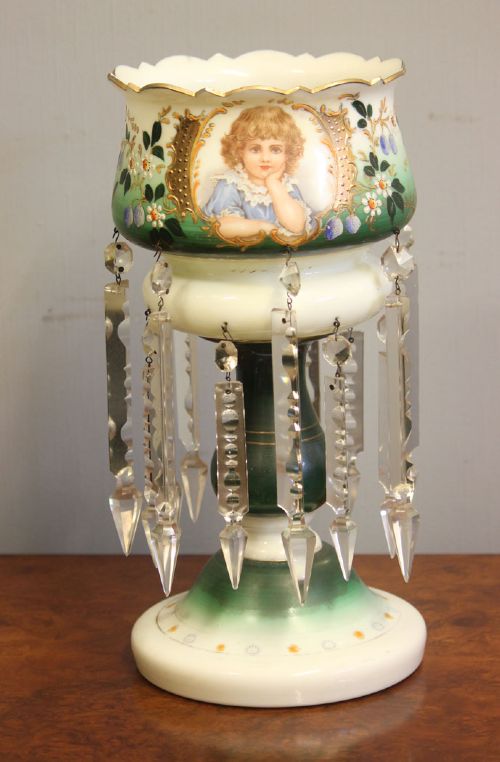
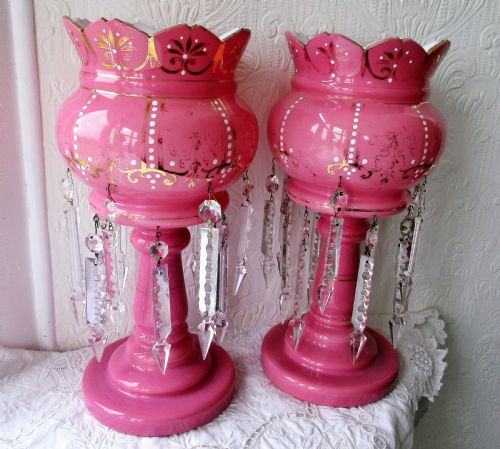
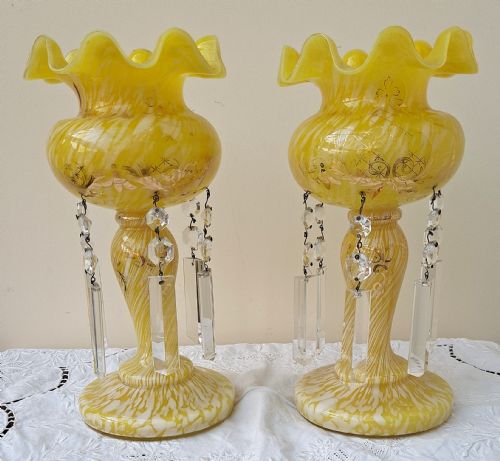
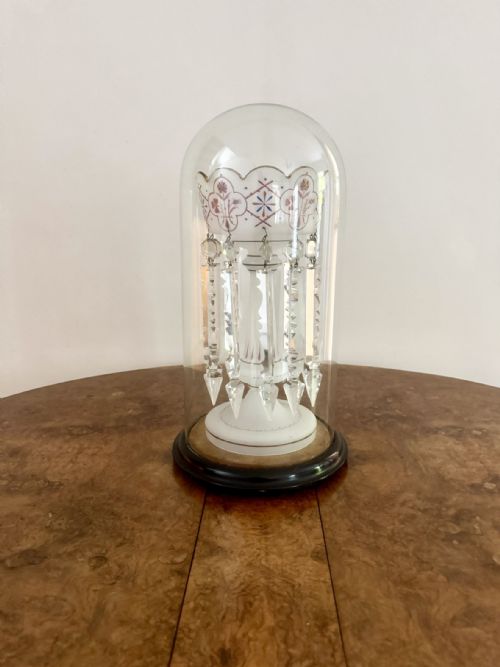
When you search for Victorian prism drop vases, you are looking at nineteenth-century glass lustres designed for mantelpieces and tables. These pieces typically appear in pairs, though individual examples also surface.
The selections recorded on this page span the Victorian era, including specific dates such as eighteen eighty, eighteen sixty, and nineteen hundred. Most items take the form of mantel lustres or table lustres fashioned from coloured or clear glass.
Colours dominate the selection, with ruby glass, cranberry glass, green glass, pink glass, and yellow glass appearing frequently. Many of these items originate from English workshops or Bohemian makers.
Materials and manufacture
Glassmakers produced these pieces using heavy mould-blown or free-blown glass techniques, often employing flash glass methods where a thin layer of coloured glass overlays a clear core. Cut crystal components then formed the body and the hanging pendants.
Gilt and gold leaf embellishments frequently decorate the glass surfaces, applied by hand around the rims and bowls. Prism drops hang from the central rim by means of notched or pierced apertures, secured with wire or metal pins.
These luminous mantel ornaments spent centuries dutifully absorbing the smoke of Victorian coal fires while trying to look immaculate.
Distinctions in quality
Quality rests upon the depth of the glass colour and the precision of the hand-cut facets on the hanging prisms. Rich ruby and cranberry hues, alongside heavier lead crystal weights, mark out the finer examples.
The preservation of original gilding and the completeness of the matching prism drops dictate the standing of a piece within its period. Richly decorated enamel work and deeply cut glass profiles separate standard production from superior items.
The Victorian Prism Drop Vases Glossary
- Mantel lustre
- A decorative glass vase fitted with a ring of hanging glass prisms designed to stand on a fireplace mantelpiece. They became popular in the nineteenth century for reflecting candlelight.
- Prism drop
- A cut glass pendant suspended from the rim of a lustre to refract light. These drops take spear, spearhead, or triangular shapes.
- Flash glass
- Glass made by coating a core of one colour with a thin layer of another colour. This technique allowed artisans to cut through the top layer to reveal the contrasting glass beneath.
- Ruby glass
- A deep red glass coloured with gold compounds during the melting process. It was a favoured medium for high-end Victorian decorative tableware and mantel ornaments.
Victorian Prism Drop Vases: Frequently Asked Questions
What are Victorian prism drop vases?
These pieces are decorative glass mantel lustres featuring hanging crystal prisms designed to catch and reflect light from candles or oil lamps during the nineteenth century.
They combine a central glass vase or bowl shape with a ring of suspended glass drops attached to the rim.
How were glass lustres used?
Victorian households placed them on mantelpieces, side tables, and chests of drawers primarily for ornamental effect rather than holding flowers. The hanging prisms caught the ambient light of the room, creating a sparkling display.
They were often arranged as matching pairs flanking a clock or candelabra on the drawing room mantel.
How do I identify ruby glass?
Ruby glass exhibits a rich, deep red coloration achieved by adding gold chloride to the molten glass mixture. When held to the light, genuine nineteenth-century examples show a warm, glowing hue rather than a flat dark red.
Many pieces also feature cut-through flash layers where clear or white glass shows beneath the red surface.
Are missing prism drops common?
Because the crystal pendants hang loosely from the rim, individual drops frequently became detached or broken over generations of handling and cleaning. Finding a complete set of matching prisms is a notable feature for collectors.
Replacements can be sourced, but original drops matched to the exact age and wear of the glass body remain preferable.