


Gilded White Glass
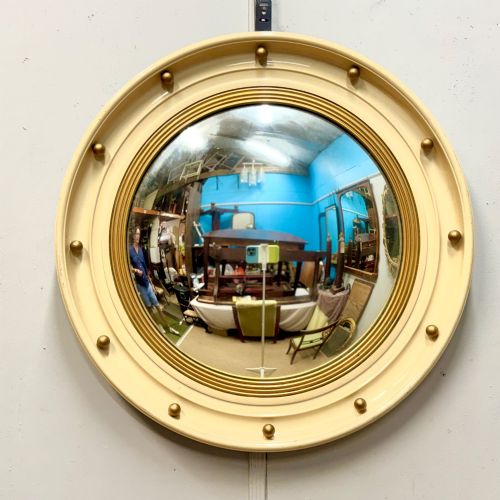
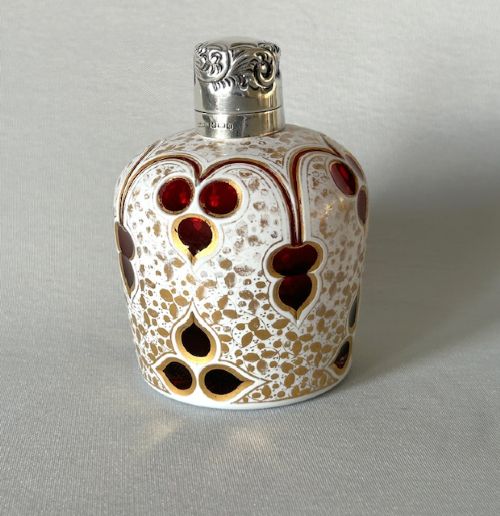
These pieces of gilded white glass bring together bright metallic gilding and opaque white glass surfaces across mirrors, vases, and lustres.
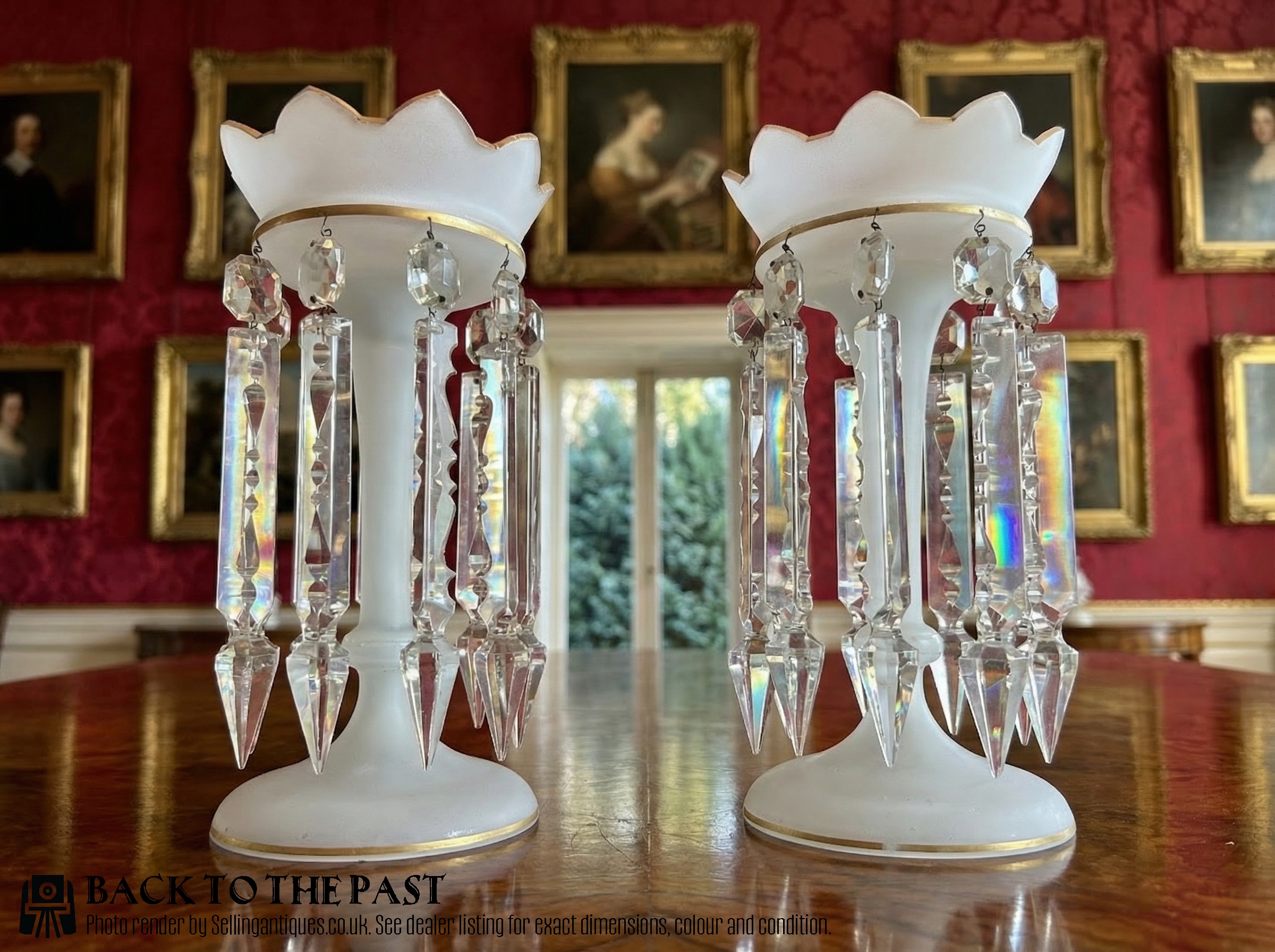
Gilded White Glass
When you search for gilded white glass, you encounter items where white glass provides a pale ground for gold leaf, gilt, and enamel highlights. The selection spans domestic vessels and large architectural fittings from the nineteenth and early twentieth centuries.
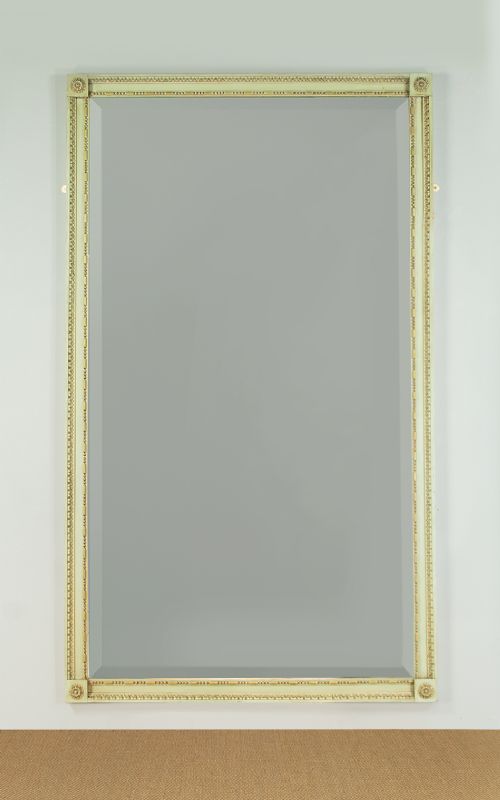
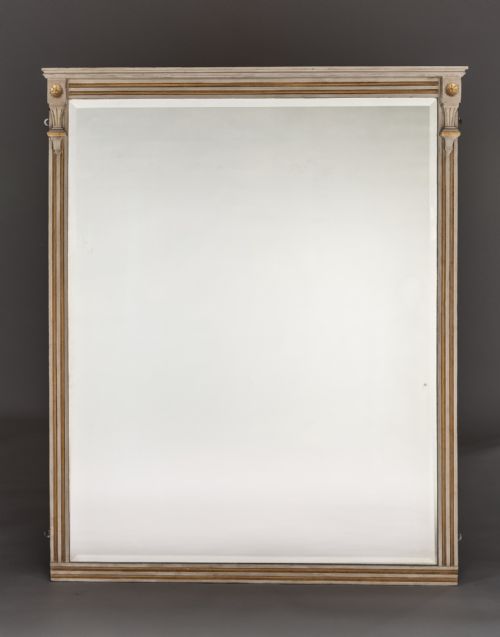
The most frequent forms on this page include vases, table lustres, and large mirrors with painted or gilded frames. These objects reflect the Victorian and Edwardian preference for decorative contrast between bright white surfaces and reflective metallic accents.
How they were made
Maker operations combine blown or moulded glass with applied layers of gold leaf, gesso, and paint. Artisans utilise enamel work and surface gilding directly onto glass or painted wood structures.
Techniques range from hand-painted floral motifs on opaline glass to carved wood and gesso frames finished with gilt and white paint. Many pieces integrate brass fittings or mirrored glass panels within the finished construction.
What varies in quality
Quality rests upon the crispness of the hand-painting and the preservation of the original gold leaf and gesso. Superior examples maintain intact gilding without extensive overpainting or loss to the delicate enamel details.
The sophistication of the glass body and the weight of the mounting structure dictate the tier of the piece. Refined items show careful handling of the white glass ground alongside precise, hand-applied metallic decoration.
Baccarat·Jean Francois Robert
The Gilded White Glass Glossary
- Opaline glass
- An opaque white glass developed in France and England during the nineteenth century. It frequently serves as a canvas for hand-painting and gilding.
- Lustre
- A decorative glass vase or candlestick hung with crystal prisms. These pieces often feature painted or gilded white glass bodies.
- Gesso
- A plaster-like mixture applied to wood frames before gilding. It provides a smooth base for gold leaf and decorative carving.
- Decalcomania
- A transfer technique used on nineteenth-century decorative glass and ceramics. It involves applying printed designs to glass surfaces before sealing them.
- Overmantel mirror
- A large wall mirror designed to hang above a fireplace mantel. These frames frequently combine white painted finishes with gilt highlights.
Gilded White Glass: Frequently Asked Questions
What is gilded white glass?
Gilded white glass describes decorative objects made from opaque white glass decorated with gold leaf or metallic gilt. These items include vases, table lustres, and mirrors from the Victorian and Edwardian periods.
Craftsmen applied the metallic decoration over the pale glass surface, often combining it with hand-painted enamel colours or floral motifs for decorative effect.
How do I clean white glass?
Cleaning requires a soft, dry cloth to remove dust from the surface. Avoid harsh chemical cleaners that can damage fragile enamel or disturb the original gold leaf.
Take particular care around painted areas and gilt highlights, as nineteenth-century pigments and metallic leaf are sensitive to moisture and abrasive friction.
Where were these pieces made?
The inventory on this page includes items originating from English, French, and Bohemian workshops. Each region contributed distinct styles, from English opaline vases to French decorative lustres and mirrors.
European factories utilised local glassblowing traditions and refined decorative techniques to produce these pale, gilded household ornaments.
How do I date these items?
Dating relies on stylistic markers, framing techniques, and the specific type of glass production. Pieces on this page predominantly date from the mid-nineteenth century through the Edwardian era.
Examining the construction of the frames, the formulation of the opaline or cased glass, and the application of the gilding helps determine the exact period.