




Victorian Prie Dieu Chair
These Victorian prie dieu chairs are low devotional seats designed for kneeling and prayer, offering tactile connection to nineteenth-century craftsmanship.
Victorian Prie Dieu Chair
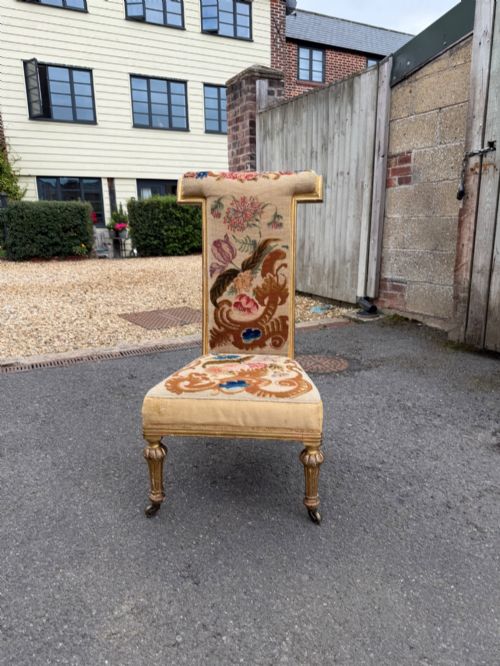
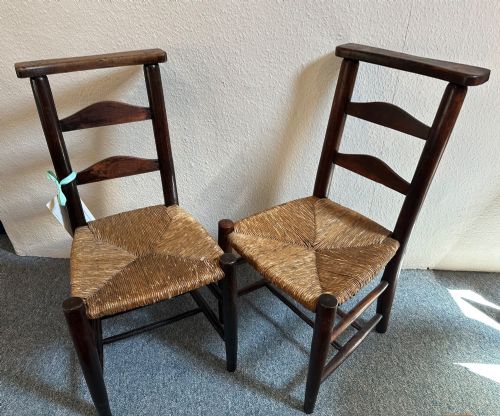
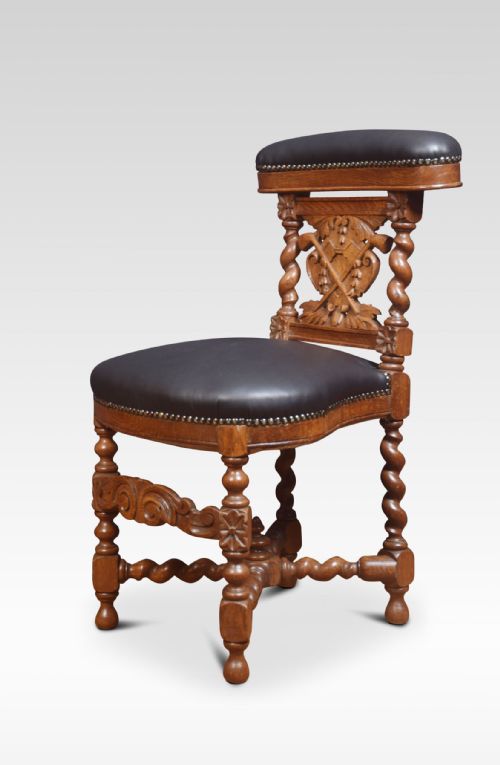
Makers and workshops produced these devotional seats in various secondary forms such as prayer chairs, nursing chairs, and occasional chairs. Stylistic variations range from standard Victorian and Gothic Revival to Flemish carved oak and ecclesiastical designs. Buyers frequently encounter rosewood and mahogany frames alongside oak examples.
Materials and Construction
Frames rely heavily on dense hardwoods such as mahogany, walnut, and rosewood, alongside carved oak and ebonised wood. Joinery involves traditional cabinet-making techniques suited to slender proportions, often enhanced by barley twist turnings or intricate ecclesiastical carving.
Upholstery forms an integral part of the construction, utilising velvet, fabric, needlepoint, beadwork, and original tapestry woolwork. Brass details and fretted tops occasionally supplement the primary timber structures.
Victorian Prie Dieu Chair Retail Price Guide 2026
Typical asking prices for victorian prie dieu chair among the pieces listed under this phrase on Sellingantiques today, from the lower quarter to the upper quarter. They describe what is for sale here now, not the wider market.
Some chairs carry visible proof of hard cathedral kneeling from St Paul's itself.
Quality and Distinction
The distinction between ordinary production and superior pieces rests upon timber selection and the crispness of the carving. Dense, richly figured rosewood or walnut frames with deeply articulated Gothic ornament command greater appreciation than plain secondary woods.
Original upholstery methods and surviving period needlework or beadwork elevate the integrity of a piece. Finer examples retain their original structural rigidity and sophisticated turnings, such as barley twist supports.
R Whytock of Edinburgh
The Victorian Prie Dieu Chair Glossary
- Prie Dieu
- A devotional chair designed for prayer, featuring a low seat and an upright, often narrow back. The term translates from French as pray God.
- Gothic Revival
- An architectural and decorative style popular during the nineteenth century, characterised by pointed arches, tracery, and medieval motifs. This aesthetic heavily influences many ecclesiastical prayer seats.
- Needlepoint
- A type of canvas work embroidery executed with yarn, frequently found on the seats and backs of nineteenth-century devotional chairs. Surviving examples demonstrate intricate floral or geometric patterns.
- Barley Twist
- A decorative turning technique resembling a spiralling rope, commonly utilised on the upright posts and legs of Victorian chairs. This detail adds visual movement to dense hardwoods.
Victorian Prie Dieu Chair: Frequently Asked Questions
What is a prie dieu chair?
A prie dieu chair is a nineteenth-century devotional seat built with a low seat and a tall, narrow backrest. They were designed for private prayer and kneeling within the home.
These pieces combine functional utility with architectural styles of the period, particularly Gothic Revival and ecclesiastical designs.
How do I date a Victorian prayer chair?
Dating relies upon timber choices, upholstery styles, and structural characteristics recorded across the nineteenth century. Rosewood and rich mahogany commonly indicate mid-century production around eighteen-fifty.
Later decades introduced heavier oak framing and distinct Gothic or Flemish carving. Comparing turned elements like barley twists helps narrow the decade.
Where were prayer chairs used?
These seats originated for domestic prayer rooms, bedrooms, and quiet spaces within Victorian households. Some ecclesiastical examples were commissioned directly for cathedral use.
Over time, many transitioned into occasional or nursing chairs within domestic parlours and bedrooms.
Are original textiles common on these chairs?
Surviving pieces occasionally retain period needlework, beadwork, or velvet upholstery from the nineteenth century. Many examples also appear ready for reupholstery.
Original tapestry woolwork significantly contributes to the historical integrity of a piece.