




Victorian Pottery Spill Vase
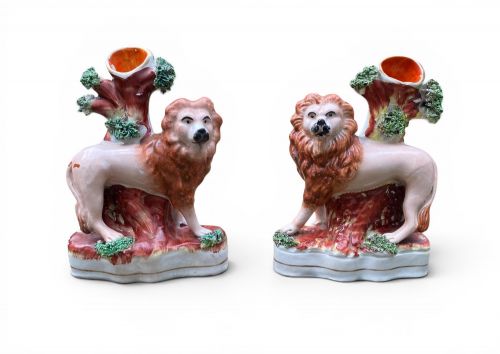
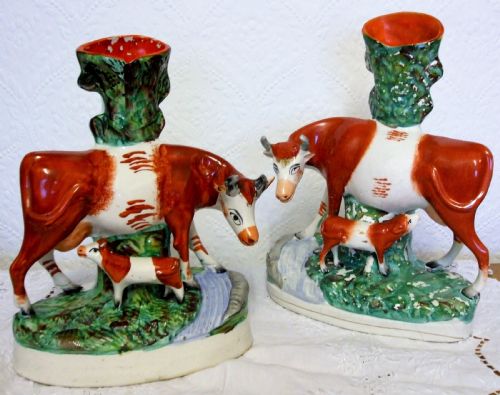
These Victorian pottery spill vases are spirited figures and hollow holders that once kept loose matches ready by the hearth.
Victorian Pottery Spill Vase
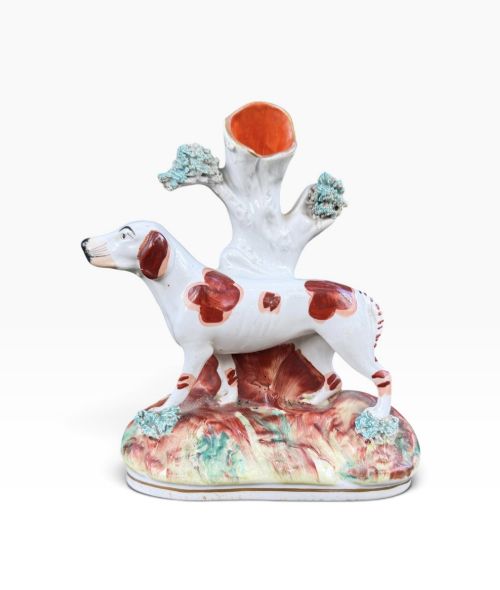
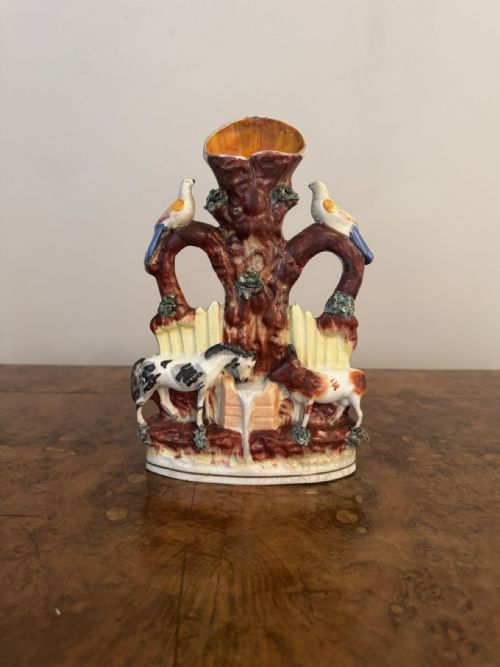
A victorian pottery spill vase is most often a Staffordshire earthenware figure combined with a cylindrical holder, depicting animals, rural pairs or historic subjects from the nineteenth century. The examples on this page span the 1850s to the 1900s, appearing as single pieces, pairs or multi-figure groups.
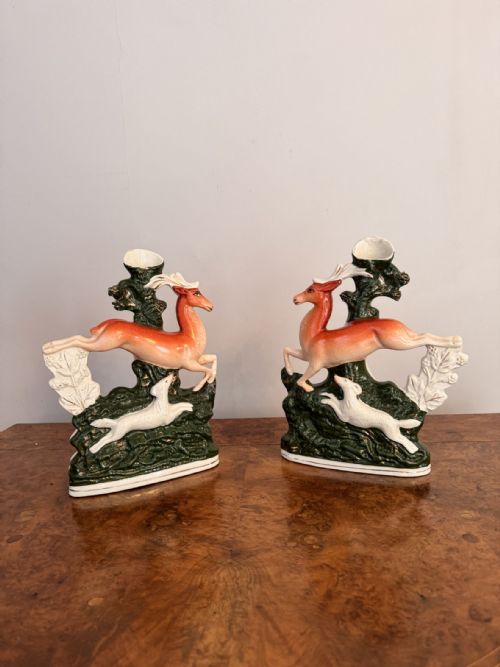
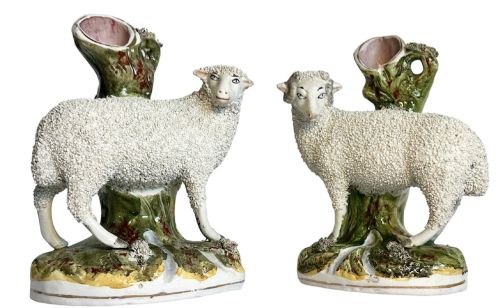
Makers shaped these items as deer, sheep, cows, dogs, lions and swans, alongside human figures such as Scots harvesters or the Band of Hope. Many were formed as flatback pieces designed to stand neatly against a mantelpiece wall.
How they were made
Potters shaped these objects from earthenware and ceramic bodies, frequently applying lead glazes and enamel colours to finish the surfaces. Some pieces incorporate gold leaf highlights to accent details on the figures and vases.
Moulds formed the basic shapes of the animals and human groups, while the cylindrical spill holders were joined to the earthenware bodies before firing. Artisans painted the enamel decoration by hand over the glaze, giving each piece its individual character.
Victorian Pottery Spill Vase Retail Price Guide 2026
Typical asking prices for victorian pottery spill vase among the pieces listed under this phrase on Sellingantiques today, from the lower quarter to the upper quarter. They describe what is for sale here now, not the wider market.
Victorian potters occasionally turned their hand to poodles, sheep and even babes in the wood to keep the mantelpiece company.
What varies in quality
Pairs matched for size and balance command greater attention than mismatched single items. The application of gold leaf and the depth of the glaze also distinguish standard production pieces from finer studio output.
The Victorian Pottery Spill Vase Glossary
- Spill vase
- A hollow cylindrical holder designed to store wooden spills used for lighting candles or fires. These vessels are typically integrated into Staffordshire pottery figures.
- Flatback
- A figure moulded with a finished front and a flat, unglazed or minimally decorated back designed to stand flush against a wall. This technique saved time and materials during production.
- Earthenware
- A porous ceramic body fired at lower temperatures, commonly used for nineteenth-century Staffordshire figures. It requires a glaze to become impermeable to liquids.
- Lead glaze
- A glossy coating containing lead compounds applied to pottery before firing to give a smooth finish. It enhances the colours of the underlying enamel decoration.
- Enamel
- Opaque glass-based paints applied over the fired glaze and fixed with a secondary low-temperature firing. This medium provides the bright surface colours seen on Victorian figures.
Victorian Pottery Spill Vase: Frequently Asked Questions
What were spill vases used for?
These holders kept thin wooden slips, known as spills, close to the fireplace for transferring flames to candles, oil lamps or pipes before matches were common.
Placed on mantelpieces, they combined practical hearth utility with decorative figural subjects ranging from farm animals to literary scenes.
How do I date a Staffordshire spill vase?
Dating relies on stylistic clues, potting methods and glaze characteristics, with most Victorian examples falling between the mid and late nineteenth century.
Pieces from the 1850s and 1860s often display robust modelling and distinct enamel palettes, while later Victorian items show shifts in subject matter and production.
Are these pieces usually found in pairs?
Many Victorian animal and figure subjects were produced as matched pairs to flank clocks or ornaments on either end of a mantelpiece.
Sheep, deer, lions and swans frequently appear as mirror-image pairs in the evidence, though single surviving pieces are also common.
How should I clean my pottery vase?
Dust these ceramic pieces gently with a soft, dry brush to preserve the delicate hand-painted enamel and gold leaf decorations.
Avoid using water, chemical cleaners or abrasive cloths, as nineteenth-century enamel colours can be sensitive to moisture and friction.