





Victorian Cow Figure
These Victorian cow figure pieces bring nineteenth-century pastoral charm into a room, offering tactile earthenware and carved wood for the collector.
Victorian Cow Figure
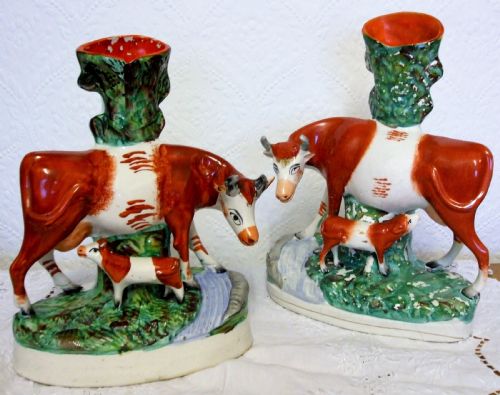
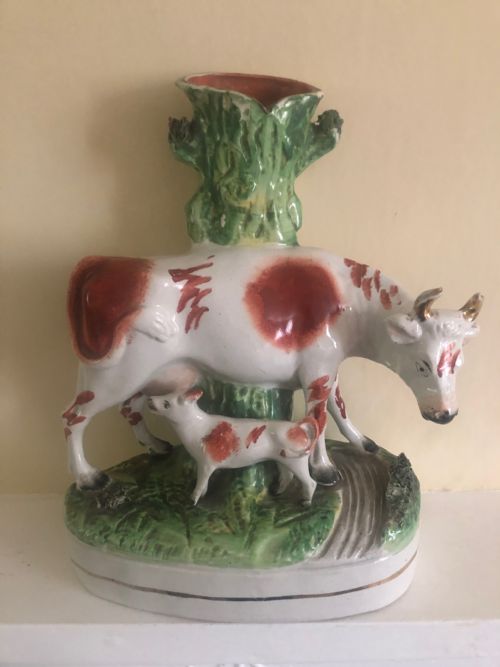
When you search for a victorian cow figure, you encounter nineteenth-century Staffordshire earthenware ceramics and carved wood sculptures. These pieces frequently depict cows with calves, milkmaids, or milkmen in flatback or spill vase forms.
The Staffordshire pottery tradition dominates the selection, appearing either as single figures or balanced pairs. Alongside ceramics, the listings include Black Forest carved figures and occasional paper mache items representing the same rural subject matter.
Materials and construction
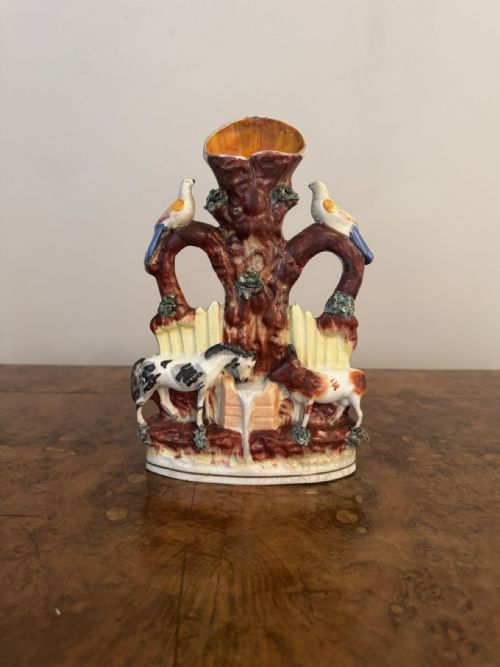
Potters shaped the Staffordshire ceramic figures from earthenware, finishing the surfaces with glaze and hand-applied enamel colours. Many examples function as spill holders or spill vases, combining practical hearth utility with sculptural modelling.
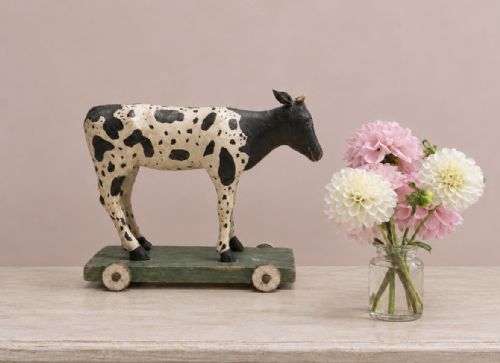
Wood carvers produced the Black Forest pieces from timber, capturing detailed animal forms without ceramic glazes. Artisans also utilised paper mache to construct lighter sculptural representations of cows during the early twentieth century.
Victorian Cow Figure Retail Price Guide 2026
Typical asking prices for victorian cow figure among the pieces listed under this phrase on Sellingantiques today, from the lower quarter to the upper quarter. They describe what is for sale here now, not the wider market.
Staffordshire pottery dominates the ceramic offerings, appearing alongside paintings of Highland cattle on paper and canvas.
Judging quality
In carved wooden pieces, depth of detail and clean execution of the animal forms distinguish finer production. Pairs naturally command attention for their symmetry, particularly when matching spill vases or figures survive together intact.
Robert Thorne Waite·George Turner
The Victorian Cow Figure Glossary
- Spill Vase
- A hollow ceramic vessel designed to hold taper spills for lighting fires or candles. These often take the form of cows standing beside tree trunks.
- Flatback
- A figure moulded with a finished front and a flat, unglazed or minimally decorated reverse meant to stand against a wall. This construction method typifies nineteenth-century Staffordshire pottery.
- Earthenware
- Porous pottery fired at lower temperatures than stoneware or porcelain. It serves as the primary ceramic body for nineteenth-century Staffordshire figures.
- Black Forest
- A style of wood carving originating from the mountain region of central Europe. These works typically depict animals carved from solid timber.
Victorian Cow Figure: Frequently Asked Questions
What is a spill vase?
A spill vase is a hollow vessel designed to hold thin wooden spills used for transferring flames from a hearth fire to candles or pipes. In nineteenth-century ceramics, these holders were often integrated into sculptural groups featuring animals.
Potters combined utility with ornament by shaping the vase as a tree trunk or support behind a Staffordshire cow figure. This allowed households to keep lighting tapers close at hand on the mantelpiece.
Why are many figures made as pairs?
Victorian mantelpieces and interior displays often relied on symmetry, leading potters and carvers to produce figures in matched sets. Pairs of cow figures or spill vases balanced each other visually across a fireplace.
These paired groupings frequently incorporate milkmaids, milkmen, or calves alongside the central animals. Surviving together, they represent a complete decorative unit from the nineteenth-century interior.
What is a flatback figure?
A flatback figure is a ceramic piece moulded with detailed decoration on the front and a flat, unpainted reverse. This design allowed the object to sit flush against a wall or the back of a shelf.
The Staffordshire potteries adopted this technique to save on materials and production time while creating visually substantial ornaments for domestic display.
How do ceramic and wooden figures differ?
Ceramic pieces utilise glazed earthenware decorated with hand-applied enamel colours, originating primarily from English potteries. They often serve a dual purpose as sculptural ornaments and functional spill holders.
Wooden Black Forest figures rely instead on carved timber textures to depict the animals without glaze or enamel. Both mediums capture the nineteenth-century pastoral aesthetic through distinct regional craft traditions.