
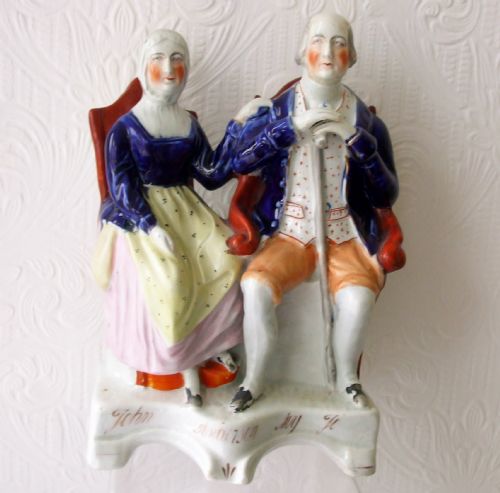


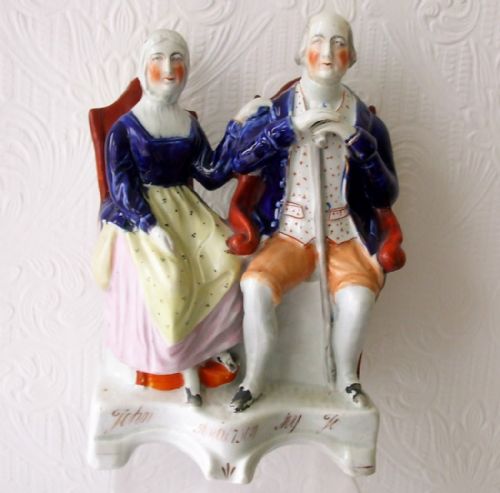
Victorian Pottery Couple
These Victorian pottery couple figures bring nineteenth-century character to a mantelpiece, offering a glimpse into domestic and theatrical pastoral scenes.
Victorian Pottery Couple
When searching for a victorian pottery couple, a buyer encounters earthenware figures modelled as country couples, Scottish lairds, harvesters, and theatrical pairs. These domestic ornaments capture nineteenth-century rural and romantic ideals in ceramic form.
The versions most frequently met on this page are Staffordshire flatback figures, designed to stand neatly against a wall on a shelf or mantelpiece. Alongside these English pieces appear Dutch ceramic figurines portraying traditional figures such as fishermen and their companions.
Makers produced these decorative figures and spill vases across various decades of the nineteenth century, ranging from simple portrait groups to substantial matched pairs. Each grouping reflects the popular culture, theatrical characters, and literary figures of the era.
Earthenware moulding and enamel painting
Makers shaped these pieces from earthenware and ceramic bodies, often utilising press moulds to form the flatback bodies of the couples. Artisans then applied lead glazes to seal the surfaces, creating a glossy protective finish over the clay.
Listings feature earthenware bodies decorated with lead glazes and enamel paint across the nineteenth century.
Modelling depth and enamel crispness
The preservation of the original glaze and the clarity of the colours distinguish superior figures from those with heavy wear or extensive restoration. Scale also plays a role, with larger figures and matched pairs often demonstrating more ambitious modelling by the potter.
ROZENBURG
The Victorian Pottery Couple Glossary
- Flatback
- A figure moulded with a finished front and a plain, unglazed or semi-glazed flat reverse. This construction allowed the ornament to sit flush against a wall or mantelpiece.
- Spill Vase
- A hollow ceramic figure incorporating an attached upright cylinder intended to hold wooden spills for lighting fires or candles. These combination pieces served a practical household function alongside their decorative appeal.
- Earthenware
- A porous, opaque ceramic body fired at lower temperatures than stoneware or porcelain. It formed the standard material for nineteenth-century Staffordshire figures.
- Lead Glaze
- A glossy coating containing lead oxide applied to ceramic bodies before firing. It produced a smooth, reflective surface that brightened the underlying enamel colours.
- Enamel Paint
- Vitreous pigments applied over the fired glaze and subjected to a lower second firing to bond with the surface. This technique provided the vibrant reds, blues, and greens seen on these figures.
Victorian Pottery Couple: Frequently Asked Questions
What is a Staffordshire flatback?
A Staffordshire flatback is a ceramic figure designed with a detailed front and a flat, unpainted back intended to rest against a wall. These pieces were specifically shaped to decorate high shelves and mantelpieces in nineteenth-century homes.
Potters produced them in large numbers, depicting everything from literary characters to royal portraits and rural couples. Their flat construction kept them stable on narrow surfaces.
How were spill vases used?
Spill vases combined a decorative ceramic figure with an open cylindrical tube designed to hold wooden spills. These slender tapers were lit from the fireplace and used to transfer flames to candles or pipes.
Placed on the mantelpiece, they kept practical fire-lighting tools within easy reach while disguising them as pastoral ornaments. Many pairs depict couples or historical figures beside these functional holders.
How do I date a pottery couple?
Dating these ceramic figures involves examining the stylistic clues, modelling techniques, and materials recorded in nineteenth-century production. Pieces frequently reflect the dress and public figures of specific decades between eighteen-fifty and nineteen-hundred.
Makers often relied on traditional earthenware bodies and hand-applied enamel paints characteristic of the Victorian period. Comparing the subject matter to known historical portraits or theatrical prints helps narrow down the era of manufacture.