



Victorian Portrait Ceramics
Victorian portrait ceramics capture likenesses of royalty, reformers and literary figures across earthenware, porcelain and tiles.
Victorian Portrait Ceramics
When you search for victorian portrait ceramics, you encounter figures, plaques, jugs and tiles depicting notable people of the nineteenth century. These objects served as domestic displays of loyalty, patriotism or admiration during the Victorian period.
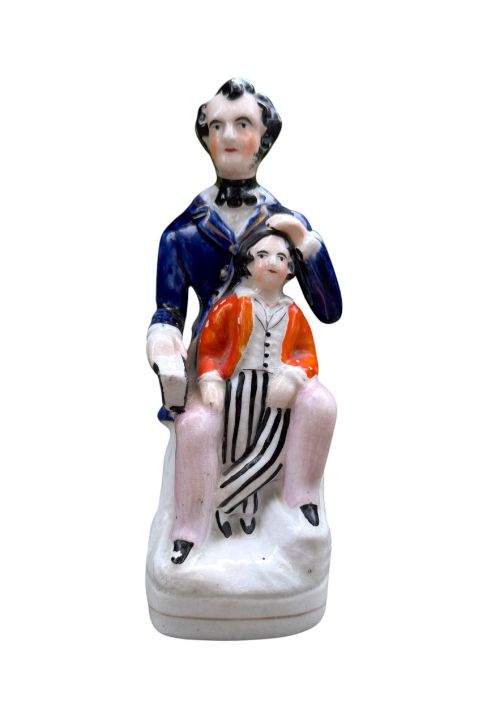
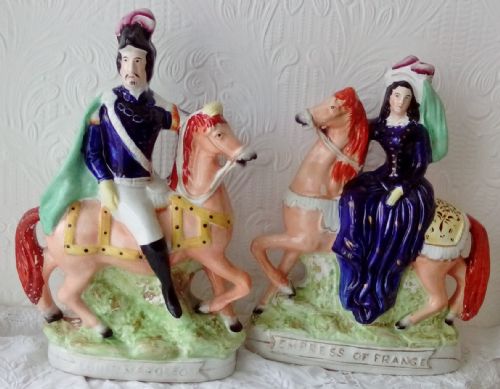
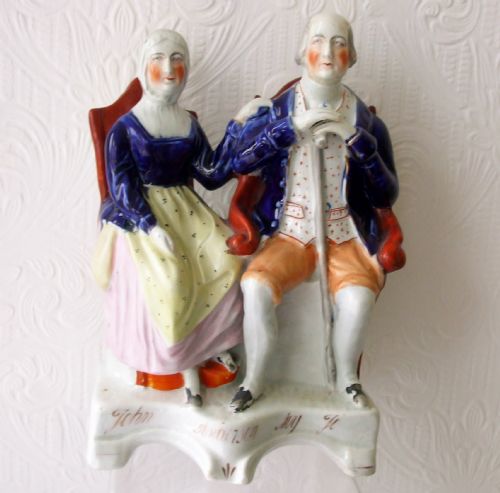
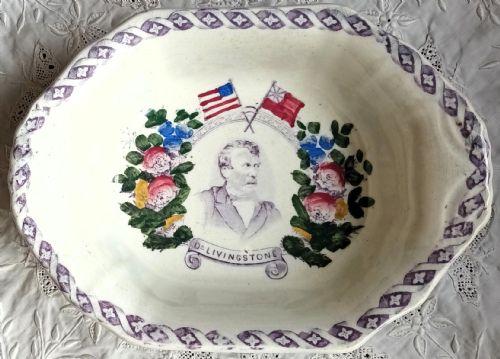
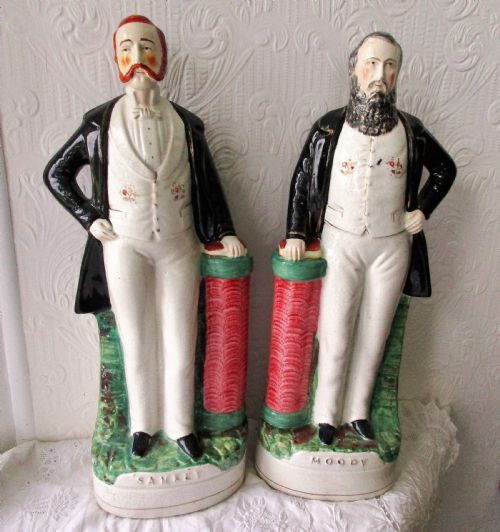
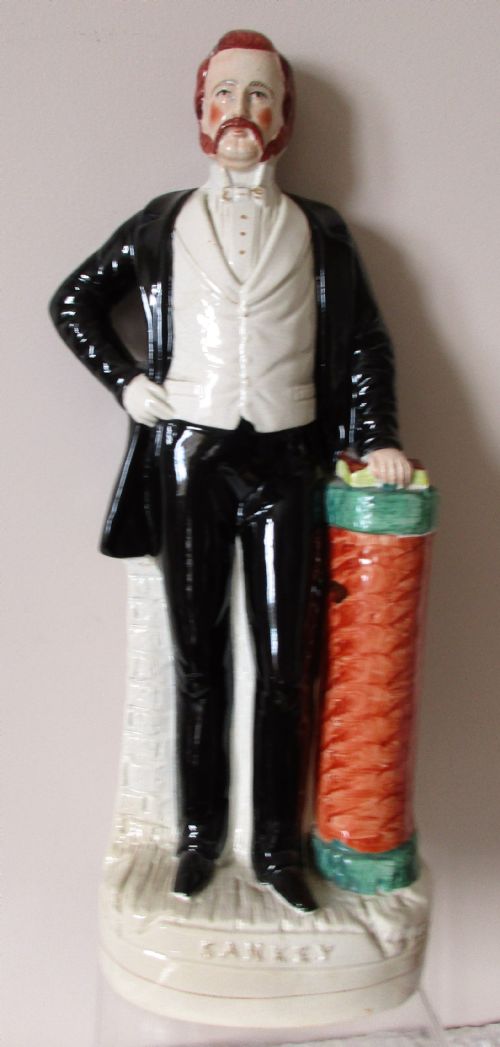
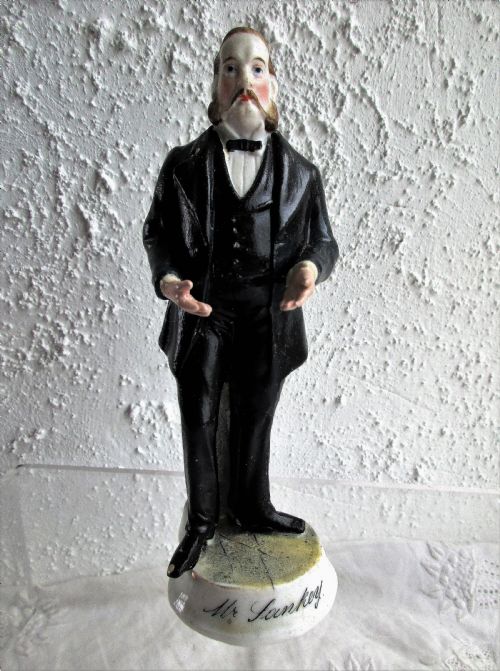
The Staffordshire pottery figure is the most frequent form on this page, often showing monarchs, military commanders or evangelists. Alongside these earthen figures, buyers meet porcelain plaques, Parian busts and glazed ceramic tiles.
The pieces span from the mid-nineteenth century through the eighteen nineties, capturing both popular heroes and political figures of the era. Makers utilised earthenware, porcelain and lead glaze to immortalise subjects ranging from Queen Victoria to literary characters.
Materials and Methods
Potters shaped earthenware and porcelain into figures, vases and plaques, often applying lead glaze to seal the ceramic body. Hand painting and gilt detailing added colour and definition to faces, uniforms and robes.
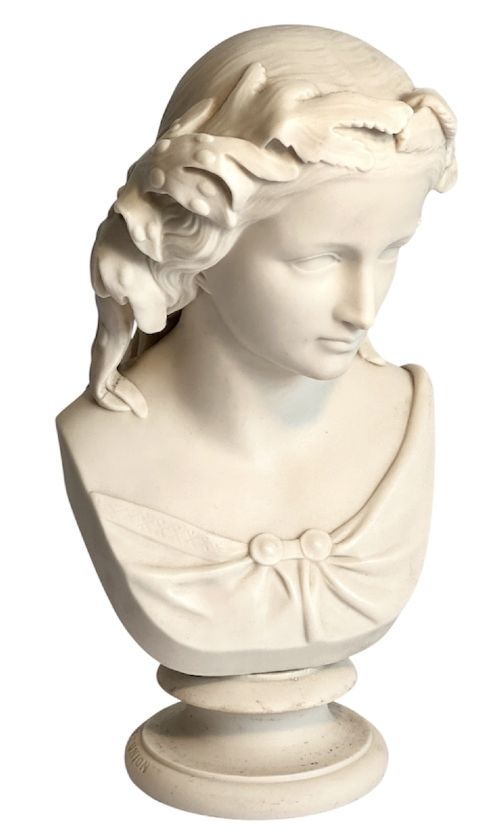
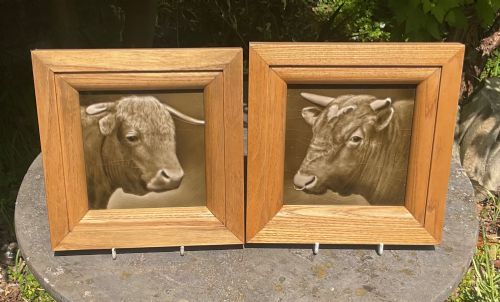
Parian ware provided a fine, unglazed surface that resembled marble for portrait busts. Specialised ceramic tiles from makers like Sherwin and Cotton employed painted designs under or over glaze within framed settings.
Forms include decorative figures, wall art, vases and commemorative jugs.
Quality Variations
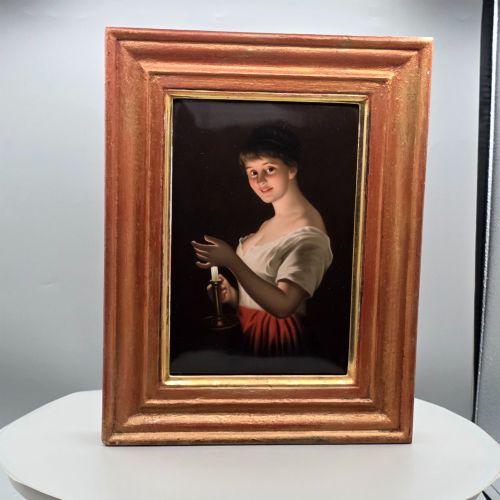
The crispness of the modelling separates standard production figures from superior portrait ceramics. Skilled hand painting on porcelain plaques and charger plates brings distinct character and depth to the subject's face.
Sherwin and Cotton·Doulton Lambeth·Royal Bonn·Coalport
The Victorian Portrait Ceramics Glossary
- Parian ware
- A fine unglazed white porcelain developed to imitate marble, often used for portrait busts. It takes its name from the Greek island of Paros.
- Flatback
- A Staffordshire pottery figure style where the rear is unpainted and flat because the piece stood against a mantelpiece wall. This technique saved materials and kiln space.
- Earthenware
- Porous pottery fired at lower temperatures, commonly used for Staffordshire portrait figures and jugs. It requires a glaze to become impermeable.
- Moon flask
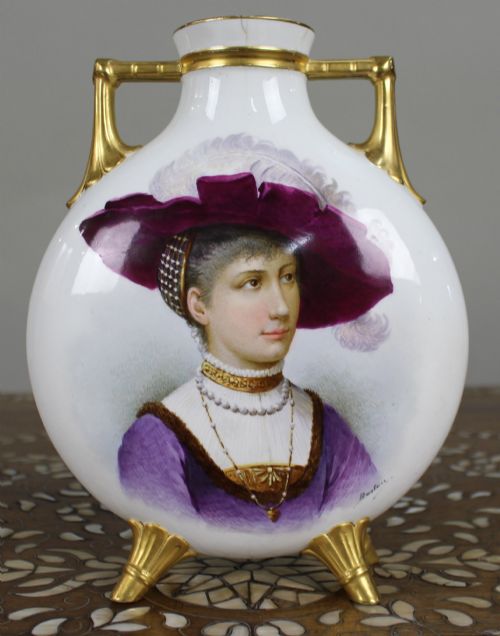
- A flattened circular vase form with a narrow neck and small handles, frequently decorated with hand painted portraits and gilding. These vessels display nineteenth century European artistry.
- Charger
- A large decorative plate intended for wall display or mounting on a sideboard rather than for dining. They often feature detailed hand painted portraits.
Victorian Portrait Ceramics: Frequently Asked Questions
What are Staffordshire portrait figures?
Staffordshire portrait figures are earthenware sculptures depicting royalty, politicians, preachers and literary characters produced during the nineteenth century. Potters moulded these pieces for domestic mantelpieces to commemorate contemporary public figures.
Most examples are earthenware with hand painted details and occasional gilt highlights. They reflect the popular heroes and events of the Victorian era.
How do I identify Parian ware?
Parian ware is a type of unglazed white porcelain that has a smooth, matte texture resembling carved marble. It appears in nineteenth century portrait busts and classical figures.
The material does not possess the glossy sheen typical of glazed porcelain. Its surface highlights fine sculptural detail without needing surface paint.
Were these ceramic tiles used on walls?
Ceramic tiles from this era often served as decorative wall art, mounted in wooden frames rather than installed in kitchens or hearths. Makers produced framed pairs and series depicting female figures or animals.
These framed pieces operated purely as domestic wall decoration. They showcase hand painted or glazed artistry typical of late nineteenth century tile works.
How should I display portrait plaques?
Portrait plaques and painted porcelain chargers typically feature integral hanging fixtures or sit within dedicated wooden frames. Placing them away from direct sunlight preserves the enamel colours and gilt detailing.
Wall mounting allows porcelain plaques and framed tiles to be viewed at eye level. This mirrors how nineteenth century homes exhibited painted ceramic portraits.