



Victorian Porcelain Garniture
These Victorian porcelain garniture sets combine painted ceramic bodies with metal mounts, offering matched display pieces for a mantelpiece.
Victorian Porcelain Garniture
A Victorian porcelain garniture comprises sets of matched decorative objects, most frequently three-piece clock sets or multi-piece vase assemblies designed for symmetrical arrangement on a mantelpiece. The evidence shows these pieces spanning the nineteenth century, including specific dates from eighteen fifty to nineteen hundred, alongside Georgian and Victorian designations.
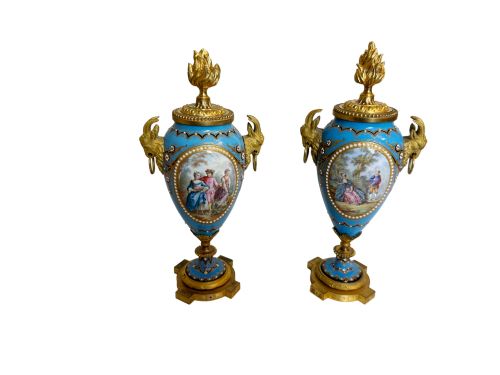
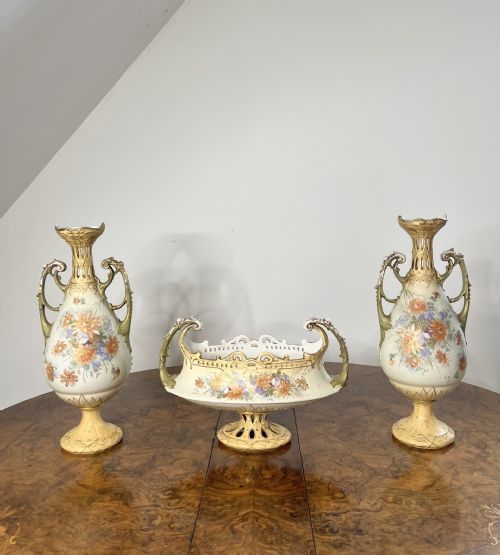
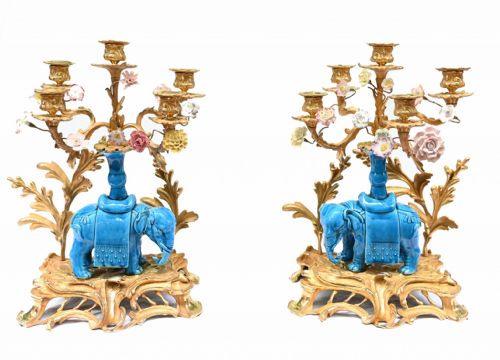
The objects take several distinct forms across the listings, ranging from clock sets and standalone vase garnitures to cassolettes, candlesticks, and centrepieces with side vases. French styles strongly influence the selection, with Sevres style, Rococo Revival, Louis XVI Style, and Belle Epoque pieces appearing alongside English ironstone and Vienna porcelain.
Materials and Manufacture
The construction combines ceramic bodies in porcelain or ironstone with metal mounts of gilt bronze, brass, or ormolu. Enamel, gold leaf, and glass also appear across the listings to decorate the porcelain surfaces and metal fittings.
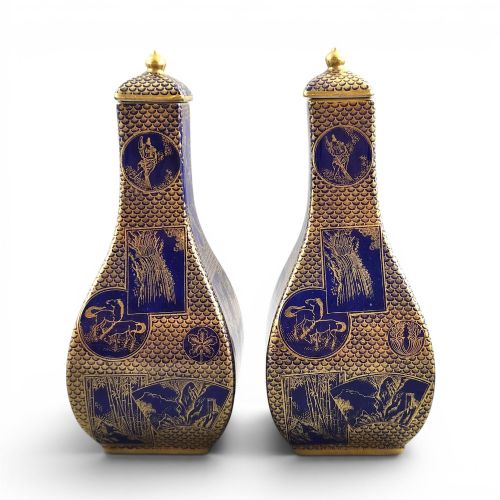
Makers shaped these materials into complex forms requiring both ceramic firing and metal casting skills. Many items incorporate painted scenes or coloured grounds, such as mazarine blue or turquoise, paired with gilded metal bases and handles.
Listings feature nineteen-century porcelain garnitures in French Sevres style, alongside English ironstone by Mason's and production from Vienna and Berlin.
Evaluating Quality
Quality rests on the crispness of the porcelain moulding and the detail within the hand-painted decoration. Finer pieces demonstrate superior control over coloured grounds and gilding.
The integration between the ceramic body and the metal mounts determines the success of the piece. Better examples show precise casting in the ormolu or gilt bronze components that complement the porcelain rather than overpower it.
Mason's·Royal Vienna·KPM Berlin·Finnigan Manchester·Royal Crown Derby·Meissen
The Victorian Porcelain Garniture Glossary
- Garniture
- A set of matched ornamental objects designed to be displayed together on a mantelpiece or sideboard, typically comprising a central clock or vase flanked by two smaller matching pieces.
- Cassolette
- A reversible decorative vessel that functions as a vase on one side and a burner or perfume jar when flipped, often found in nineteenth-century French sets.
- Ironstone
- A heavy, durable type of ceramic patented in the nineteenth century that mimics porcelain while offering greater strength.
- Ormolu
- Gilded bronze used for decorative mounts and fittings on nineteenth-century furniture and ceramic sets.
- Sevres style
- Decoration and porcelain forms inspired by the outputs of the famous French royal manufactory, characterised by rich ground colours and classical painted panels.
Victorian Porcelain Garniture: Frequently Asked Questions
What is a Victorian porcelain garniture?
A Victorian porcelain garniture is a matched set of decorative ceramic objects, usually consisting of three pieces such as a mantel clock flanked by two vases or candelabras. These sets were designed during the nineteenth century to sit symmetrically on a fireplace mantel or console table.
The listings show various configurations, including vase-only sets and three-piece clock garnitures incorporating materials like gilt bronze, ormolu, and ironstone.
How were clock garnitures used?
Clock garnitures served both a practical timekeeping function and a decorative role in nineteenth-century interiors. The central clock provided the time while the flanking vases, cassolettes, or candelabras completed a balanced visual display.
Owners placed them on mantelpieces where their painted porcelain surfaces and gilded metal mounts reflected candlelight and daylight.
How do I identify French styles?
French styles in nineteenth-century garnitures often feature Sevres style painted panels, elaborate ormolu mounts, and Rococo Revival curves. Makers frequently employed rich blue or turquoise ground colours paired with gilt highlights.
Items from this tradition emphasise decorative symmetry and classical motifs influenced by Louis periods and the Belle Epoque.
What materials make up these sets?
The primary materials are porcelain and ironstone, which form the bodies of the clocks, vases, and candelabras. These ceramic elements are frequently decorated with enamel, gold leaf, and hand-painted designs.
Metal mounts in gilt bronze, brass, or ormolu provide structural support, feet, and decorative handles, while some pieces also incorporate glass or onyx.