


Victorian Porcelain Basket
A victorian porcelain basket brings intricate floral modelling and hand-painted charm straight to the dining table or cabinet.
Victorian Porcelain Basket
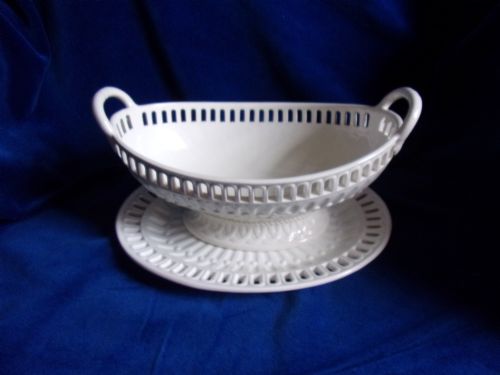
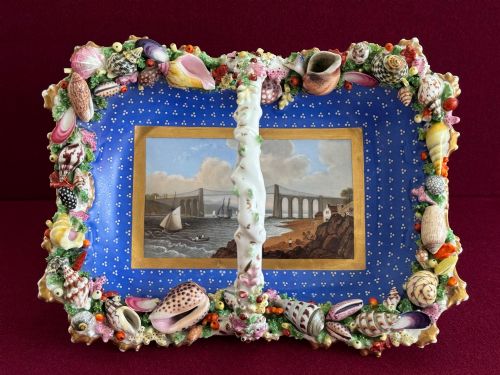
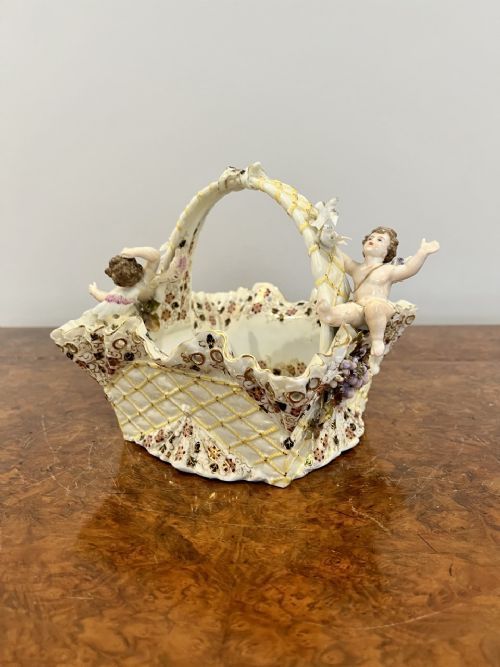
When searching for a victorian porcelain basket, buyers encounter decorative openwork vessels, figural containers, and figural sweetmeat dishes dating across the nineteenth century. These pieces combine utilitarian basketry forms with delicate ceramic artistry, often featuring woven lattice walls or applied floral embellishments.
The selection ranges from Staffordshire quill holders and parian figures holding baskets to large German centrepieces and English porcelain baskets. Most examples date from the mid to late nineteenth century, reflecting the ornate tastes of the Victorian era through rococo revival and neoclassical styles.
What varies in quality
The standard of a victorian porcelain basket rests on the crispness of the modelling and the finesse of the hand-painting. Finer pieces display delicately articulated petals and well-defined woven lattices rather than heavy, thick-walled moulding.
Listings feature 19th Century, Victorian, 1880, 1860, 1900, and 1910 periods alongside materials such as porcelain, parian porcelain, earthenware, and gold leaf.
Royal Worcester·Volkstedt Porcelain·C G Schierholz Sohn·Royal Dux·Chamberlain Worcester·Mason Ironstone·James Dudson
The Victorian Porcelain Basket Glossary
- Parian Porcelain
- A fine-grained unglazed porcelain developed to resemble white marble. It gained immense popularity in the nineteenth century for statues and figural groups.
- Sweetmeat
- A small confection or sweet served at dessert. Sweetmeat figures and dishes often take the form of open baskets designed to hold these treats.
- Centrepiece
- A large decorative ornament placed in the middle of a dining table. Nineteenth-century examples often combine pierced porcelain baskets with figural supports.
- Gilding
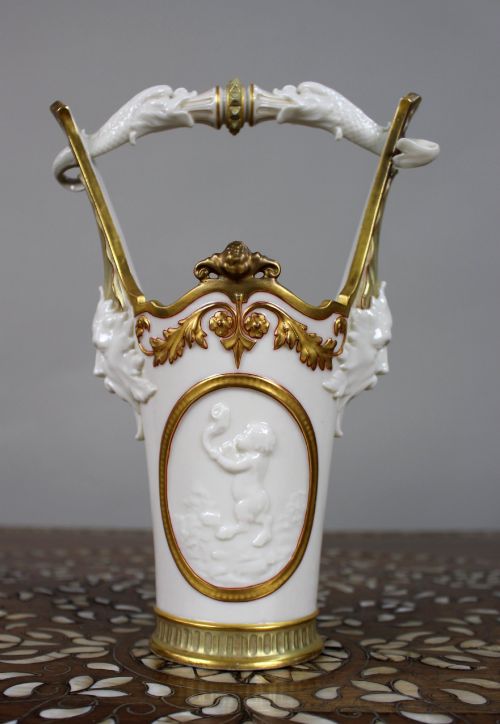
- The application of gold leaf or gold paint to ceramic surfaces. This technique highlights rims, handles, and raised decorative motifs.
- Staffordshire
- A major English pottery-producing area known for figures, dogs, and utilitarian wares. Pieces from this region frequently incorporate basket forms into quill holders and figurines.
Victorian Porcelain Basket: Frequently Asked Questions
How do I clean a porcelain basket?
Dust gently with a soft, dry brush to protect delicate applied flowers and delicate openwork handles.
Avoid soaking or using harsh detergents, especially on pieces featuring gold leaf gilding or delicate enamel work.
Are these baskets suitable for daily use?
Most antique pieces function best as decorative objects, centrepieces, or display items rather than for heavy daily service.
The intricate pierced lattice walls and applied ceramic details are vulnerable to chips and knocks during routine handling.
How can I tell the period?
Examine the paste, glaze characteristics, and stylistic markers such as rococo revival curves or nineteenth-century neoclassical motifs.
Maker marks, factory stamps, and the presence of parian ware or hand-painted enamels also help narrow down the date.