

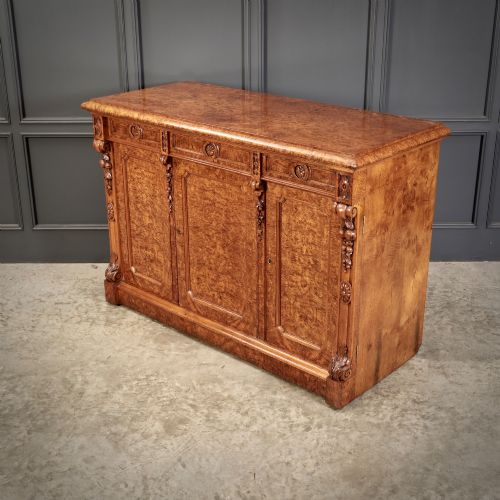
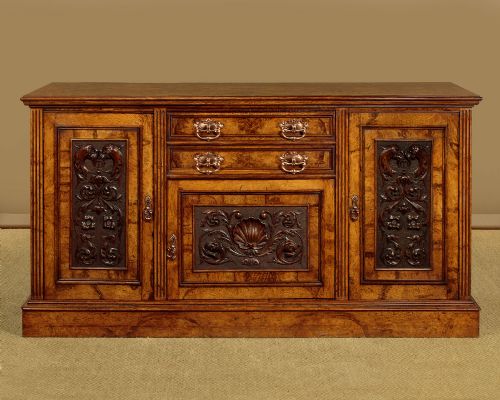
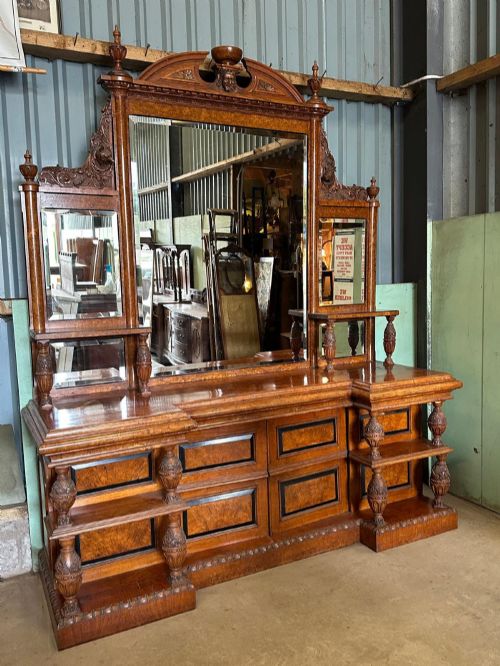
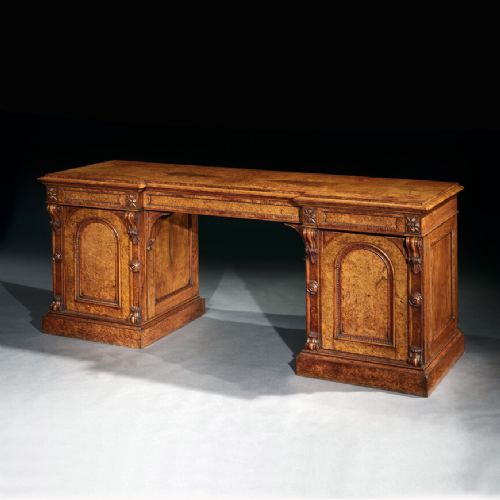
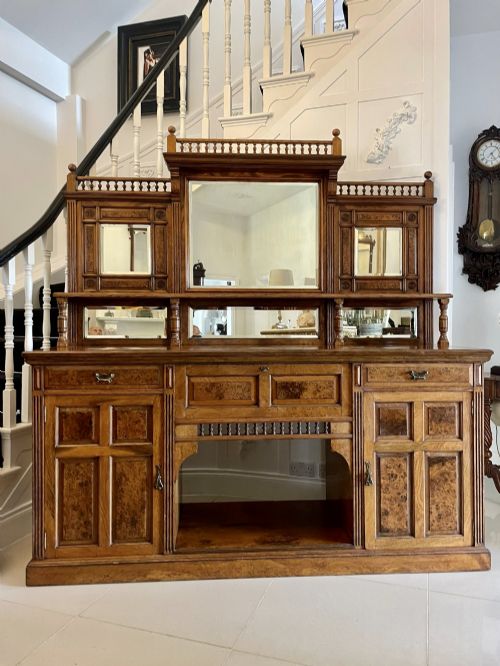

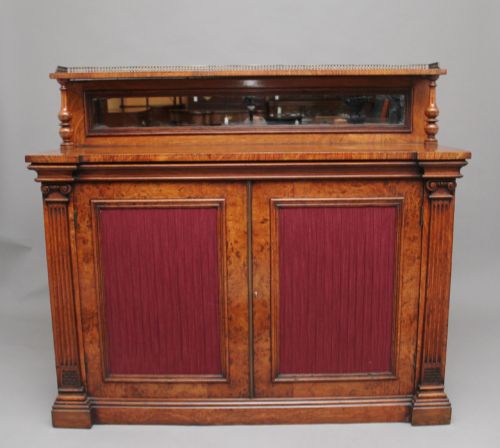


Victorian Pollard Oak Sideboard
These Victorian pollard oak sideboards deliver intense grain movement and deep character that elevate a dining room with serious nineteenth-century presence.
Victorian Pollard Oak Sideboard
A victorian pollard oak sideboard brings substantial storage and striking decorative timber to nineteenth-century interiors. The pieces on this page span the nineteenth century, including specific dates around eighteen eighty and the Gothic Revival style.
Forms range from simple chiffonier bases and three-door buffets to massive mirror-backed sideboards and credenzas. Most examples utilise the distinctive burr-marked wood to create a bold visual focal point in a room.
How they were made
Cabinet makers utilised pollard oak veneers and solid timbers, harnessing the knotted growth patterns of pollarded trees to achieve dramatic figured surfaces. Many examples incorporate ebony inlay, specimen wood details, and brass hardware.
Larger pieces frequently integrate glass panels within mirror-backed superstructures and top shelves. Carved detailing and internal shelving systems complete the robust nineteenth-century construction.
Victorian Pollard Oak Sideboard Retail Price Guide 2026
Typical asking prices for victorian pollard oak sideboard among the pieces listed under this phrase on Sellingantiques today, from the lower quarter to the upper quarter. They describe what is for sale here now, not the wider market.
Listings feature pieces from the nineteenth century, including specific Victorian items dated to eighteen eighty.
What varies in quality
The density and movement of the pollard oak grain dictate the visual appeal of the timber surface. Finer examples display exceptionally rich figuring across every door and panel.
Structural complexity sets the standard, separating simple servers from elaborate mirror-backed sideboards featuring specialist inlays, superior carving, and Gothic Revival architectural elements.
The Victorian Pollard Oak Sideboard Glossary
- Pollard oak
- Timber taken from trees that were cut back close to the trunk to produce dense, highly figured burr growth. This wood forms the primary decorative surface for these sideboards.
- Chiffonier
- A compact nineteenth-century sideboard style equipped with lower cupboards and often a shelf above. These pieces provide practical storage in smaller dining spaces.
- Credenza
- A large storage cabinet originating for dining rooms, frequently built without legs to sit directly on the floor. In Victorian examples, these pieces match the capacity of traditional sideboards.
- Specimen wood inlay
- Decorative patterning created by inserting small pieces of different timber species into the main surface. This technique highlights the maker's skill through contrasting natural colours.
Victorian Pollard Oak Sideboard: Frequently Asked Questions
What is a pollard oak sideboard?
A heavy nineteenth-century dining room cabinet built from timber harvested from pollarded oak trees. The resulting wood displays distinctive clustered knots and swirling grain patterns.
These pieces function primarily as serving stations and storage units, combining cupboards, drawers, and occasionally upper display shelves or mirrors.
How do I clean pollard oak?
Dust the timber regularly with a soft, dry cloth to prevent dirt from settling into the intricate grain crevices. Avoid modern silicone sprays that can damage the antique finish.
Apply a traditional beeswax periodically to nourish the wood and maintain a soft sheen. Keep the cabinet away from direct sunlight and strong heat sources to protect the veneer.
Where should I place a sideboard?
Position the piece against a principal dining room wall where its substantial scale and figured timber can command attention. Ensure the floor is level so the heavy doors and drawers align correctly.
Allow enough clearance around the cabinet for doors to open fully without striking surrounding furniture. Mirror-backed variants look particularly striking when positioned to reflect natural window light.
How do I date a sideboard?
Examine the construction methods, secondary timbers, and overall design motifs present in the piece. Nineteenth-century examples often incorporate hand-cut joints and distinct Victorian proportions.
Look for stylistic clues such as Gothic Revival architectural carving or specific hardware styles. The presence of documented makers like James Schoolbred provides a firm point of reference for eighteen-eighty pieces.