

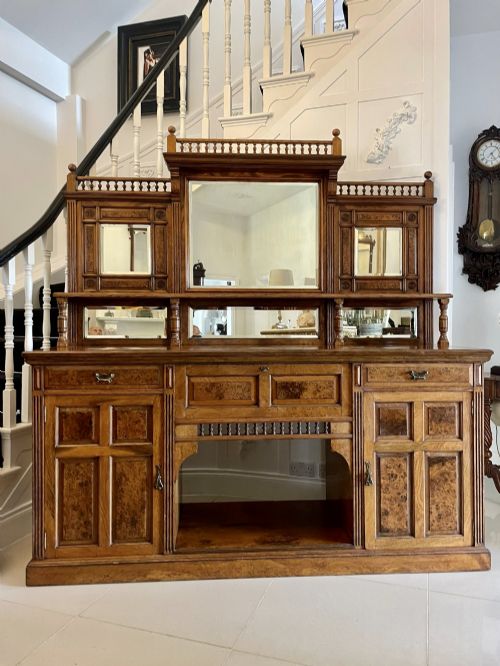


Pollard Oak Server
A pollard oak server brings the unmistakable burled figuration of pollard oak into a room, offering both substantial storage and a striking focal point for a dining space.
Pollard Oak Server
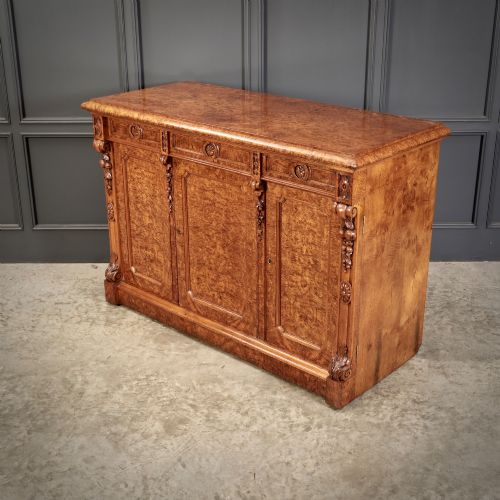
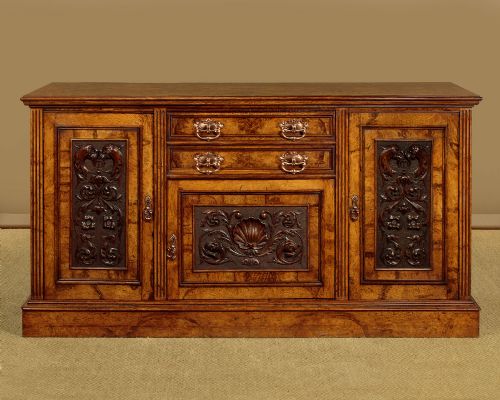
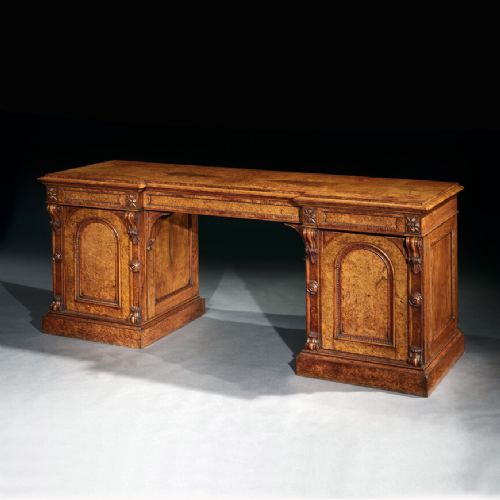
When searching for a pollard oak server, collectors encounter substantial nineteenth-century case furniture designed for dining rooms and grand hallways. The examples appearing on this page span the Victorian era, alongside pieces reflecting Regency and Gothic Revival influences.
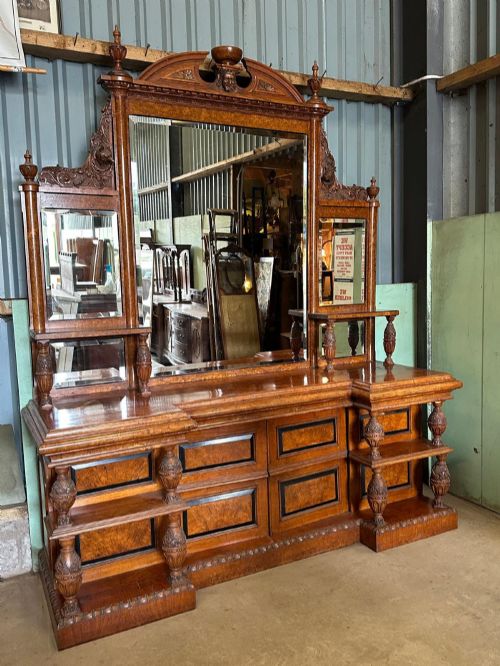
Most pieces date from the nineteenth century, including specific items from around eighteen-eighty, demonstrating the Victorian appetite for heavily figured timber. The surviving pieces range from simpler serving tables to grand mirror-backed sideboards fitted with specimen wood inlay.
Materials and construction
Makers utilised solid oak and pollard oak veneers to create these servers, exploiting the distinctive knotty grain patterns formed where trees were repeatedly cut back. This burled timber is often contrasted with darker details such as ebony inlay or specific specimen wood inlays.
Hardware and structural additions typically include brass fittings and glass elements, particularly in cabinets and mirror-backed superstructures. Carved ornamentation and applied mouldings add depth to the substantial carcasses of these servers, particularly within the Gothic Revival and Victorian styles.
Pollard Oak Server Retail Price Guide 2026
Typical asking prices for pollard oak server among the pieces listed under this phrase on Sellingantiques today, from the lower quarter to the upper quarter. They describe what is for sale here now, not the wider market.
The listings on this site feature nineteenth-century pieces finished in pollard oak, oak, and ebony, alongside brass and glass elements.
Assessing quality in pollard oak
The primary distinction in quality lies in the selection and matching of the pollard oak veneer across the principal surfaces. Exceptional pieces display tightly clustered, symmetrical burr patterns that cover the doors and drawer fronts without interruption.
Superstructure complexity and secondary materials also elevate a piece, such as the inclusion of fine specimen wood inlays, substantial mirror frames, and robust brass hardware. The integration of architectural carving, particularly in Gothic Revival examples, marks the upper tier of nineteenth-century cabinet making.
The Pollard Oak Server Glossary
- Pollard oak
- Timber taken from oak trees that have been pollarded, a pruning method that produces heavily figured, knotty growth rings known as burr. This wood is sliced into veneers for furniture cabinets.
- Credenza
- A grand dining room storage cabinet without legs, often featuring multiple doors and a flat top surface. In nineteenth-century pieces, these frequently incorporate mirrors and shelving.
- Buffet
- A low sideboard or serving table designed specifically for holding food and dishes during meals. Victorian examples often include upper shelves for display.
- Specimen wood inlay
- Decorative patterning created by inserting small pieces of various contrasting timbers into a primary surface. This technique highlights the maker's skill and adds colour variation.
Pollard Oak Server: Frequently Asked Questions
How do I date a pollard oak server?
Dating these servers involves examining the prevailing styles, construction methods, and materials recorded across nineteenth-century cabinet making. Most pieces reflect the Victorian period or specific movements like Gothic Revival and Regency.
Key indicators include the presence of mirror-backed superstructures, ebony or specimen wood inlays, and the specific proportions typical of eighteen-eighty workshop production.
Where were these servers used?
These servers were primarily placed in formal nineteenth-century dining rooms to assist with hosting and entertaining. Their top surfaces held dishes and drinks during meals, while internal shelving stored silver, linen, and glassware.
Grander versions with mirror backs and top shelves also stood in entrance halls and large reception rooms to display decorative porcelain.
How do I care for pollard oak furniture?
Caring for pollard oak involves keeping the timber away from direct heat sources and strong sunlight to prevent the veneer from drying out. Regular dusting with a soft, dry cloth preserves the polished finish of the burr grain.
Applying a traditional beeswax occasionally helps nourish the oak surfaces and maintains the deep lustre of the nineteenth-century polish.