
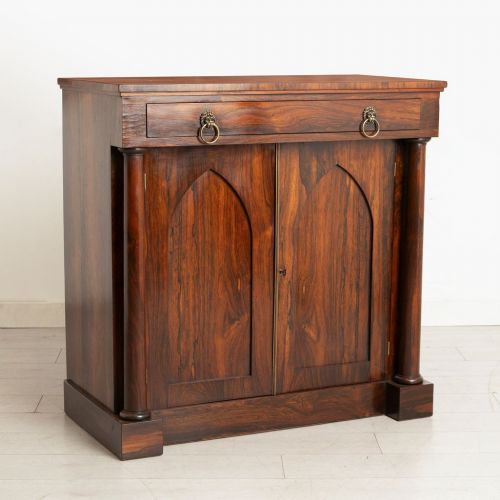
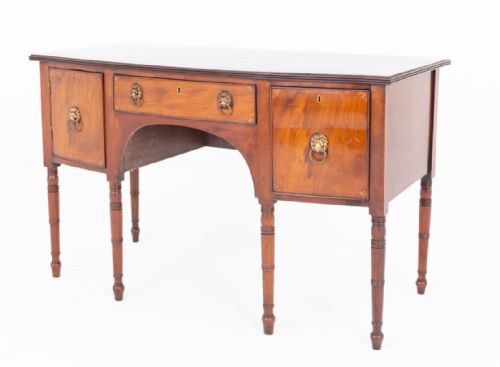
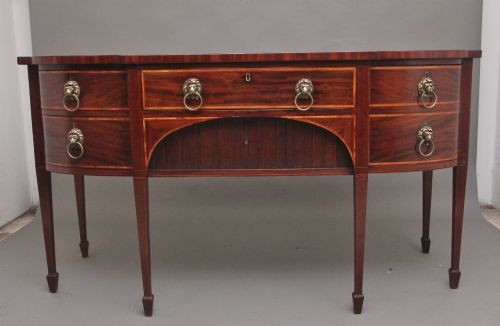
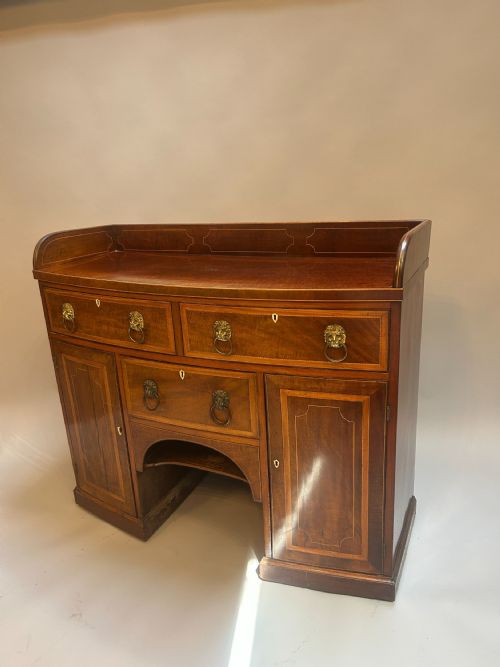
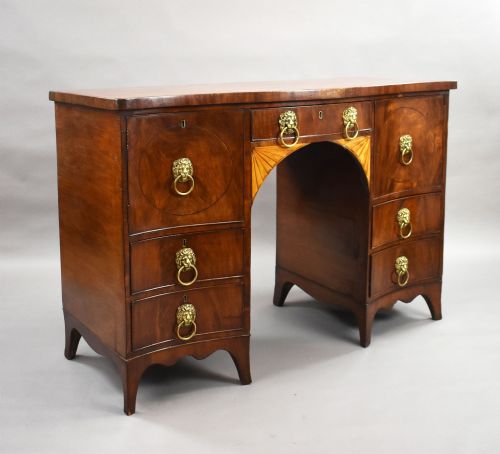


Lion Mask Sideboard
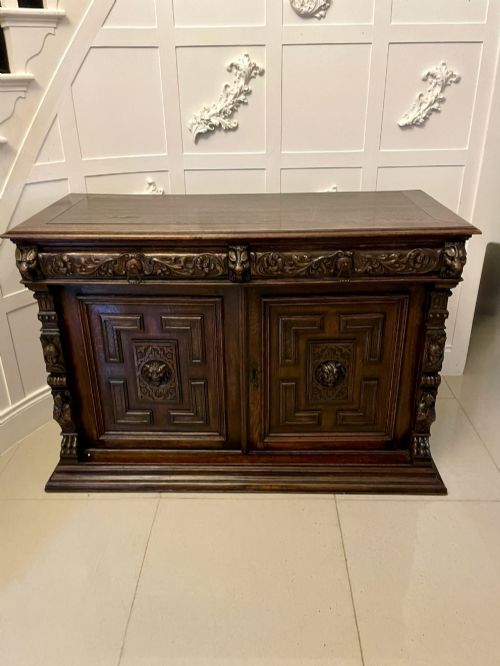
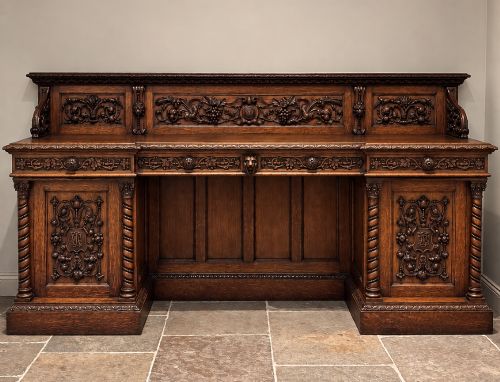
A lion mask sideboard brings sculptural presence and commanding scale to a room through carved timber and fierce classical detailing.
Lion Mask Sideboard
A lion mask sideboard provides substantial storage and serving space while anchoring a dining room or hall with strong architectural character. When you search for a lion mask sideboard, you encounter substantial serving furniture built to display wealth and hospitality.
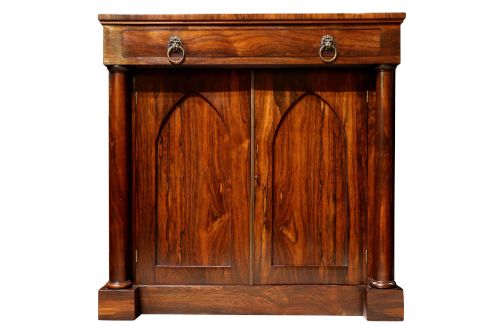
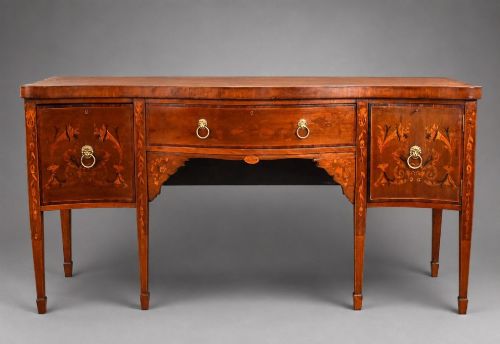
The pieces appearing on this page span several distinct periods, most notably the 19th Century, Regency, and Victorian eras. Mahogany and carved oak dominate the forms, ranging from clean Georgian outlines to heavily carved Victorian revival pieces.
Distinctions in craftsmanship
The depth and definition of the carved lion masks separate standard production furniture from superior workshops, where artisans rendered eyes, manes, and jaws with lifelike musculature. Crisp undercutting and smooth symmetry indicate a sculptor working at a high standard rather than a rapid workshop process.
Timber selection and matching dictate overall visual harmony, visible in how grain patterns mirror across central drawer fronts and cabinet doors. Superior examples integrate brass galleries and original hardware seamlessly into the architectural design without awkward proportions.
Listings feature solid oak and mahogany pieces spanning from Georgian bowfronts to heavily carved Victorian revival cabinets.
H Mower & Stephenson
The Lion Mask Sideboard Glossary
- Lion mask
- A decorative carving representing the face of a lion, frequently flanked by foliage or holding a ring in its jaws. This motif appears on drawer pulls and cabinet corners.
- Breakfront
- A cabinet or sideboard whose central section projects forward from the flanking outer sections. This arrangement creates dynamic shadows and breaks the flat line of a wall.
- Bowfront
- A furniture front that curves outward in a convex arc. This shape softens room angles and provides additional internal depth.
- Chiffonier
- A compact sideboard or low cabinet equipped with doors enclosing shelves. These pieces often feature tiered upper superstructures for display.
- Pollard oak
- Timber sourced from trees that were cut back at the trunk to promote dense, gnarled branching. This practice produces richly textured wood grain filled with swirling knots.
Lion Mask Sideboard: Frequently Asked Questions
Where did these sideboards stand?
These large serving pieces stood against dining room walls to hold heavy platters, silver, and wine during grand meals.
Servants used the flat top surfaces for carving meats and staging dishes before service to the table.
How do I date a mahogany piece?
Cabinet makers built earlier Georgian examples with refined proportions, subtle stringing, and straight or bow fronts. Later Regency and Victorian interpretations introduced heavier brass work, bolder grain patterns, and deep architectural carvings.
Examining internal drawer construction and secondary woods helps confirm the period of manufacture.
Can I fit one in a modern home?
These sideboards demand generous wall space and substantial clearance due to their heavy timber construction and deep drawers. Placing them in spacious dining rooms or wide hallways lets the carved details show clearly.
Ensure floor weight distribution and doorway clearances are checked before positioning such heavy furniture.
What is the green man motif?
Victorian cabinet makers frequently blended lion masks with foliate faces known as green men, symbolizing rebirth and nature. These carvings emerge directly from wooden scrollwork on doors and friezes.
Such hybrid details reflect nineteenth century revivals of gothic and medieval ornamentation.