

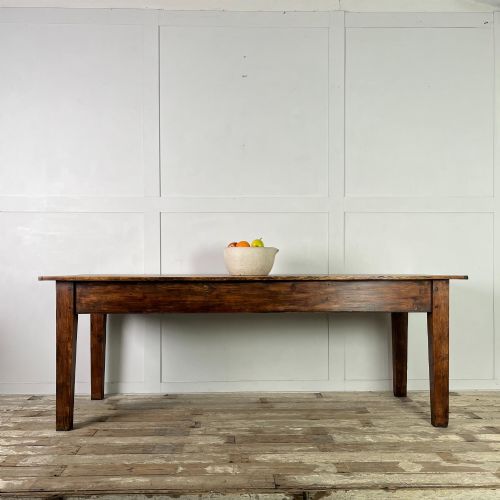


Victorian Pine Refectory Table
A victorian pine refectory table brings sturdy domestic presence to a room, offering generous length for dining and kitchen preparation.
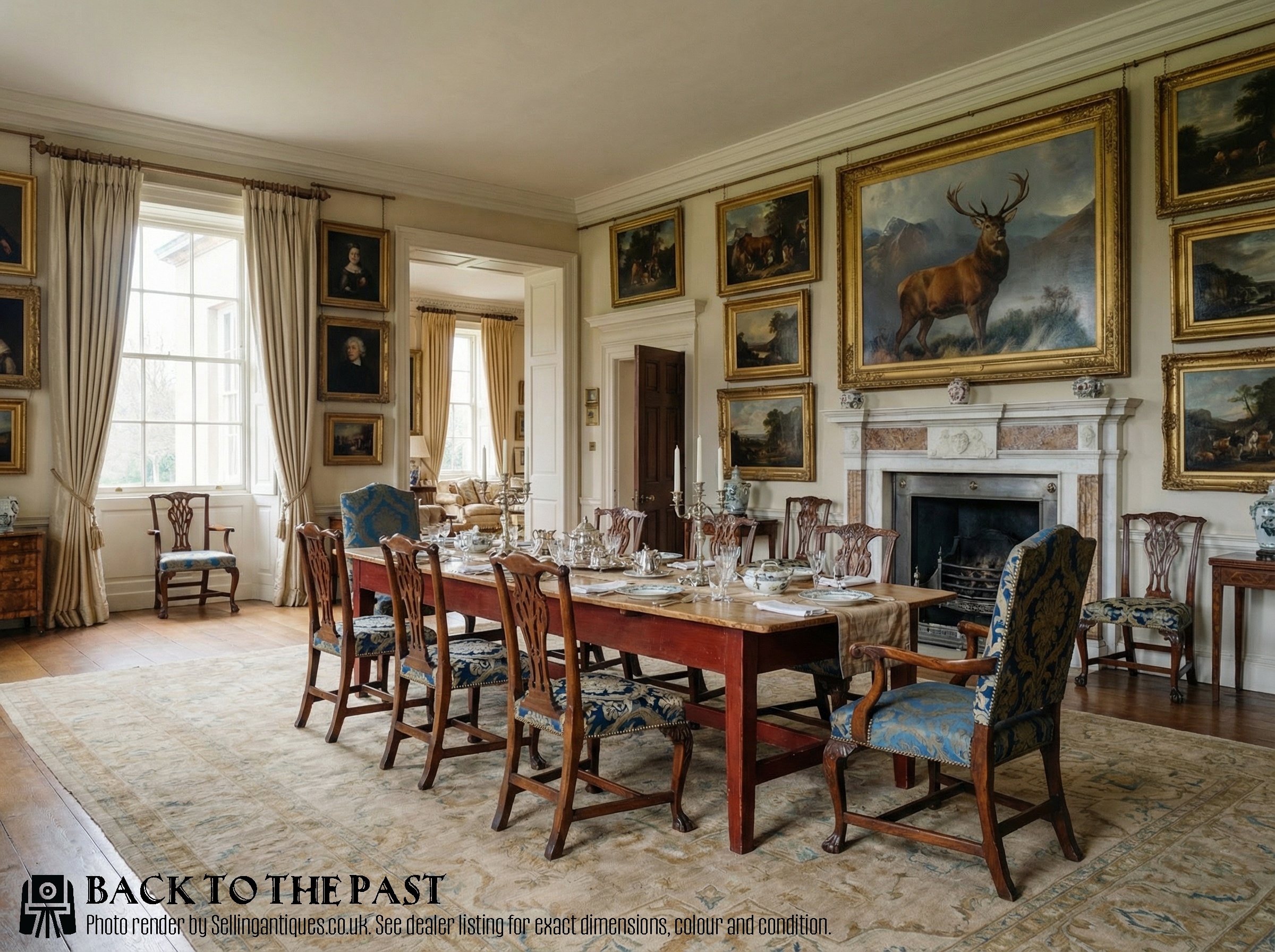
Victorian Pine Refectory Table
A victorian pine refectory table typically presents as an elongated surface designed for communal dining or kitchen work, drawing on nineteenth century vernacular traditions.
The evidence shows forms ranging from six seater country house variants to grand examples spanning eight to eleven feet, often categorised alongside farmhouse and harvest tables.
Makers utilised resilient softwoods and hardwoods, pairing pine tops with oak, ash, elm or sycamore to create durable tables suited to heavy daily use.
Materials and construction
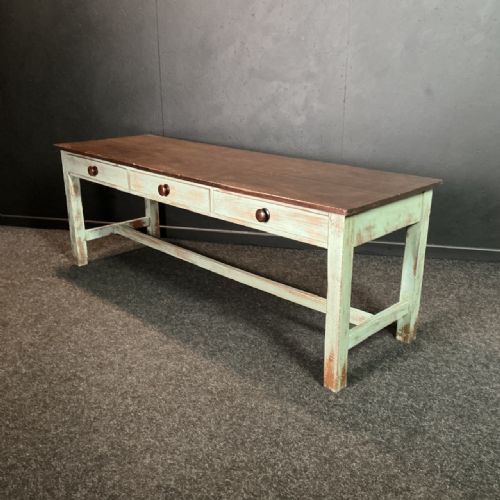
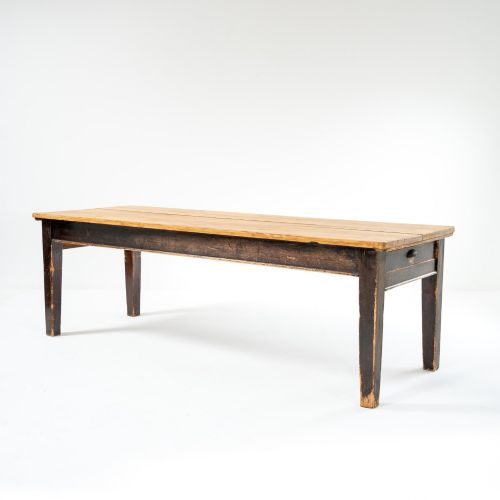
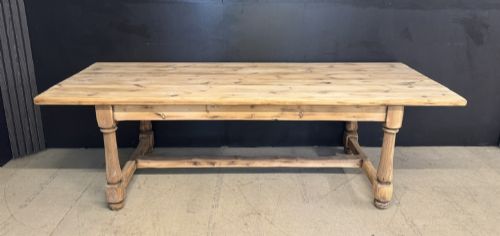
Carpenters constructed these long tables using solid pine planks for the top, frequently supported by H stretchers and sturdy square section or turned legs.
Workshops combined timber types within a single piece, pairing pitch pine or standard pine with oak and brass elements for additional structural support.
Surfaces were left natural to be scrubbed clean, or treated with paint and patinated finishes suited to busy kitchens and dining halls.
One extraordinary survivor includes an official crown estate stamp with bronze feet, hinting at official service life.
Evaluating distinction
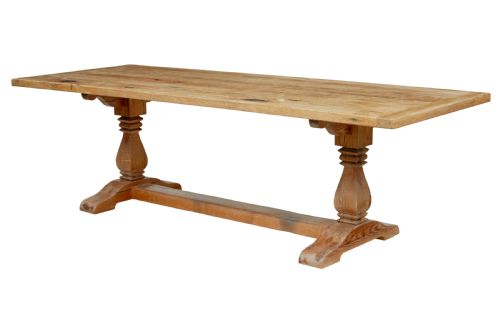
Quality rests in the selection of timber and the integrity of the joinery, distinguishing utilitarian boards from finely proportioned examples with stretcher bases.
The balance between the plank top and the underframe dictates the character of each piece, whether built for a school, a country estate or a modest farmhouse.
The Victorian Pine Refectory Table Glossary
- Refectory table
- A long dining table historically used for communal meals. This form provides substantial length and sturdy leg supports.
- Scrub top
- A bare wooden tabletop intended for frequent washing with water and a brush. This finish is typical of utilitarian kitchen preparation tables.
- H stretcher
- A horizontal wooden brace connecting the legs of a table in the shape of the letter H. It adds rigidity and strength to the frame.
- Pitch pine
- A resinous and durable softwood valued for its strength and grain pattern. It appears frequently in nineteenth century domestic furniture.
Victorian Pine Refectory Table: Frequently Asked Questions
How long are these tables?
The recorded pieces span various proportions, with many standard domestic versions measuring around six to eight feet in length.
Larger country house examples extend significantly further, accommodating eight to eighteen seats depending on the original commission.
What is a scrubbed top?
A scrubbed top refers to an unpainted wooden surface cleaned repeatedly with water and a scrubbing brush.
This treatment was standard for kitchen tables used in food preparation and daily domestic labour.
Where were they used?
These tables served primarily in kitchens, dining rooms and institutional settings such as schools and estate service rooms.
Their robust construction made them suitable for heavy daily demands across nineteenth century households.
Are multiple woods used?
Carpenters frequently combined pine with other timbers to strengthen the overall framework.
Evidence shows tabletops in pine paired with oak, ash, elm, pitch pine or sycamore for legs and stretchers.