
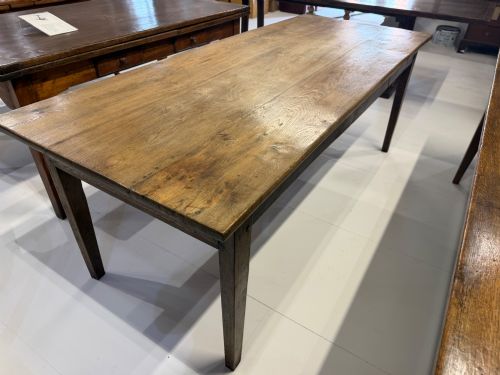
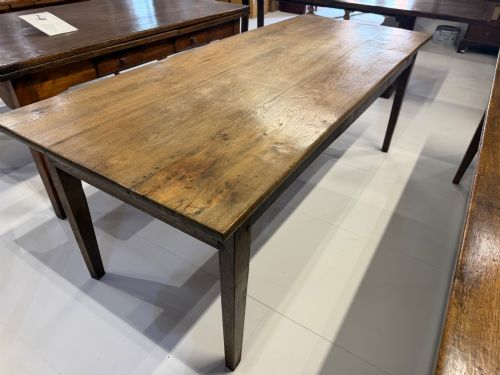
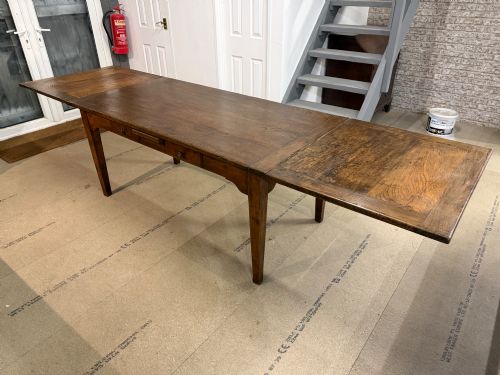
Traditional Rustic Dining Table
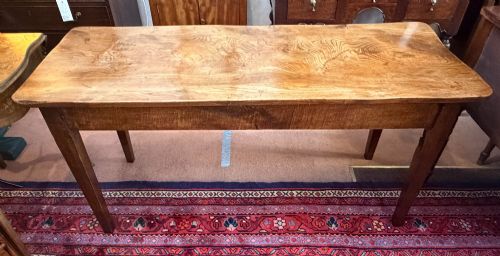
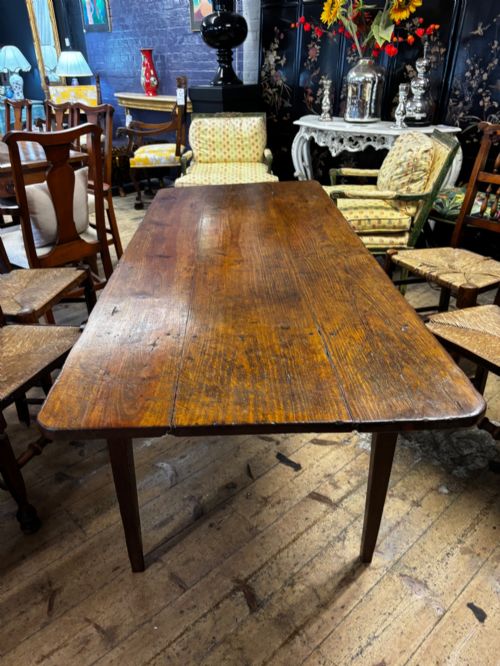
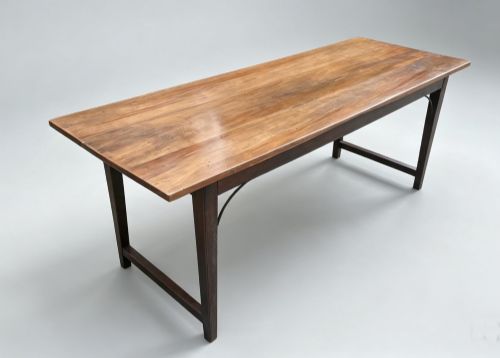
A traditional rustic dining table anchors the room with sturdy boards and honest joinery built for daily gatherings.
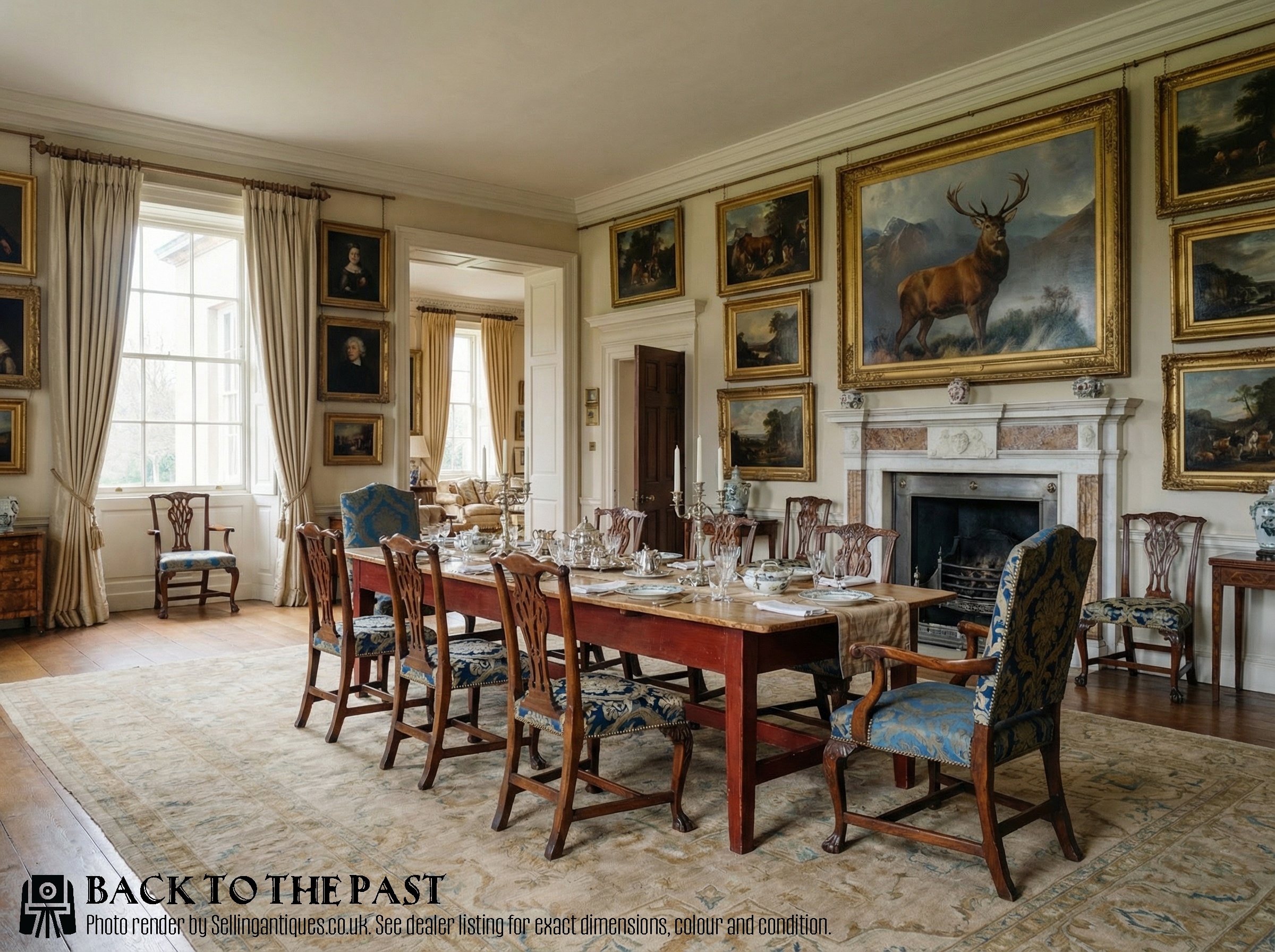
Traditional Rustic Dining Table
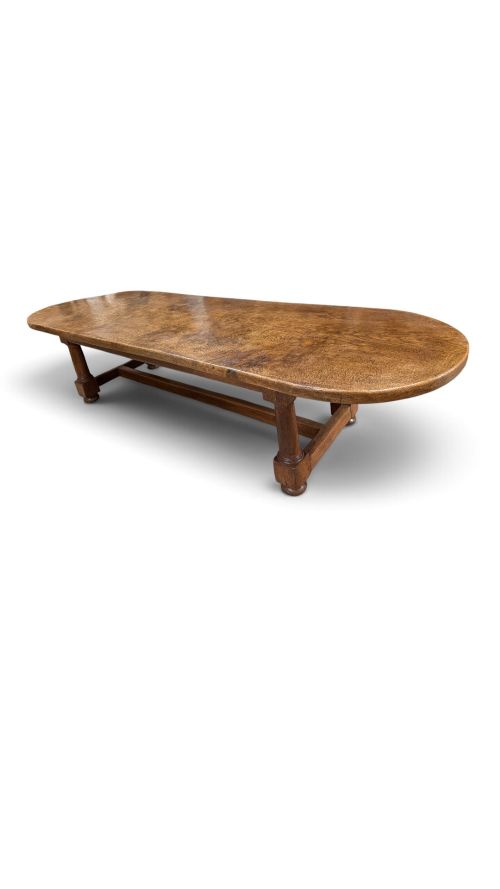
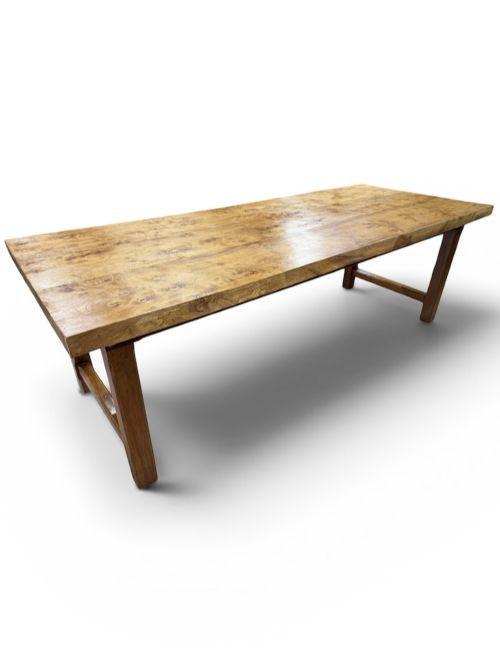
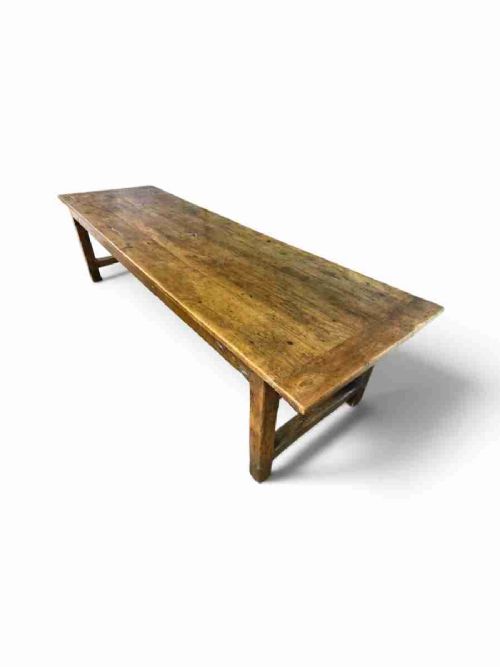
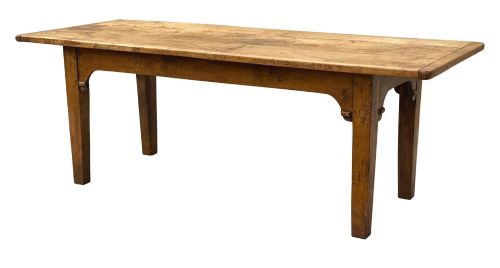
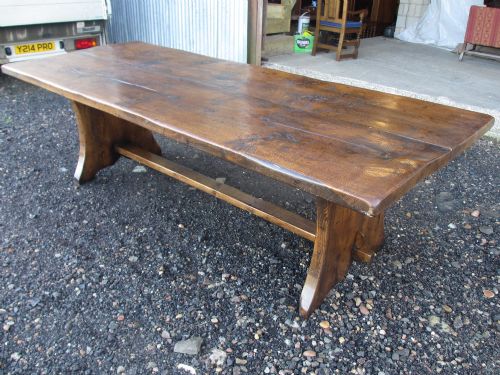
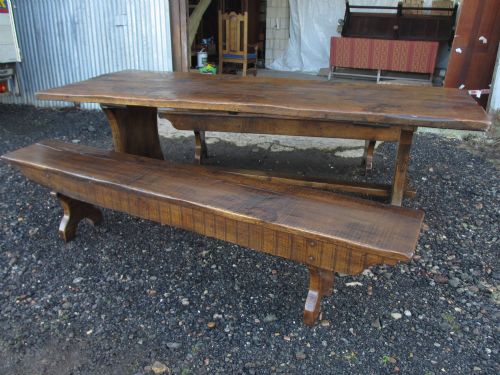
A traditional rustic dining table appears in various heavy timber forms designed for communal meals, spanning the eighteenth, nineteenth, and early twentieth centuries. Buyers seeking a traditional rustic dining table most frequently encounter substantial oak and pine pieces from the Victorian and Edwardian eras, alongside earlier farmhouse examples.
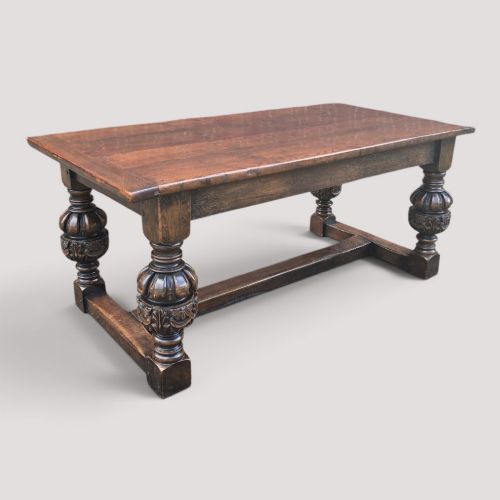
The selection ranges from simple plank tops on trestle or tapered legs to larger refectory formats and gateleg designs. These heavy tables originated in kitchens and provincial dining spaces where durability mattered more than delicate ornamentation.
Materials and Construction
Carpenters built these tables primarily from solid oak, pine, elm, and fruitwood, often pairing timbers such as oak tops with beech or elm underframes. Boards were joined to create thick surfaces capable of withstanding heavy daily use.
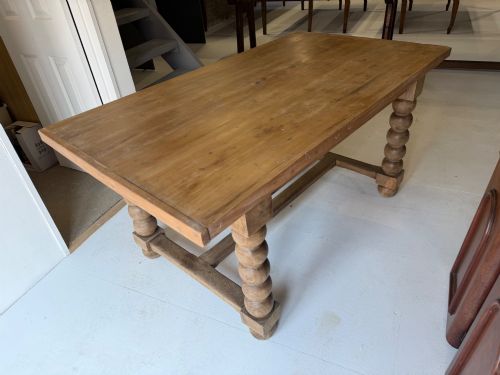
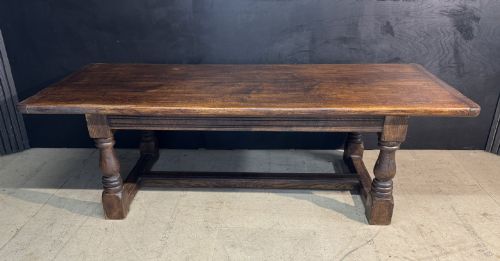
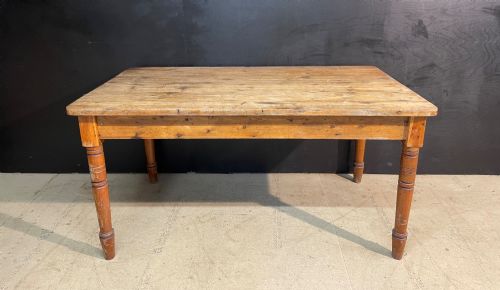
Leg supports vary from turned bobbin shapes and tapered uprights to shaped trestle ends and substantial gateleg actions. Surfaces received simple wax or natural finishes that exposed the grain and allowed the timber to age with character.
Listings combine eighteenth-century gateleg formats with nineteenth-century oak refectories and twentieth-century pine kitchen tables.
Judgement of Quality
The distinction between ordinary and superior pieces rests on timber selection, such as single-plank tops versus joined boards, and the integrity of the original underframe. Tables retaining their original surface patination and uncompromised structural timbers hold greater authority.
Proportion and scale dictate the visual weight of the piece, with longer refectory formats and deeper boards showing superior presence. Altered heights or replaced stretchers reduce the purity of an antique survivor.
The Traditional Rustic Dining Table Glossary
- Refectory table
- A long narrow dining table historically used for communal dining in monastic or large domestic settings. These tables feature long boards supported by trestles or four legs linked by stretchers.
- Gateleg table
- A drop-leaf table where hinged legs swing out like a gate to support the raised leaves. This design allowed tables to fold down against a wall when not in use.
- Single plank top
- A table surface constructed from one wide piece of timber rather than multiple joined boards. Such tops indicate timber of considerable maturity and width.
- Stretchers
- Horizontal wooden rails connecting the legs of a table to provide structural rigidity and stability. They prevent the legs from spreading under heavy loads.
Traditional Rustic Dining Table: Frequently Asked Questions
How do I clean a wooden farmhouse table?
Wipe the surface with a soft, damp cloth and dry it immediately to protect the aged timber. Avoid harsh chemical sprays that strip the historical wax finish.
Apply a traditional beeswax periodically to nourish the dry wood and maintain a soft sheen without creating a glossy artificial coating.
Can I seat eight people comfortably?
Many refectory and farmhouse formats accommodate eight or more diners due to their generous length and lack of obstructive corner legs. Trestle designs offer particular flexibility for chair placement along the sides.
Check the clearance beneath the apron or stretchers to ensure standard dining chairs slide underneath without difficulty.
What is the difference between oak and pine?
Oak provides a dense, heavy hardwood surface with prominent grain patterns that darkens richly over centuries of handling and exposure. It resists heavy knocks and forms the backbone of formal refectory tables.
Pine offers a softer, lighter softwood texture typical of provincial kitchen furniture, often displaying knots and a paler, scrubbed appearance.
Are these tables suitable for modern kitchens?
These robust tables integrate smoothly into contemporary spaces by providing a warm contrast of historic texture against modern architecture. Their straightforward utility suits daily family meals and active kitchen environments.
Use felt pads under hot dishes and placemats to protect antique timber from moisture rings while living with the piece normally.