



Large Pine Farm Table
A large pine farm table provides the sturdy heart of a busy kitchen or dining room, built for daily domestic life.
Large Pine Farm Table
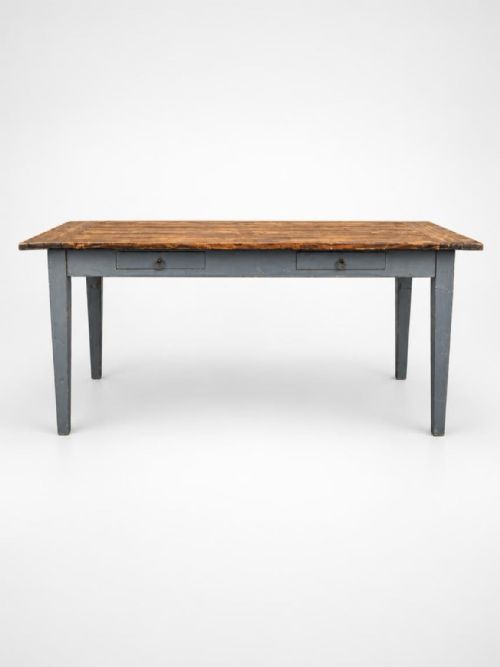
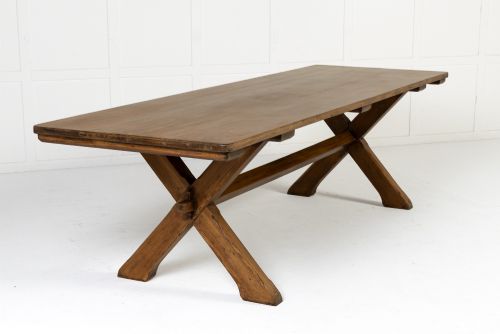
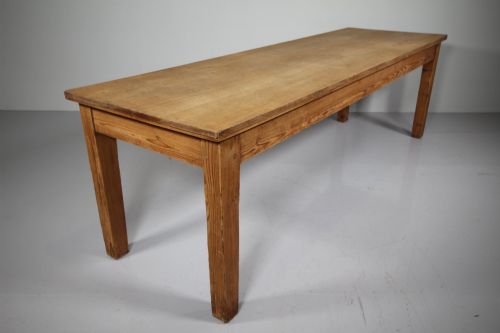
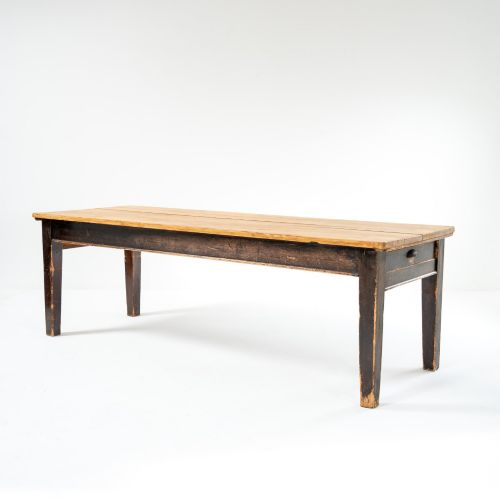
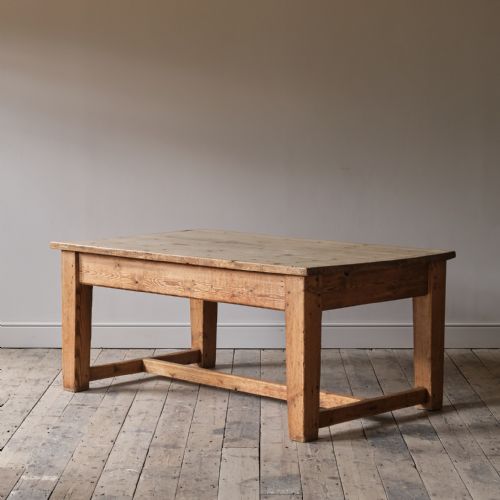
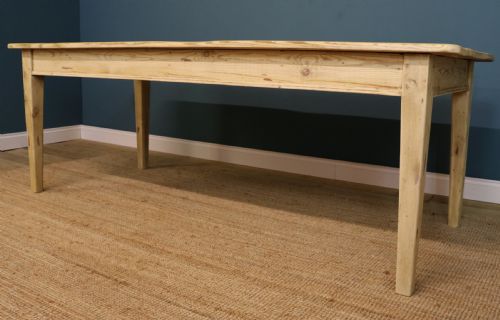
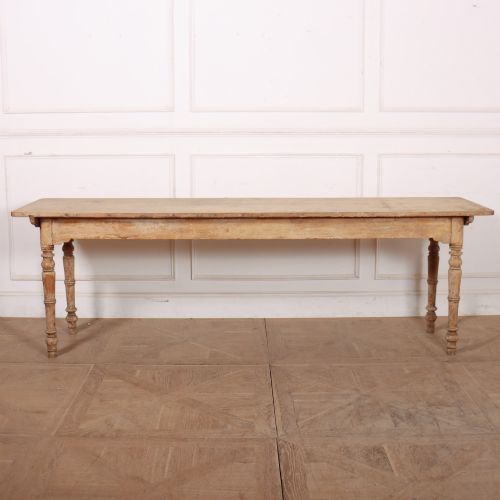
A large pine farm table is a substantial piece of utilitarian furniture designed for communal dining, food preparation, and daily household labour. These tables appear in forms such as simple dining tables, refectory tables, harvest tables, preparation tables, and console tables.
The versions most commonly met on this page originate from the nineteenth century, alongside examples from the early twentieth century. Their geographical origins span England, France, Italy, and Sweden, reflecting diverse rural traditions across Europe.
Makers and builders constructed these surfaces in distinct regional styles, including English country, Victorian country, Scandinavian country, rustic farmhouse, French country, and Italian country. They serve today as both functional dining surfaces and characterful focal points in modern interiors.
How they were made
Makers built these large pine farm tables primarily from pine, often pairing the primary timber with oak, fruitwood, or painted wood for structural elements and tops. Some examples feature original painted surfaces, stained wood finishes, or bleached pine.
Construction techniques suited the heavy demands of daily domestic and agricultural use, employing sturdy trestle designs, refectory framing, and robust joining methods. These methods ensured the tables could endure heavy community dining and kitchen preparation tasks without failing.
Large Pine Farm Table Retail Price Guide 2026
Typical asking prices for large pine farm table among the pieces listed under this phrase on Sellingantiques today, from the lower quarter to the upper quarter. They describe what is for sale here now, not the wider market.
Listings feature pine alongside painted wood, oak, and fruitwood, spanning the nineteenth century up to nineteen-twenty.
What varies in quality
Quality in a large pine farm table rests upon the integrity of its timber selection, the honesty of its construction, and the preservation of its original surface. Tables featuring original paint or untouched bleached pine hold distinct character compared to heavily restored examples.
Proportional harmony and structural soundness separate standard utility pieces from exceptional regional variants. The execution of trestle or refectory frames dictates how gracefully the table meets the floor and supports heavy daily use.
The Large Pine Farm Table Glossary
- Refectory table
- A long dining table historically used in monasteries and large institutions for communal meals. These tables feature long, narrow proportions supported by substantial legs and stretcher rails.
- Harvest table
- A narrow dining table traditionally used during seasonal gatherings and agricultural harvests. Their elongated forms allowed large groups of workers to sit together.
- Trestle table
- A table comprising two or more support frames connected by a horizontal beam or stretcher. This design maximises legroom along the length of the surface.
- Preparation table
- A utilitarian work table built for kitchen tasks such as kneading dough or chopping food. They often display robust timber tops shaped by decades of functional use.
- Bleached pine
- Pine timber that has been treated to achieve a lighter, paler tone. This process highlights the natural grain and knots within the wood.
Large Pine Farm Table: Frequently Asked Questions
What is a large pine farm table used for?
These large tables served primarily for communal dining, food preparation, and daily domestic labour in rural households. Their generous proportions accommodated large families and farm workers for meals and daily tasks.
Today, they function well as central dining surfaces or large kitchen work tables. Their robust construction suits them for modern daily living and entertaining.
How do I tell different periods apart?
Nineteenth-century examples often display deep patination, heavier timber dimensions, and signs of extensive utilitarian wear. Twentieth-century pieces, such as those from the 1920s, may exhibit lighter treatments like bleached pine.
Examining the construction methods and fastener types helps clarify the era of manufacture. Regional styles also offer clues to the age and origin of the piece.
Where were these tables made?
The listings on this page include pieces originating from England, France, Italy, and Sweden. Each region developed distinct structural styles suited to local rural traditions.
English and French examples often reflect classic refectory or harvest forms, while Scandinavian and Italian pieces showcase unique painted finishes and trestle designs.
How do I live with a pine farm table?
Living with a large pine farm table involves embracing its natural timber character and history of use. The soft nature of pine means the surface absorbs marks and patination over time.
Regular maintenance involves simple cleaning with appropriate wood care products to protect the finish. Allowing the table to continue its working life adds to its ongoing charm.